Plizio Visual Lab
Rustaq
ℹ️Practical info — Rustaq
▾
🌤 Weather — 5 days
📍 Nearby
Sights nearby
💡 Tips
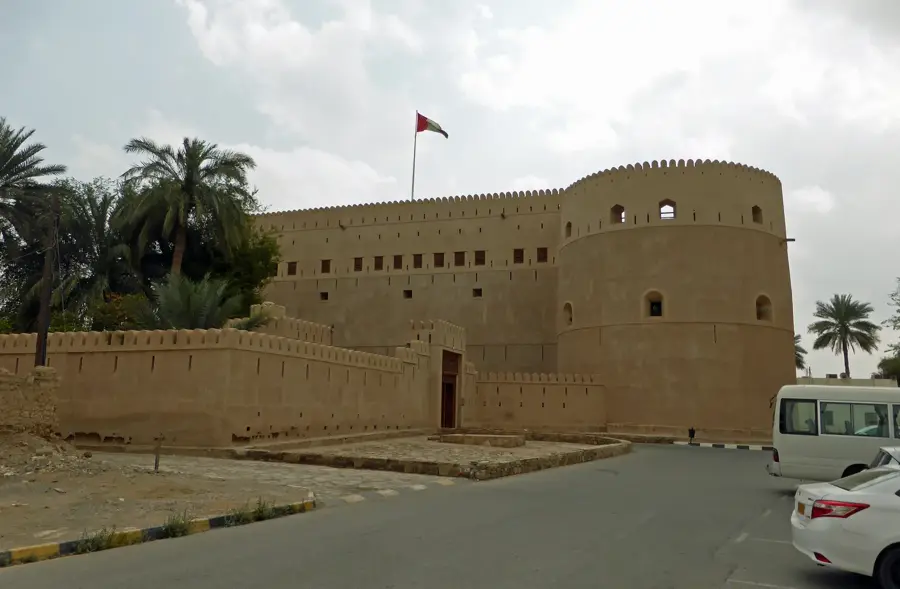
- Visit Rustaq Fort early in the morning; exploring the extensive towers involves a lot of climbing and it gets very hot later.
- When visiting Ain Al Kasfa hot springs, respect local customs by wearing modest swimwear (t-shirts and knee-length shorts for both men and women).
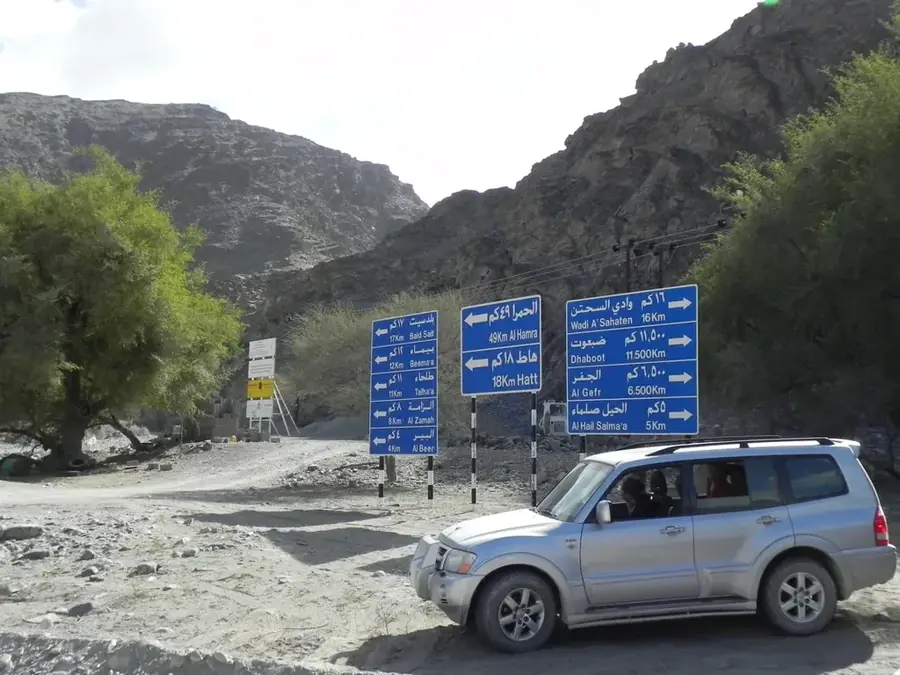
- If you plan to explore the spectacular surrounding wadis (like Wadi Bani Awf), renting a 4x4 vehicle is highly recommended.
- The town has a very traditional atmosphere; dress conservatively when walking through the souq and residential areas.
🍽 Food
Slow-roasted lamb marinated in spices, usually found in traditional restaurants near the town center.
A gelatinous sweet flavored with saffron and nuts, freshly made and sold in the local souq.
Traditional Omani cardamom coffee served with fresh local dates, often offered as hospitality or in small cafes.
🛍 Shopping · 🧘 Quiet spots
Rustaq is famous for its pure, high-quality honey sold by local vendors in the market.
Traditional silver daggers; you can find authentic pieces and local silverware in the old souq.
The hot springs are very peaceful just after sunrise before the locals arrive for their daily baths.
Take a shaded walk along the ancient falaj (irrigation channels) surrounded by dense date palms.
Water temperature…
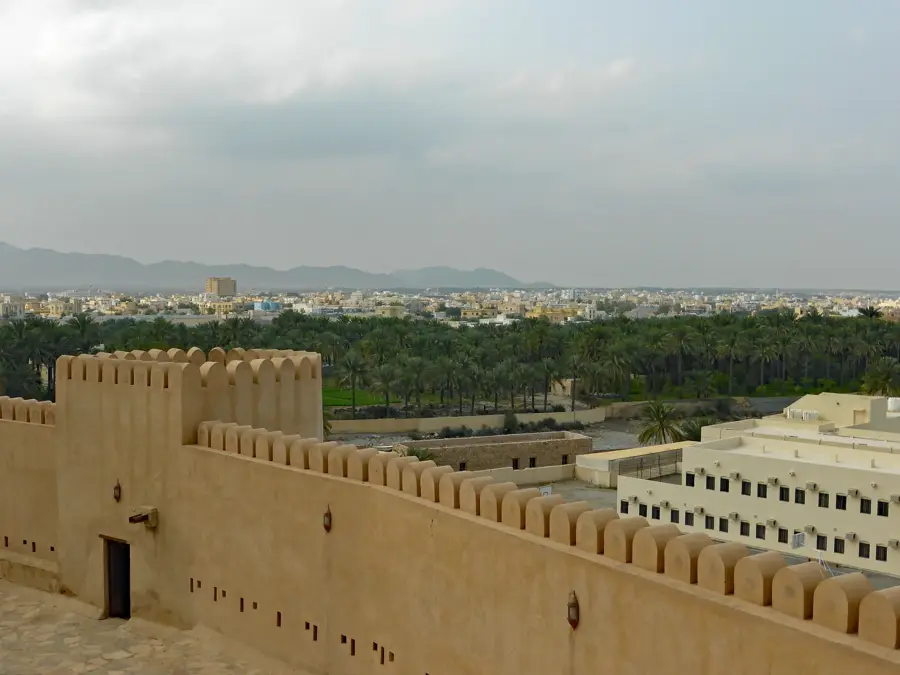
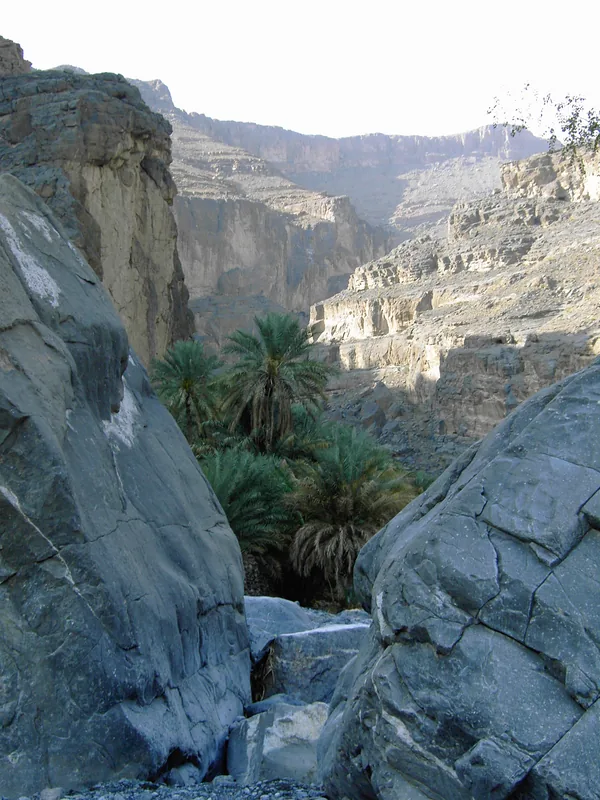
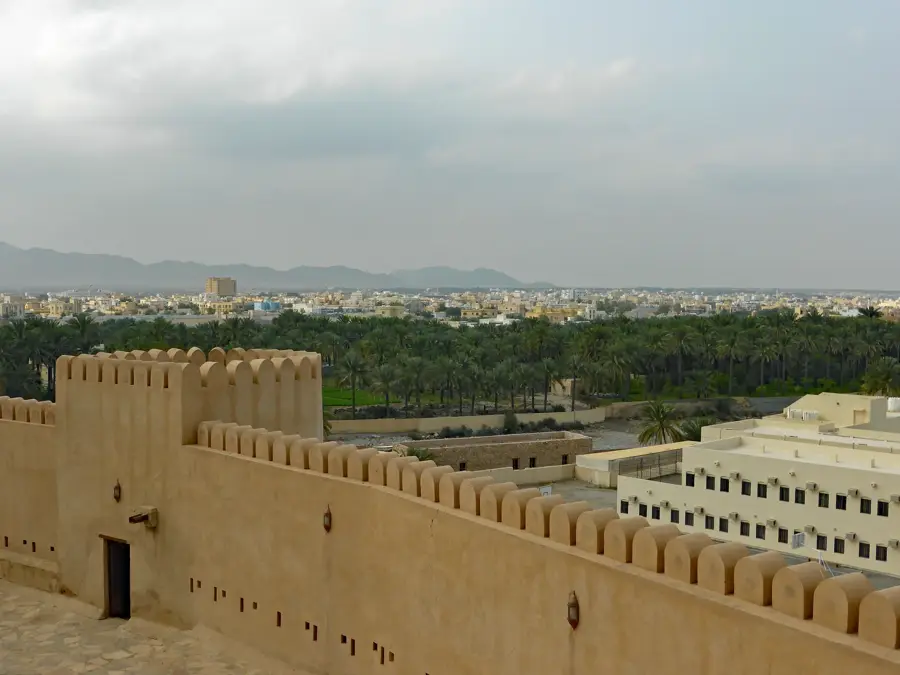
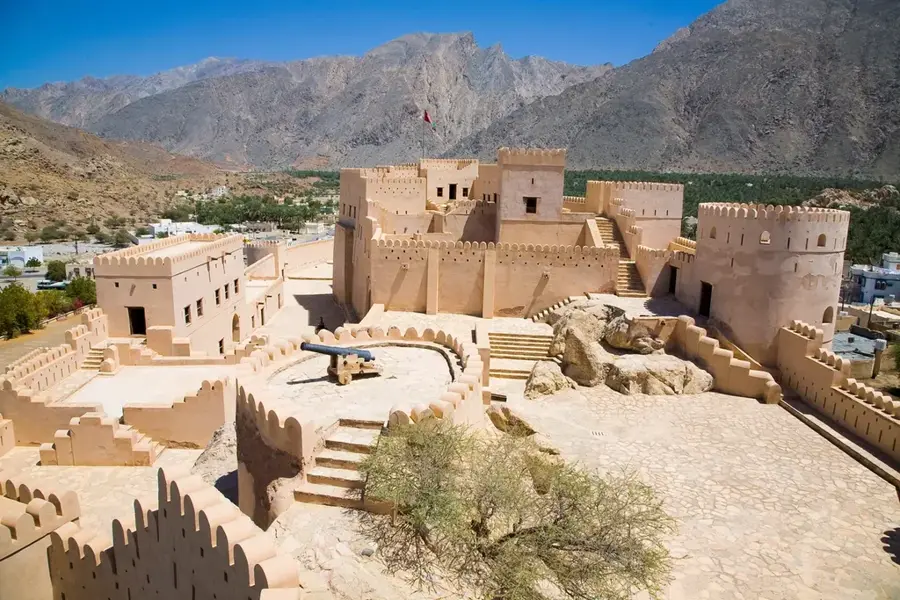
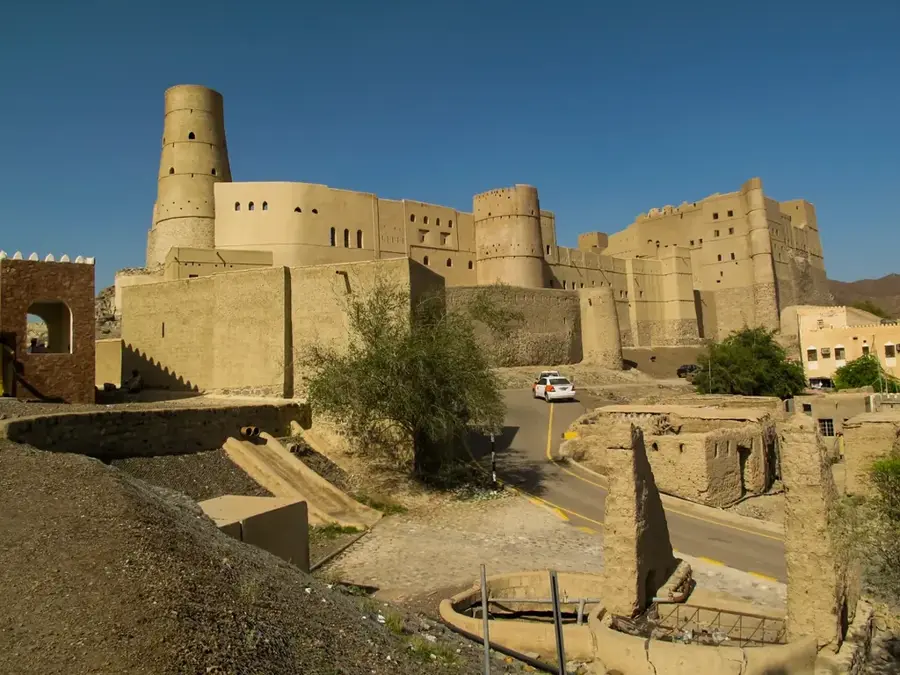
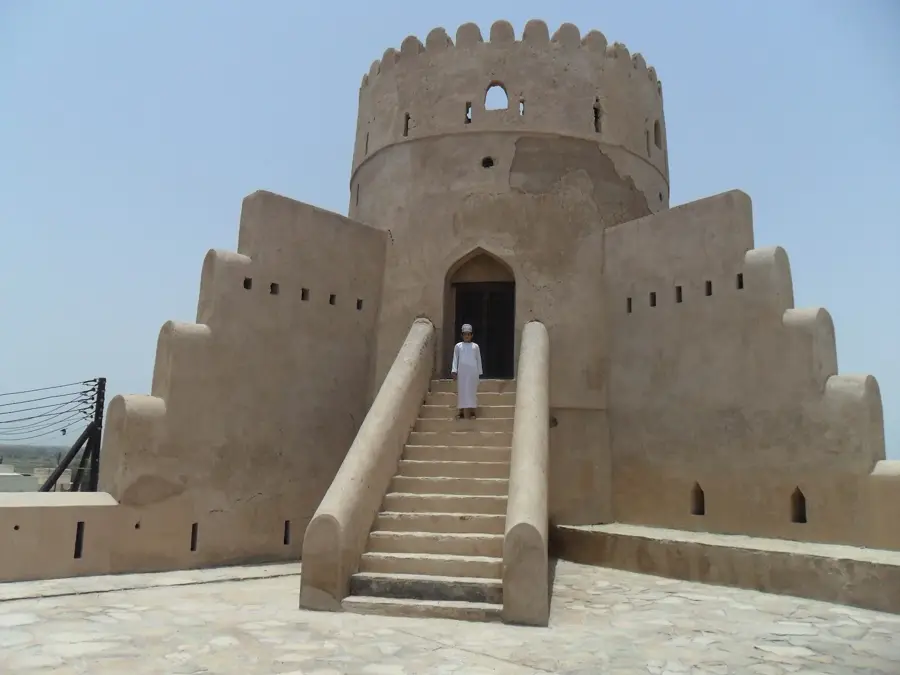
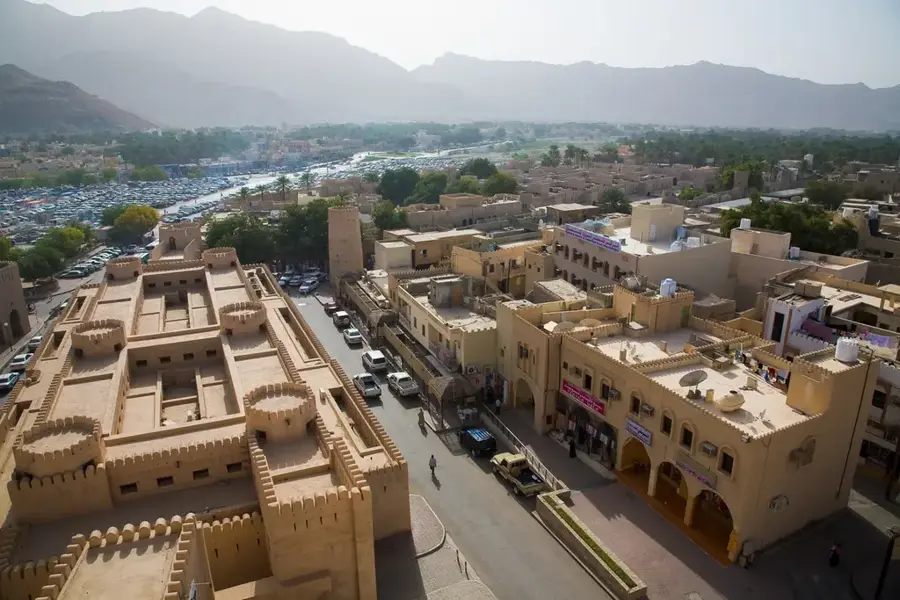
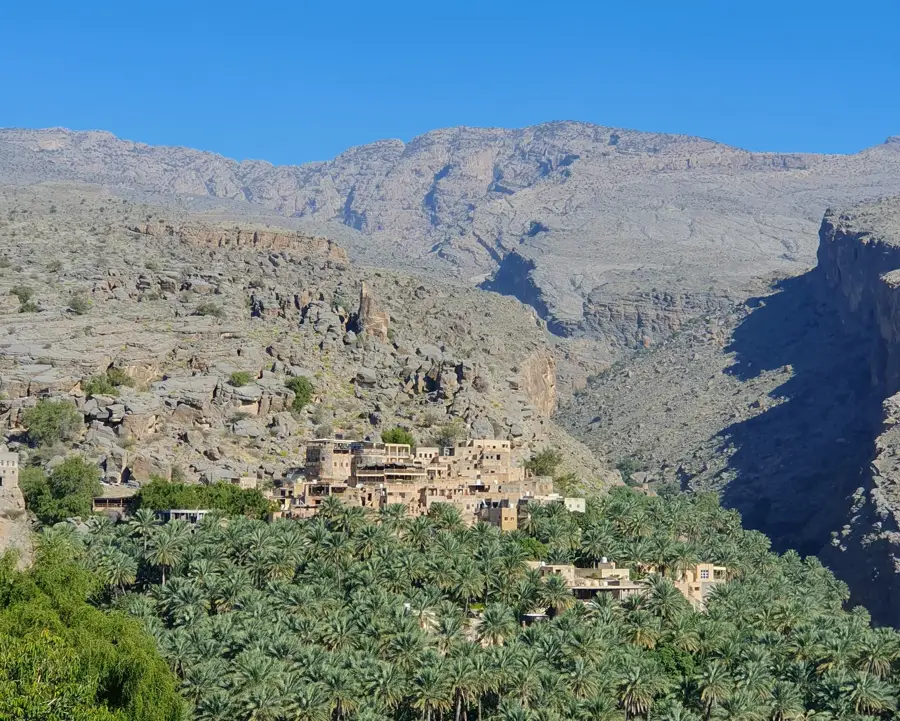
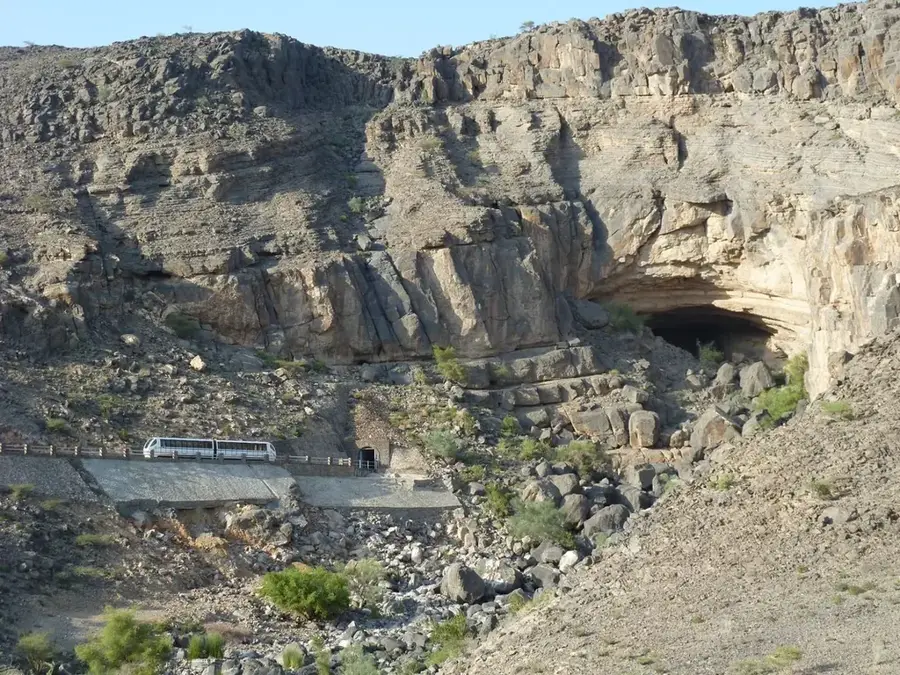
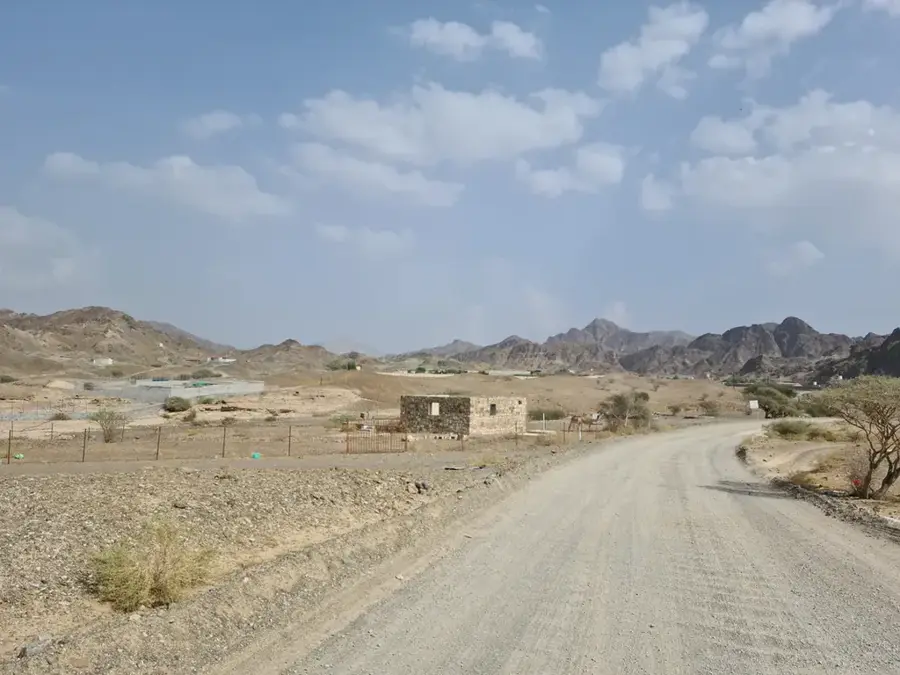
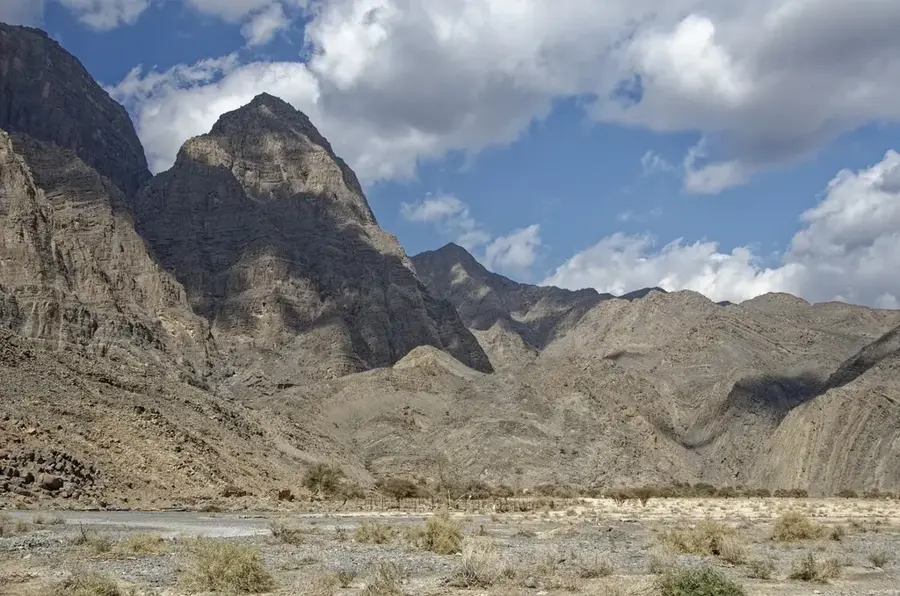
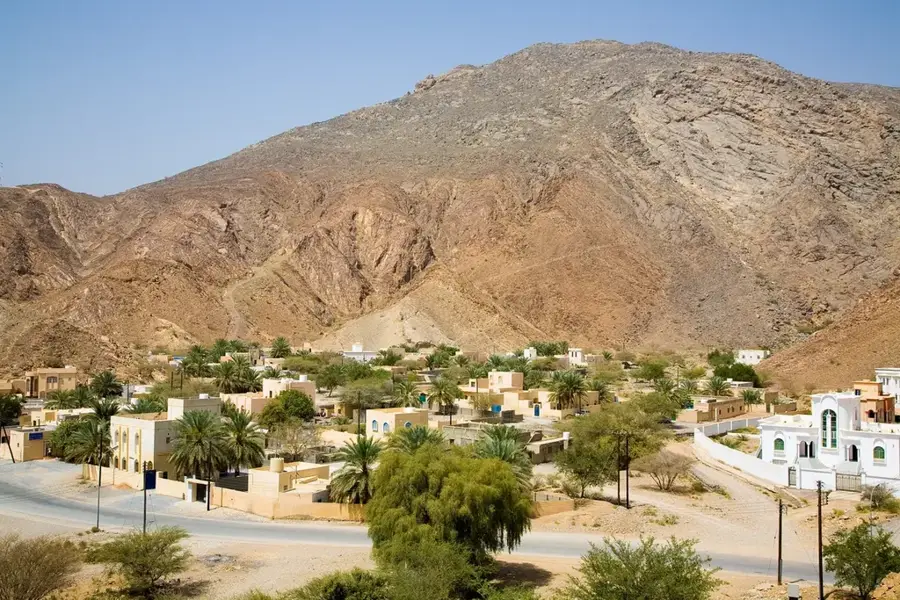
Rustaq lies at the foot of the Jebel Akhdar Mountains in the South Al Batinah region and was the capital of the Yarubi dynasty from 1624 to 1744, before Ahmad bin Said al-Bu-Said founded the Al-Bu-Said dynasty and thus the modern Sultanate of Oman. The city, with about 90,000 inhabitants, has one of the country's most impressive structures, Rustaq Fort. The original structure dates from the 7th century (pre-Islamic times) and was massively expanded in the 17th century. The Ain al-Kasfa hot springs, about 10 kilometers from the city, gush with sulphurous water at around 45 degrees Celsius and have been used for medicinal purposes for centuries. Rustaq's fertile wadis allow for extensive date palm plantations and mango cultivation.
- Location: Oman
- Nearby: Jebel Akhdar (8 km)
- Population: ~120.000 (2024)
Best time to visit & climate
The most pleasant time to visit is Jan, Feb, Dec.
| Jan | Feb | Mar | Apr | May | Jun | Jul | Aug | Sep | Oct | Nov | Dec | |
|---|---|---|---|---|---|---|---|---|---|---|---|---|
| Avg °C | 19 | 21 | 24 | 29 | 33 | 35 | 35 | 34 | 32 | 29 | 24 | 20 |
| Rain mm | 13 | 12 | 23 | 14 | 7 | 11 | 14 | 11 | 6 | 6 | 9 | 9 |
Geography
Facts
- About 90,000 inhabitants in the South Al Batinah region
- Capital of the Yarubi dynasty from 1624 to 1744
- Rustaq Fort originally dates from the 7th century
- Ain al-Kasfa hot sulfur springs at 45 degrees Celsius
- At the foot of the Jebel Akhdar Mountains
- Ahmad bin Said founded the Al-Bu-Said dynasty in 1744
- Extensive date and mango plantations
- About 175 kilometers west of Muscat
Explore nearby
Notable places around
Route planner — Car & Motorhome
Where do you start? We build the route here, with stops and country notes along the way.
© OpenStreetMap contributors · OpenRouteService
Sights in the town Rustaq (1)
Frequently asked questions
What is the highlight in Rustaq?
Are the hot springs accessible to tourists?
How much time is needed for sightseeing?
Is Rustaq suitable for children?
How do I get to Rustaq?
Rustaq: where is it located?
Rustaq: when is the best time to visit?
Rustaq: why is it worth visiting?

Nearby cities
History & landmarks
Nature
More places