Plizio Visual Lab

Tombali Rainforest

Plizio editorial teamData Sources
Forest
—°
Tombali Rainforest (Guinea-Bissau)

Weather…

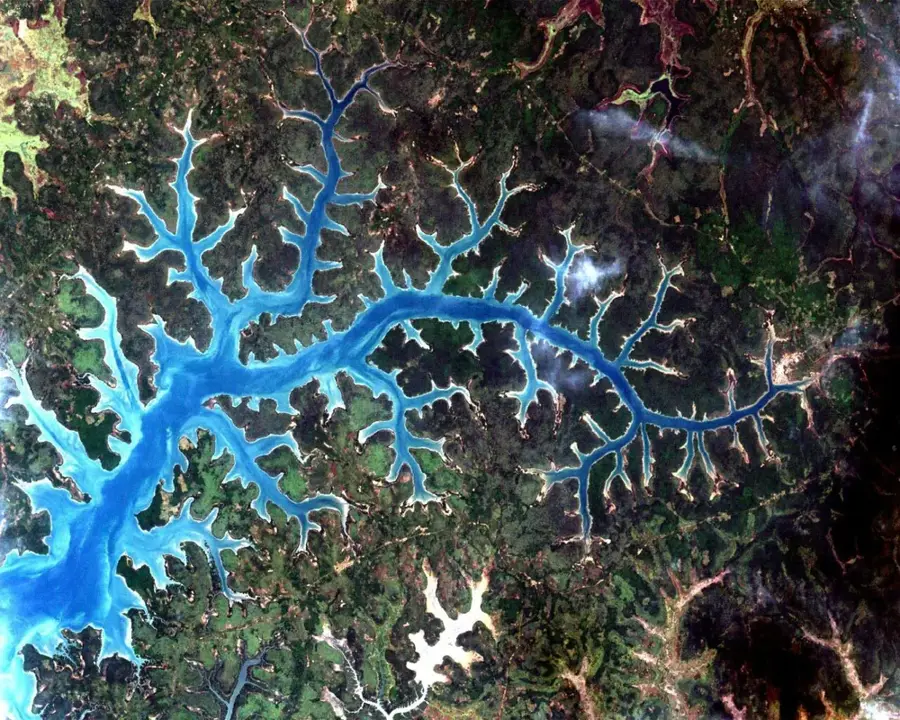
The relief of the Tombali rainforest in deep southern Guinea-Bissau is a complex system of coastal lowlands and gently rising forested ridges. This region is geomorphologically defined by extremely high humidity and a dense hydrological network. Most of the relief sits just above sea level and is crisscrossed by a labyrinth of tidal channels and small rivers that cut deeply into the soft sedimentary soils. Beneath the dense canopy lies a topography of marshy depressions and isolated firm elevations where the giant trees of the primary forest take root. The soil composition features humic, water-saturated substrates that stand in sharp contrast to the dry plateaus of the north. The relief here acts as a natural sponge, absorbing massive monsoon rainfall and releasing it slowly. This topographical structure is essential for maintaining the microclimate that enables the rainforest's growth. For wildlife, the varying elevations within the forest, from the flat mangrove fringes to the higher forested ridges, provide a multitude of ecological niches.

Best time to visit & climate

The most pleasant time to visit is Jan, Feb, Dec.

JanFebMarAprMayJunJulAugSepOctNovDec
Avg °C262828292928262626272726
Rain mm002132193454575376185230

📋 Practical info

🧭
Getting there
Access to the Tombali Rainforest is typically via unpaved forest tracks that may require a four-wheel-drive vehicle, especially after seasonal rain. In Guinea Bissau, reaching the deeper parts of the forest often involves starting from nearby rural communities or designated ranger stations.
📅
Best season
The dry season is generally the most suitable time for a visit to avoid muddy trails and high humidity levels in the forest. In this region of Guinea Bissau, visiting between December and March typically ensures easier navigation through the dense tropical vegetation.
⛰️
Terrain & paths
The terrain is characterized by original West African rainforest in south, with dense undergrowth and potentially swampy areas near forest water sources. Walking paths are often narrow and can be covered in thick leaf litter, requiring careful attention to avoid tripping on hidden roots.
🎒
What to bring
Long-sleeved clothing and sturdy trousers are typically recommended to protect against insects and thorny plants within the forest. High-quality insect repellent, waterproof boots, and a reliable flashlight are generally essential items for any visitor to the reserve.
🅿️
Parking
Designated parking is usually minimal, often limited to small clearings near the forest entrance or at the local administrative office. It is typically advisable to arrange transport through a local guide who is familiar with the best drop-off and pickup points.
⚠️
Safety
Safety in Tombali Rainforest typically requires staying on marked trails and being aware of the surrounding wildlife behavior at all times. It is generally recommended to visit with an experienced local guide who is familiar with the terrain and the specific safety conditions in Guinea Bissau forests.
⏱️
Time needed
A typical visit lasts between four and eight hours, providing enough time for nature observation and exploring the diverse flora. Some visitors may prefer a multi-day guided trip to explore the more remote and untouched sections of this vast forest ecosystem.

Geography

Coordinates
11.20000, -15.10000

Facts

  • The relief is shaped by the highest rainwater erosion rates in the country.
  • The soil surface remains moist nearly year-round due to the dense forest cover.
  • Minute elevation changes determine the vegetation: mangrove or rainforest.
  • The sediments in the Tombali relief are geologically young and unstable.
  • The topography buffers the inland from the impact of coastal storm surges.
  • There are no massive rock formations exposed at the surface in this region.

Explore nearby

Notable places around

Route planner — Car & Motorhome

Where do you start? We build the route here, with stops and country notes along the way.

Vehicle
Only stops with (optional):

© OpenStreetMap contributors · OpenRouteService

Sights nearby

Frequently asked questions

Where is the Tombali Rainforest located?
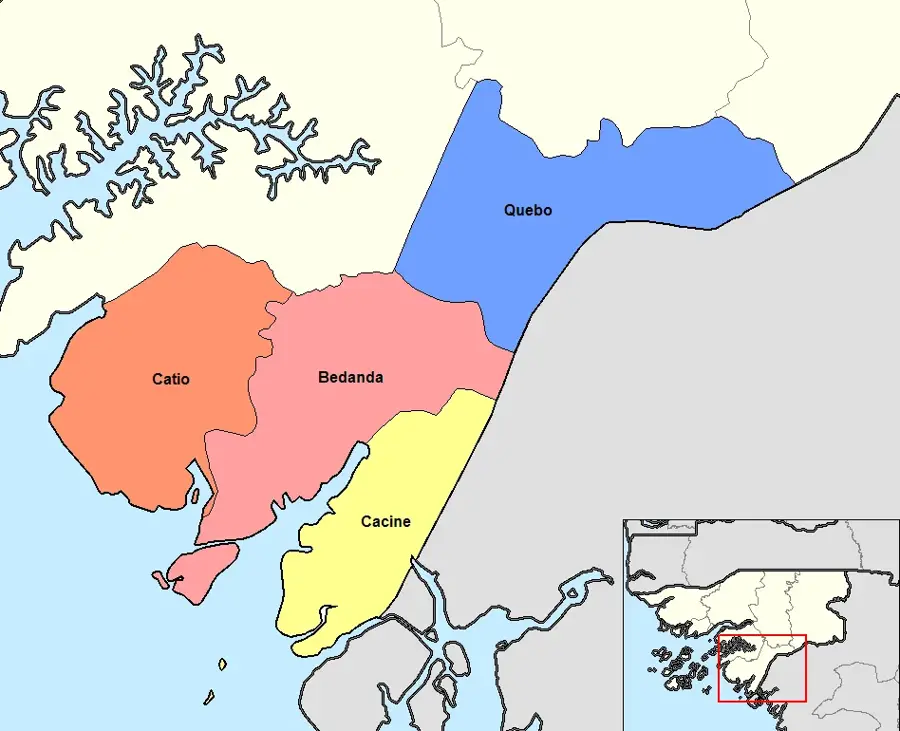
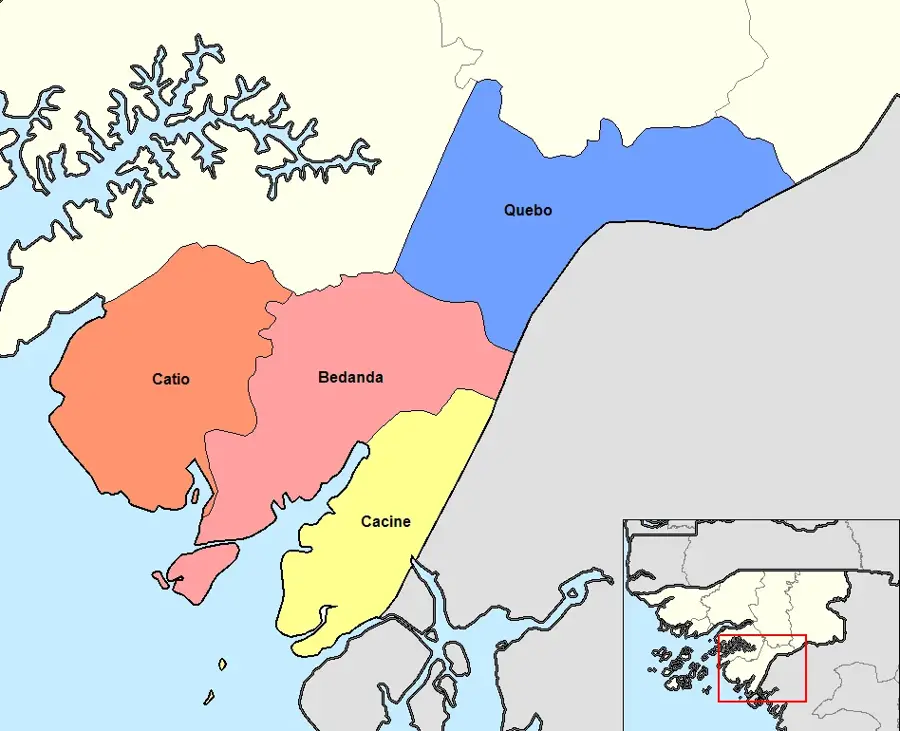
It is located in the far south of Guinea-Bissau, near the border with Guinea, in the Tombali region.
Can you see chimpanzees in the Tombali forest?
Yes, the Cantanhez National Park in the Tombali forest is one of the last refuges for chimpanzees in the country.
Is visiting the rainforest exhausting?
The humid, hot climate and dense vegetation require good physical condition for hiking.
When does it rain most in Tombali?
The heaviest rainfall occurs between July and September, which can make traveling to the region difficult.
Do you need a permit for the national park?
Yes, visitors usually need to register at the park office in Jemberem and pay an entry fee.
Tombali Rainforest: where is it located?
Tombali Rainforest is located in Guinea-Bissau.
Tombali Rainforest: when is the best time to visit?
The most pleasant time to visit is Jan, Feb, Dec.
Tombali Rainforest: why is it worth visiting?

The relief of the Tombali rainforest in deep southern Guinea-Bissau is a complex system of coastal lowlands and gently rising forested ridges.
View on map → The Top 50 Attractions → OpenStreetMap →
Africa
Explore with Plizio Discover more places in Africa
More places in Guinea-Bissau →

Nearby cities

Nature

More places