Plizio Visual Lab
Göttweig Abbey
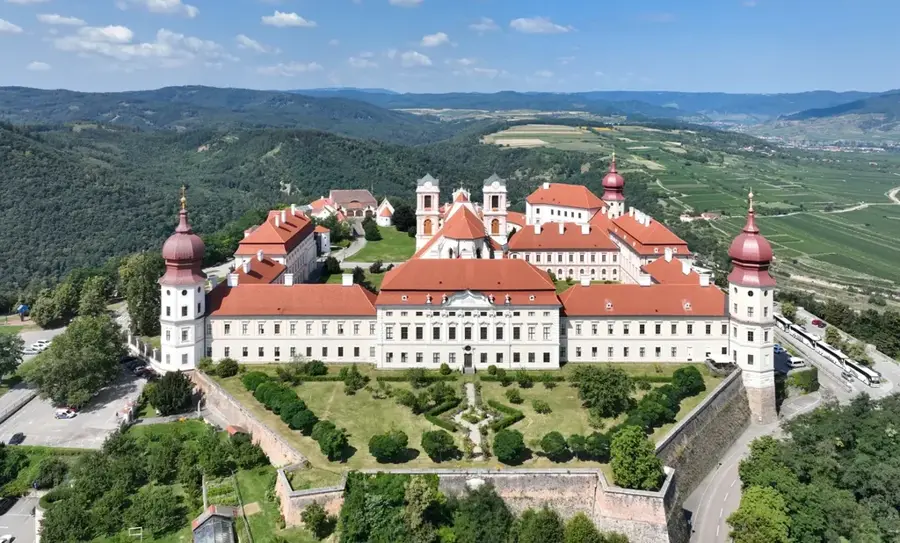
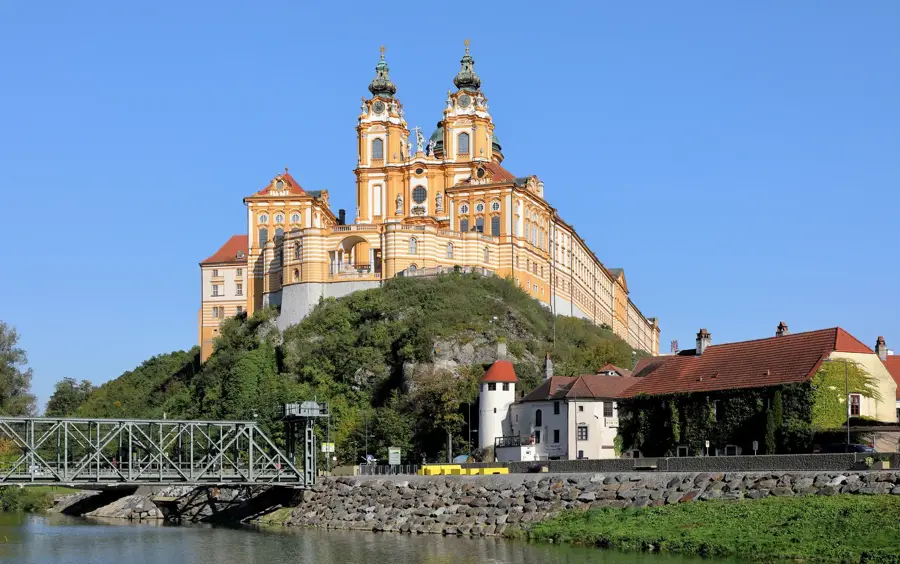
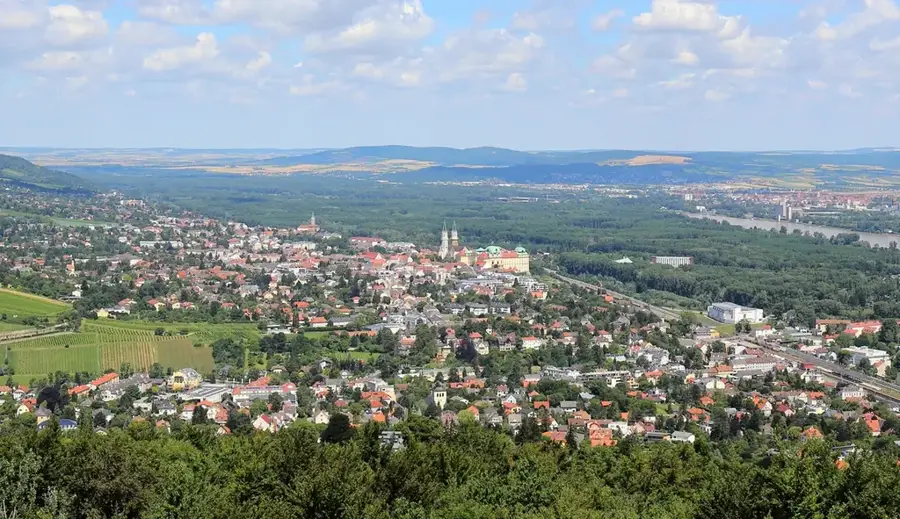
Göttweig Abbey, often referred to as the 'Austrian Montecassino,' stands prominently on a hill at the eastern edge of the Wachau valley in Lower Austria. The Benedictine abbey was founded in 1083 by Bishop Altmann of Passau and has been a UNESCO World Heritage site since 2000. Following a devastating fire in 1718, the monastery was rebuilt in a magnificent Baroque style based on designs by architect Johann Lucas von Hildebrandt. Particularly impressive is the monumental Kaiserstiege (Emperor's Staircase), decorated with a ceiling fresco by Paul Troger and considered one of the most beautiful Baroque staircases. The abbey church contains late Gothic elements at its core but was baroque-styled inside. Göttweig is also known for its extensive graphic collection and its wine culture, which has been cultivated for centuries and forms the economic basis of the monastery.
- Location: Lower Austria, Austria
- Top sights: Filialkirche hl. Blasius · Panoramablick · Waxenberg
- Nearby: Krems an der Donau (6 km)
Best time to visit & climate
The most pleasant time to visit is Jun–Aug.
| Jan | Feb | Mar | Apr | May | Jun | Jul | Aug | Sep | Oct | Nov | Dec | |
|---|---|---|---|---|---|---|---|---|---|---|---|---|
| Avg °C | -2 | -1 | 4 | 9 | 14 | 18 | 20 | 19 | 14 | 9 | 4 | -1 |
| Rain mm | 40 | 33 | 43 | 39 | 84 | 93 | 87 | 89 | 74 | 47 | 39 | 36 |
📋 Practical info
Geography
Facts
- Founded in 1083 by Bishop Altmann of Passau.
- UNESCO World Heritage site of the Wachau since 2000.
- A major fire in 1718 destroyed large parts of the site.
- The Kaiserstiege features the largest ceiling fresco by Paul Troger.
- The graphic collection comprises over 30,000 prints.
- Significant winery with over 900 years of tradition.
Explore nearby
Notable places around
Route planner — Car & Motorhome
Where do you start? We build the route here, with stops and country notes along the way.
© OpenStreetMap contributors · OpenRouteService
Sights in the town Göttweig Abbey (10)
Erentrudiskapelle
Chapel dedicated to Saint Erentrudis.
Stift Göttweig
Benedictine monastery near Krems in Lower Austria.
Museum im Kaisertrakt🏛 museum
Museum located in the imperial wing of the monastery.
Steinzeitliche Wehranlage/befestigte Siedlung, Altsiedlungsbereich
Protected archaeological site of a prehistoric fortification.
Xylophon
Large xylophone installed on the monastery grounds.
Wurzelteller
Exposed root system of a fallen tree.
Sights nearby
Frequently asked questions
Why is Göttweig Abbey called the 'Austrian Montecassino'?
What is the architectural highlight inside?
Does the abbey produce wine?
Can you stay overnight at the abbey?
What can you see in the museum?
Göttweig Abbey: where is it located?
Göttweig Abbey: what is there to see?
Göttweig Abbey: when is the best time to visit?
Göttweig Abbey: why is it worth visiting?

Nearby cities

History & landmarks