Plizio Visual Lab
Juliana Alpine Botanical Garden
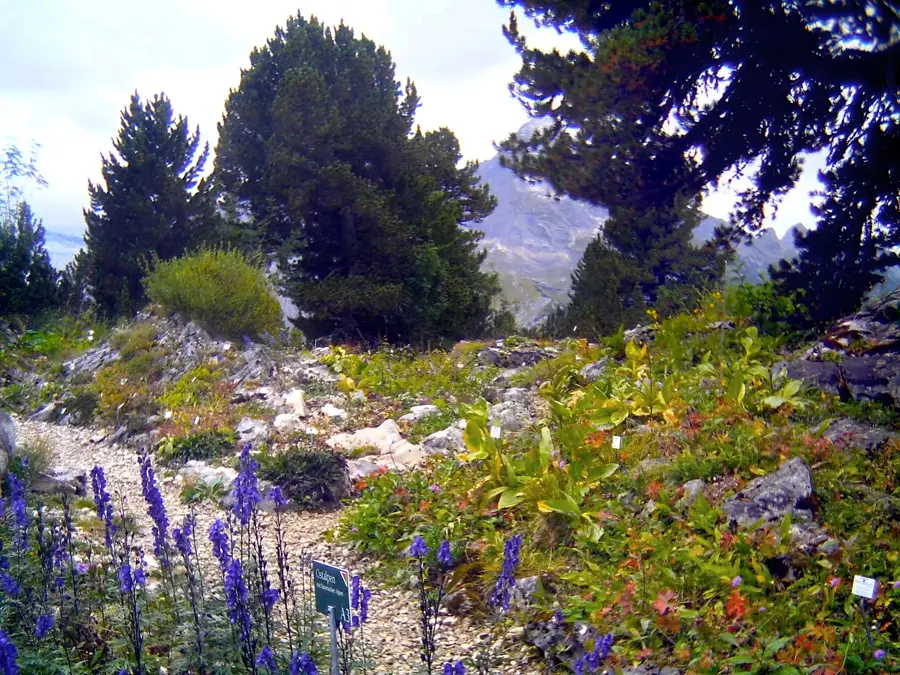
The Juliana Alpine Botanical Garden, located in the Trenta Valley, is the oldest botanical garden of its kind in Slovenia, established in 1926 by Albert Bois de Chesne. Situated at an altitude of approximately 800 meters above sea level, the garden covers an area of 2,500 square meters and is home to about 600 different plant species primarily sourced from the Julian Alps, the Karawanks, and the Kamnik-Savinja Alps. The garden is unique because it presents plants in their natural ecological environments, such as scree slopes, rock crevices, and alpine meadows, rather than in systematic beds. Notable species include endemic plants like the Scabiosa trenta, which holds significant historical and botanical value for the region. Because of its relatively low altitude for alpine flora, the garden requires specialized maintenance and irrigation to ensure the survival of sensitive mountain plants. Today, it is managed by the Slovenian Museum of Natural History and serves as a vital center for biodiversity conservation and environmental education in the heart of the Triglav National Park.
- Location: Slovenia
- Top sights: Dom Trenta · Gozdni rezervat Kukla · Goličica
- Nearby: Pokljuka (15 km)
Best time to visit & climate
The most pleasant time to visit is Jun–Aug.
| Jan | Feb | Mar | Apr | May | Jun | Jul | Aug | Sep | Oct | Nov | Dec | |
|---|---|---|---|---|---|---|---|---|---|---|---|---|
| Avg °C | -4 | -3 | 2 | 6 | 11 | 15 | 17 | 17 | 12 | 8 | 3 | -2 |
| Rain mm | 58 | 66 | 74 | 83 | 110 | 120 | 125 | 140 | 130 | 118 | 119 | 85 |
📋 Practical info
Geography
Facts
- Founded in 1926 by Albert Bois de Chesne to preserve the Julian Alps flora.
- Contains approximately 600 plant species within a 2,500 square meter area.
- Located at an elevation of 800 meters, relatively low for alpine plants.
- Managed by the Slovenian Museum of Natural History since 1962.
- Home to the endemic Scabiosa trenta, a plant of high botanical significance.
- Features a specialized irrigation system to maintain the necessary microclimate.
Explore nearby
Notable places around
Route planner — Car & Motorhome
Where do you start? We build the route here, with stops and country notes along the way.
© OpenStreetMap contributors · OpenRouteService
Sights in the town Juliana Alpine Botanical Garden (3)
Sights nearby
Frequently asked questions
When do most plants bloom?
Is there a guided tour?
Is the Juliana Alpengarten steep?
Where exactly is the garden located?
Are there rare plants there?
Juliana Alpine Botanical Garden: where is it located?
Juliana Alpine Botanical Garden: what is there to see?
Juliana Alpine Botanical Garden: when is the best time to visit?
Juliana Alpine Botanical Garden: why is it worth visiting?

Nearby cities
History & landmarks