Plizio Visual Lab
Gazi Husrev-beg Mosque
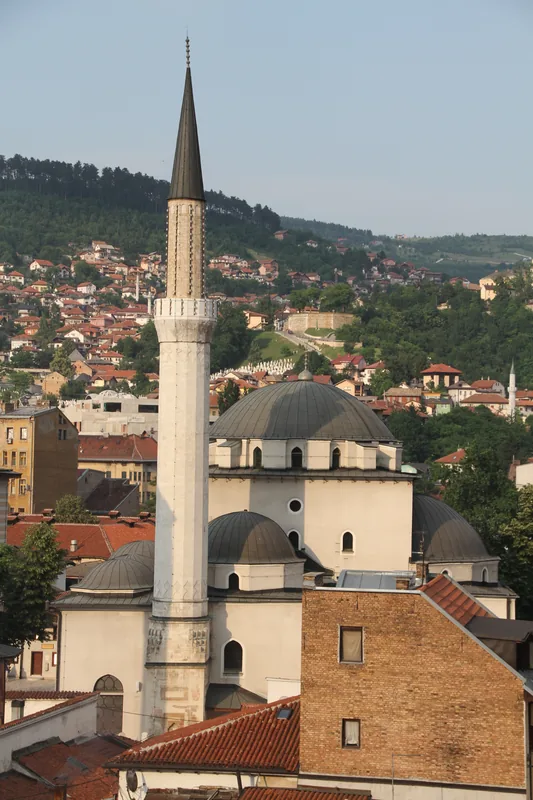
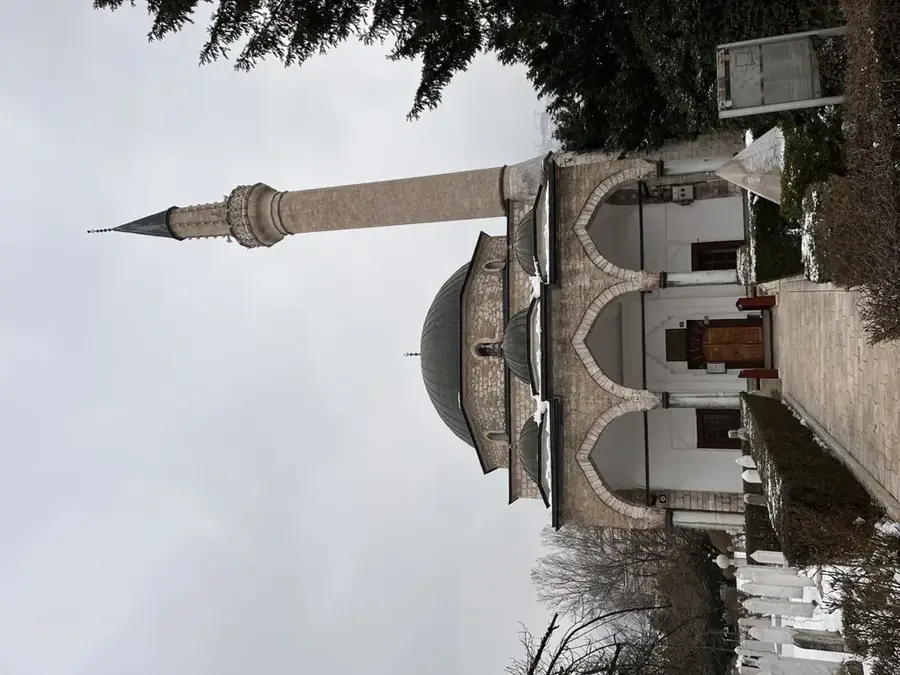
The Gazi Husrev-beg Mosque, frequently referred to simply as the Beg Mosque, is the most important and largest classical Ottoman architectural structure in Bosnia and Herzegovina. It was built in 1530 by the order of the Ottoman governor Gazi Husrev-beg, a nephew of Sultan Bayezid II, right in the center of Sarajevo's historic Baščaršija district. The renowned architect Adjem Esir Ali designed the building with an impressive 26-meter-high main dome surrounded by multiple smaller half-domes. The mosque complex also features a madrasa (Islamic school), a clock tower (Sahat-kula), a richly decorated fountain (Šadrvan) for ritual ablutions, and a mausoleum where Gazi Husrev-beg is buried. In 1898, the mosque made history by becoming the first mosque in the world to be connected to an electrical power grid for lighting. Despite enduring numerous wars, fires, and the 1990s siege, the mosque has remained the undisputed spiritual heart of Bosnian Muslims.
- Location: Bosnia and Herzegovina
- Top sights: Gazi Husrev Bey's (Kuršumli) Madrasa · Gazi Khusrev-beg's Khanqa · Sarajevo Clock Tower
- Nearby: East Sarajevo (6 km)
Best time to visit & climate
The most pleasant time to visit is Jun–Aug.
| Jan | Feb | Mar | Apr | May | Jun | Jul | Aug | Sep | Oct | Nov | Dec | |
|---|---|---|---|---|---|---|---|---|---|---|---|---|
| Avg °C | -2 | -1 | 2 | 7 | 12 | 16 | 18 | 18 | 13 | 9 | 4 | -1 |
| Rain mm | 63 | 64 | 69 | 69 | 99 | 103 | 75 | 61 | 77 | 71 | 74 | 73 |
📋 Practical info
Geography
Facts
- The mosque was completed in 1530 based on the designs of Adjem Esir Ali.
- The main dome has a diameter of about 13 meters and a height of 26 meters.
- Gazi Husrev-beg was the Ottoman governor of Bosnia from 1521 to 1541.
- The mosque first received electrical lighting in 1898.
- The height of the minaret reaches 45 meters.
- The fountain (šadrvan) in the courtyard is used for ritual ablutions.
- Severely damaged in the 1992 Bosnian War, but restored in 1996.
Explore nearby
Notable places around
Route planner — Car & Motorhome
Where do you start? We build the route here, with stops and country notes along the way.
© OpenStreetMap contributors · OpenRouteService
Sights in the town Gazi Husrev-beg Mosque (10)
Sarajevo Clock Tower
Freestanding clock tower in Sarajevo, landmark of the old town.
Old Orthodox Church
Church in Sarajevo, an old Orthodox place of worship.
Galerija Novi Hram
Art museum in Bosnia and Herzegovina, exhibiting contemporary art.
Museum of the Old Serbian Orthodox Church Sarajevo🏛 museum
Museum in Sarajevo, displaying religious art and history.
Museum of Sarajevo🏛 museum
Museum in Sarajevo, Bosnia and Herzegovina, city history.
Tašlihan
Archaeological site in Sarajevo, remains of a caravanserai.
Sights nearby
Frequently asked questions
When was the mosque built?
Can non-Muslims enter?
What is the dress code?
Who was Gazi Husrev-beg?
Is there a museum there?
Gazi Husrev-beg Mosque: where is it located?
Gazi Husrev-beg Mosque: what is there to see?
Gazi Husrev-beg Mosque: when is the best time to visit?
Gazi Husrev-beg Mosque: why is it worth visiting?
Nearby cities