Plizio Visual Lab

Cerová Highlands
Plizio editorial teamData Sources
Mountain
—°4
Cerová Highlands (Slovakia)

Weather…

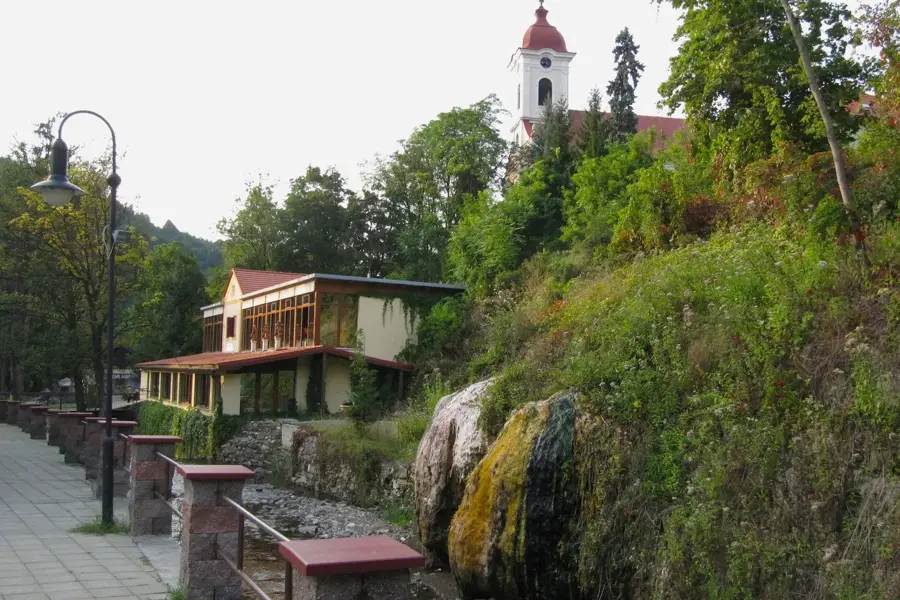
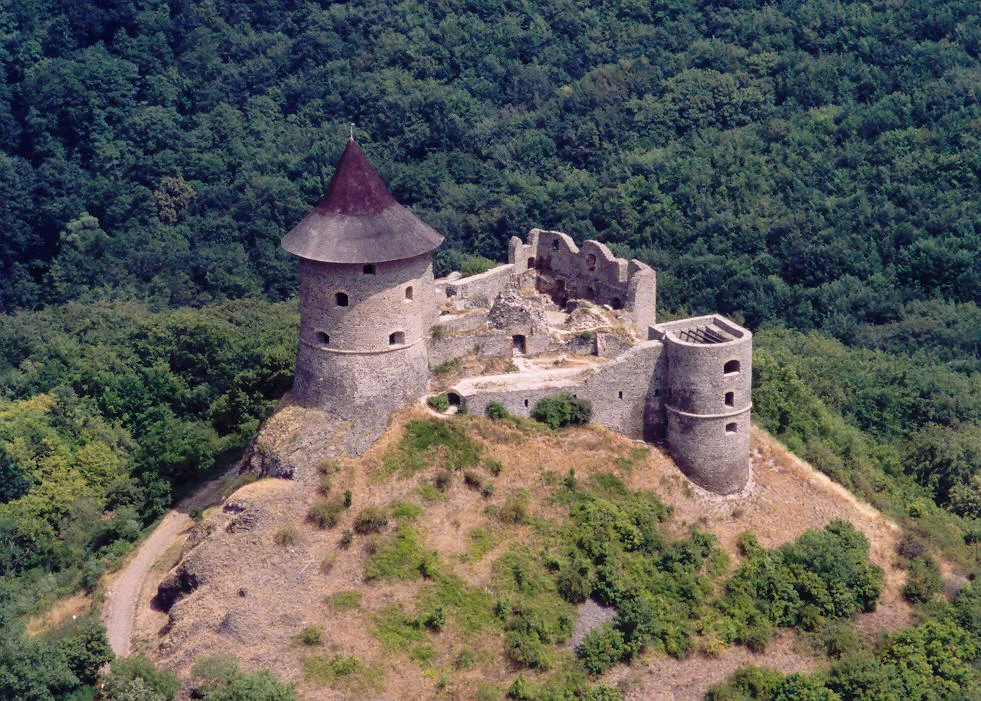
The Cerová Highlands, located in southern Slovakia along the Hungarian border, constitute a unique geological landscape shaped by recent volcanic activity. The range showcases the youngest volcanic processes in Slovakia, which concluded about two million years ago, leaving behind a series of basalt peaks, neck formations, and lava plateaus. The highest point is Karanč (Karancs), standing at 729 meters and situated directly on the international border. One of the most spectacular natural features is the 'Stone Waterfall' at Šomoška Castle, a rare formation of curved hexagonal basalt columns that is considered a global geological rarity. Due to its warm climate, the region hosts a rich variety of Pannonian flora and fauna, including many rare insect and orchid species. Since 1989, the area has been protected as the Cerová vrchovina Protected Landscape Area, preserving its exceptional geological monuments and diverse ecosystems.

Best time to visit & climate

The most pleasant time to visit is Jun–Aug.

JanFebMarAprMayJunJulAugSepOctNovDec
Avg °C-3-14111619222116104-1
Rain mm414444437580836758564947

📋 Practical info

🧭
Getting there
The strongly volcanically shaped hilly landscape is mostly reached via country roads that firmly connect the smaller rural communities in the strict south of the country. Many of the truly most interesting geological formations are comfortably accessible after only a short drive from the nearest major provincial towns.
📅
Best season
Spring and autumn are undeniably the absolute best seasons to visit, as they consistently offer well-suited, rather mild temperatures for the shadeless climbing of the entirely bare volcanic cones. The intensely southern summer sun often burns unrelentingly hot here, which firmly makes setting out early in the morning the best choice.
⛰️
Terrain & paths
The highly specific ground changes abruptly from lovely agricultural surfaces and sparse oak forests right to steep, decidedly rocky ascents on the solidified basalt formations. The distinct geological remnants of the former vents require exceptionally secure navigation directly over loose, sometimes fully porous lava rock.
🎒
What to bring
Firm shoes with a rigorously hard sole are extremely important precisely to completely avoid twisting an ankle or quickly getting blisters directly on the sharp, loose basalt chunks. Because natural, entirely clean water sources are very rare in this special geological zone, carrying abundant drinking water is unconditionally necessary.
🅿️
Parking
Parking options are mostly found in a very unbureaucratic manner clearly on the edges of the small villages or directly near the more famous historic castle ruins. These truly informal spots are generally quite small, yet they are completely sufficient for the usually highly manageable flow of tourists deeply venturing into this region.
⚠️
Safety
At the rough edges of the old basalt quarries and directly on the completely steep, natural rock faces, special caution is firmly required because the dark rock can be unexpectedly brittle. After any significant downpours, the deeply rocky volcanic paths additionally transform rapidly into treacherous, incredibly smooth slides.
⏱️
Time needed
A deeply targeted, relatively short excursion directly to one of the striking geological sights, such as a prominent stone waterfall, can easily be managed in just two to three hours. Anyone who wants to truly explore entirely different formations and completely cross the ridges should securely plan for a densely packed full day.

Geography

Coordinates
48.21000, 19.89000

Facts

  • The highest peak is Karanč, reaching 729 meters.
  • It is home to the youngest extinct volcanoes in Slovakia.
  • The Šomoška stone waterfall is a world-renowned basalt formation.
  • The Protected Landscape Area was established in 1989.
  • The region features unique Pannonian steppe vegetation.
  • It borders the Karancs-Medves Protected Area in Hungary.

Explore nearby

Notable places around
Route planner — Car & Motorhome

Where do you start? We build the route here, with stops and country notes along the way.

Vehicle
Only stops with (optional):

© OpenStreetMap contributors · OpenRouteService

Sights in the town Cerová Highlands (4)

Monosa

Monosa is a mountain in Slovakia, part of the Cerová Highlands.

Soví vrch

Soví vrch is a mountain in Slovakia.

Rakvica

Rakvica is a mountain in Slovakia.

Kostol sv. Michala archanjela

The Church of Saint Michael the Archangel is a church in the area.

Sights nearby

Frequently asked questions

What geological specialty can be found here?
The Cerová Highlands are known for their extinct volcanoes and the impressive basalt waterfall near Šomoška Castle.
Where is the Cerová Highlands located?
It is located in southern Slovakia on the border with Hungary, south of Lučenec.
What is the highest peak?
Karanč is the highest elevation of the range at 725 meters.
Are there educational trails for tourists?
Yes, there are several educational trails, such as the path to Šomoška Castle, which explains geological and floristic details.
When is a visit most worthwhile?
Spring and autumn are handy, as the climate in southern Slovakia is very mild.
Cerová Highlands: where is it located?
Cerová Highlands is located in Slovakia.
Cerová Highlands: what is there to see?
Highlights include Monosa, Soví vrch, Rakvica.
Cerová Highlands: when is the best time to visit?
The most pleasant time to visit is Jun, Aug.
Cerová Highlands: why is it worth visiting?

The Cerová Highlands, located in southern Slovakia along the Hungarian border, constitute a unique geological landscape shaped by recent volcanic activity.
View on map → The Top 50 Attractions → OpenStreetMap →
Europe
Explore with Plizio Discover more places in Europe
More places in Slovakia →

Nearby cities

History & landmarks