Plizio Visual Lab

Potala Palace
Plizio editorial teamData Sources
tourist-attraction
—°10
Potala Palace (China)

Weather…

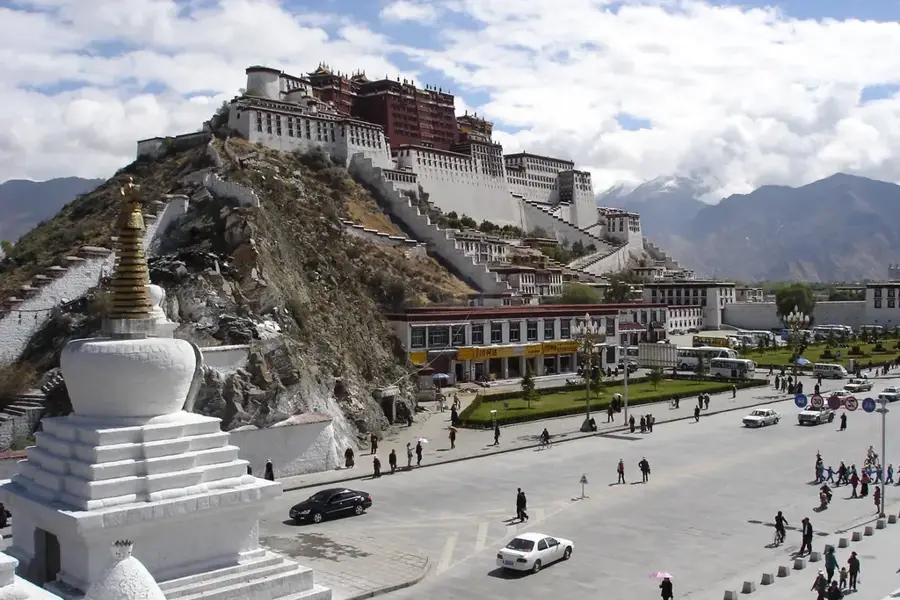
The Potala Palace in Lhasa, perched atop Marpo Ri (Red Hill) overlooking the Lhasa Valley, is the grandest landmark of Tibet and served as the winter residence of the Dalai Lamas until 1959. The current monumental structure was commissioned in 1645 by the fifth Dalai Lama and consists of two primary sections: the administrative White Palace and the religious Red Palace. Rising 117 meters and spanning 13 stories, the fortress-like complex houses more than 1,000 rooms, thousands of shrines, and approximately 200,000 religious statues. The Red Palace at the center is dedicated to Buddhist study and prayer, containing the lavishly decorated golden stupas of past Dalai Lamas, some encrusted with tons of precious metals and gems. Its massive stone walls, measuring up to five meters thick at the base, combined with its golden roofs that glitter under the high-altitude sun, make it a masterpiece of Tibetan architecture. Designated a UNESCO World Heritage site in 1994, it remains a potent symbol of Tibetan identity and a profound destination for pilgrims from across the globe.

Best time to visit & climate

The most pleasant time to visit is May, Jun, Sep.

JanFebMarAprMayJunJulAugSepOctNovDec
Avg °C-5-3159121211950-3
Rain mm124103481147119531011

📋 Practical info

🚪
Visiting
Exploring this monumental winter residence involves navigating numerous steep staircases and high-altitude corridors, making it a physically demanding but immensely rewarding visit. The interior reveals countless chapels, intricate murals, and the sacred tombs of past Dalai Lamas.
🕒
Typical hours
The palace is strictly regulated with limited daily visitor quotas, generally opening in the morning and closing by late afternoon. Your exact admission time will be assigned upon ticket purchase, and punctuality is absolutely critical to guarantee entry.
📷
Photography
Capturing the majestic exterior of the fortress from the surrounding squares and designated viewpoints is highly encouraged and yields iconic images. Inside the complex, however, photography is completely forbidden to protect the ancient artifacts and maintain spiritual sanctity.
⏱️
Time needed
Due to strict visitor management, the interior tour is carefully timed and typically restricted to precisely one hour per group. However, you should allocate additional hours for the extensive security checks, ascending the exterior steps, and exploring the adjacent gardens.
Combine with
A visit here is traditionally paired with a walk around the holy Jokhang Temple and the bustling Barkhor Street circuit. Exploring these nearby sites provides a profound immersion into the deep religious devotion and daily cultural life of the local people.
🧭
Getting there
The colossal structure dominates the central skyline and is readily reached by short taxi rides or on foot from central accommodations. Be prepared for a rigorous physical ascent once you arrive, as the main entrances require climbing substantial staircases at a high elevation.
💡
Insider tip
It is absolutely imperative to acclimate to the extreme altitude for at least a couple of days before attempting the strenuous climb to the palace. Bring your original passport, dress modestly, and pace yourself slowly to avoid severe altitude sickness during the ascent.

Geography

Coordinates
29.65750, 91.11720

Facts

  • Construction of the modern structure began in the year 1645.
  • Situated at an altitude of 3,700 meters above sea level.
  • The building rises 13 stories high, reaching 117 meters.
  • Contains more than 1,000 rooms and 200,000 religious statues.
  • Recognized as a UNESCO World Heritage site in 1994.
  • Served as the winter residence of Dalai Lamas until 1959.

Explore nearby

Notable places around
Route planner — Car & Motorhome

Where do you start? We build the route here, with stops and country notes along the way.

Vehicle
Only stops with (optional):

© OpenStreetMap contributors · OpenRouteService

Sights in the town Potala Palace (10)

Garu Nunnery⛪ religious

This secluded nunnery north of Lhasa is considered one of the oldest in the entire region.

Monument to the Peaceful Liberation of Tibet🏺 historical

A massive white monument in Potala Square commemorating the political integration of Tibet.

Chagpori🌿 nature

This sacred hill, known as the 'Iron Mountain', features one of the most famous panoramic views of the Potala Palace.

Tsomon Ling⛪ religious

One of the four 'royal' monasteries of Lhasa, which once served as a residence for high dignitaries of the Gelug school.

Muru Nyingba Monastery⛪ religious

A small, historically significant monastery near the Jokhang Temple, known for its ornate wood carvings.

Lhalu Wetlands National Nature Reserve🌿 nature

This wetland area on the edge of Lhasa serves as an important nature reserve and is often called the 'green lung' of the city.

Drepung Monastery📍 landmark

Once the world's largest monastery, this Gelugpa institution at the foot of Gambo Utse mountain impresses with its vast scale.

Nechung Monastery📍 landmark

The seat of the State Oracle of Tibet in Lhasa, famous for its elaborate and bustling ritual wall paintings.

Norbulingka🌳 park

The former summer residence of the Dalai Lamas, featuring extensive gardens and Tibet's largest man-made park.

Potala Palace📍 landmark

This monumental UNESCO-listed winter palace perched atop Red Hill served as the former administrative heart of Tibet.

Sights nearby

Frequently asked questions

How high is the Potala Palace located?
The palace is located at an altitude of about 3,700 meters above sea level.
Is there a time limit for the visit?
During peak season, the duration inside is often limited to 1 hour.
Are there many stairs to climb?
Yes, there are hundreds of steps; take it slow due to the altitude.
Is photography allowed inside?
No, photography is strictly prohibited inside the chapels and rooms of the palace.
Do I need a special permit?
Yes, foreigners need a Tibet Travel Permit (TTP) in addition to their visa.
Potala Palace: where is it located?
Potala Palace is located in China.
Potala Palace: what is there to see?
Highlights include Garu Nunnery, Monument to the Peaceful Liberation of Tibet, Chagpori.
Potala Palace: when is the best time to visit?
The most pleasant time to visit is May, Jun, Sep.
Potala Palace: why is it worth visiting?

The Potala Palace in Lhasa, perched atop Marpo Ri (Red Hill) overlooking the Lhasa Valley, is the grandest landmark of Tibet and served as the winter residence of the Dalai Lamas until 1959.
View on map → The Top 50 Attractions → OpenStreetMap →
Asia
Explore with Plizio Discover more places in Asia
More places in China →

Nearby cities

History & landmarks
Nature
More places