Plizio Visual Lab
Milos
ℹ️Practical info — Milos
▾
🌤 Weather — 5 days
📍 Nearby
Sights nearby
💡 Tips
- Boat tours are essential to see Kleftiko and other rock formations; book a few days in advance in peak season.
- Keep in mind that many beaches like Tsigrado require climbing down a steep ladder.
- The northern beaches (like Sarakiniko) are best visited when the wind blows from the south.
- Renting an ATV or 4x4 is recommended if you want to explore the western part of the island.
- Arrive at Sarakiniko at sunrise for a surreal, moon-like experience without the crowds.
🍽 Food
Small cheese pies traditional to Milos. Available in almost every local bakery in Adamas and Plaka.
A unique sweet watermelon pie. Find it in traditional bakeries and sweet shops in Pollonia.
Enjoy fresh catch at the "syrmata" (traditional boat houses) converted into tavernas in Klima or Firopotamos.
🛍 Shopping · 🧘 Quiet spots
Excellent culinary souvenirs available in small grocery stores in Plaka.
Small pumice stones or obsidian pieces from local craft shops, reflecting the island's geology.
Located above Klima, offering a very peaceful atmosphere and great views over the bay.
Usually much quieter than Plaka for sunset views, with gentle waters.
Water temperature…
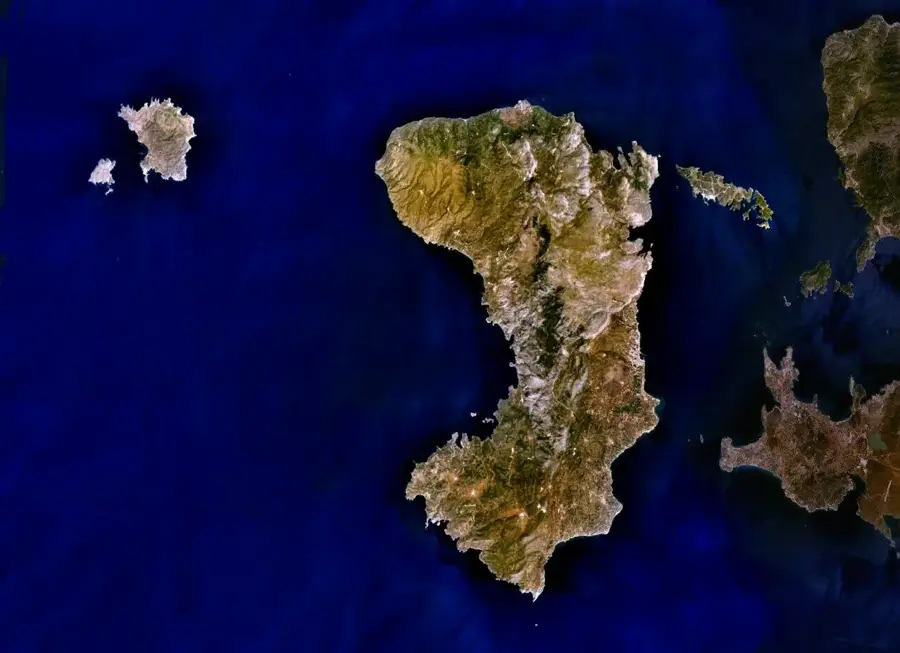
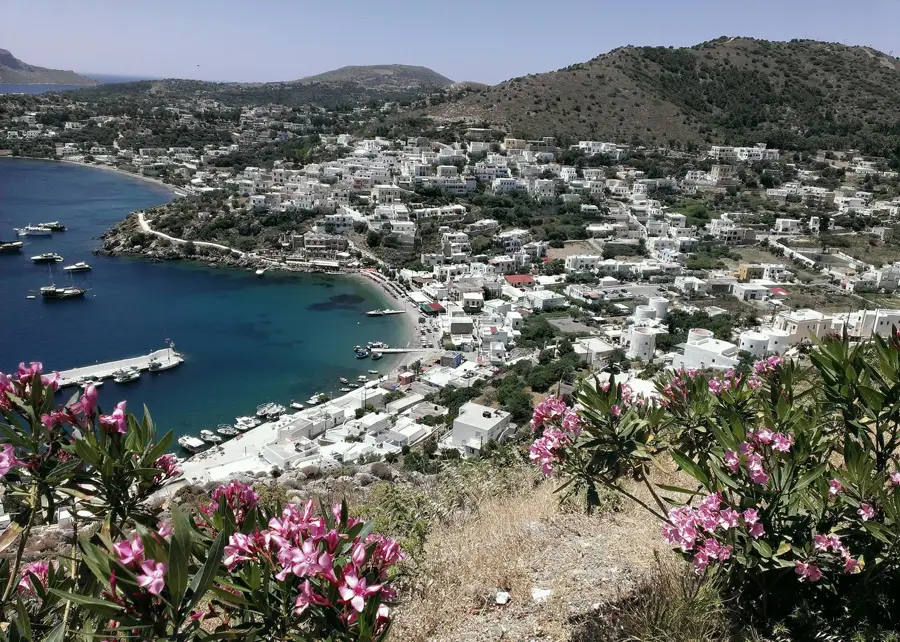
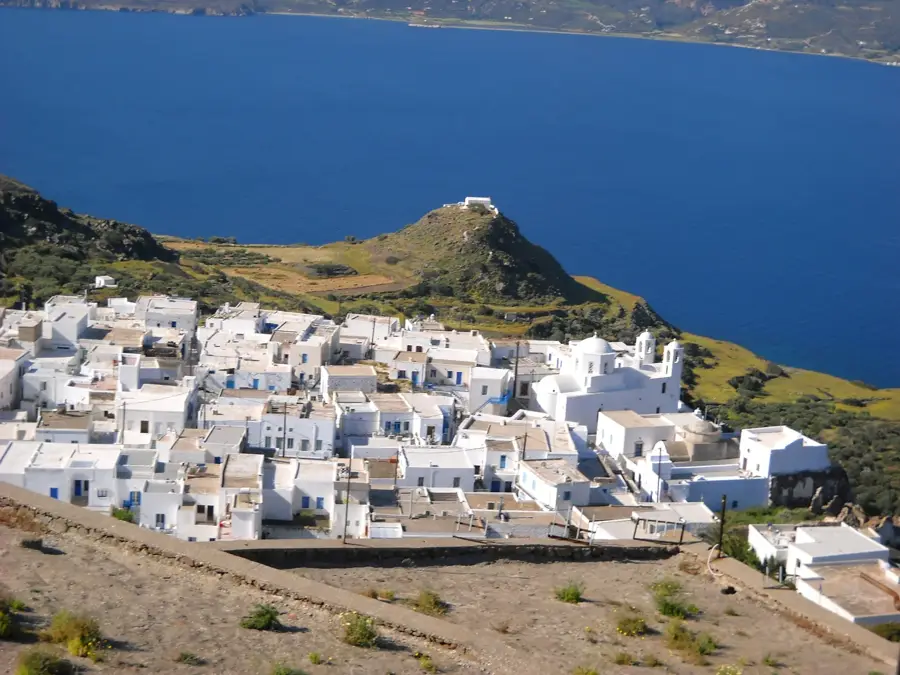
The topography of Milos is defined by a collapsed caldera that forms the island's horseshoe shape and provides one of the largest natural harbors in the Mediterranean. Its volcanic past resulted in colorful rock formations, obsidian fields, and thermal springs. For centuries, the island's economy relied on mining, evidenced today by the abandoned sulfur mines with industrial buildings carved into the yellow-red cliffs of Theiafes, as well as active bentonite and perlite quarries. Historically, it is the discovery site of the famous Venus de Milo statue and the location of Greece's largest early Christian catacombs. The island's 70-plus beaches exhibit extreme geological diversity. On the southern coast, Agia Kyriaki is known for its white sand warmed by subterranean thermal vents. Also in the south is Gerontas, featuring a distinctive rock arch, and Tria pigadia, covered with volcanic ash and perlite fragments. Kastanas beach is bordered by dark sand and purple rocks, while Katergo stands as the robust remains of a shoreline quarry. Among the rockier coastal segments, Kipoi is named for its characteristic fissures, while Agios Sostis and Kolybisionas add to the sheltered coves on the eastern side. Within the central caldera, the port of Psathi serves as a key maritime link. Many of these coastal stretches can only be reached by boat or via steep, unpaved mining roads. The waters around Milos vary from deep blue to emerald green, heavily influenced by the dissolved mineral content.
- Location: Greece
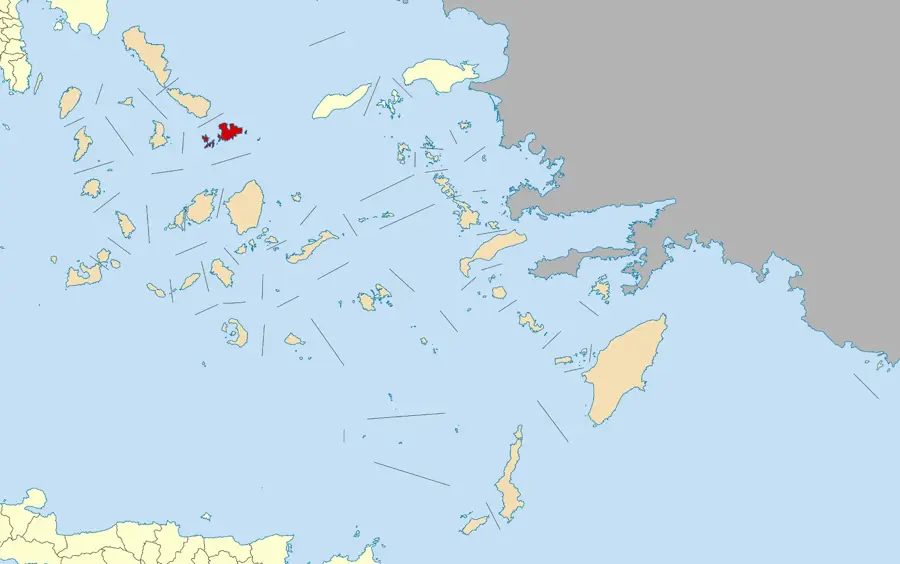
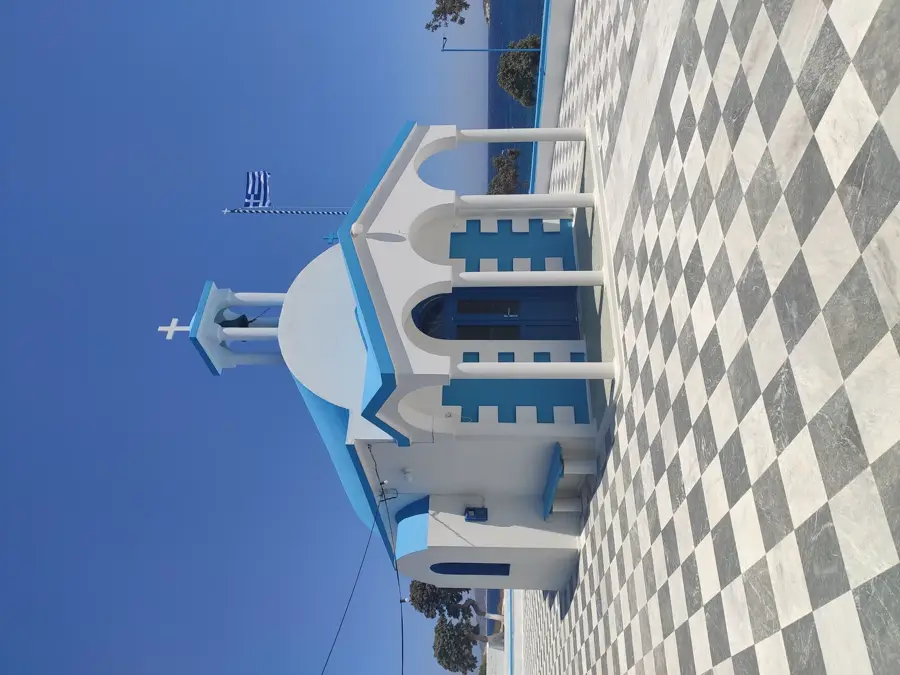
- Top sights: Palaiochori Beach · Church of the holy virgin Portiani
- Nearby: Pollonia (6 km)
- Population: ~819
Best time to visit & climate
The most pleasant time to visit is May, Jun, Oct.
| Jan | Feb | Mar | Apr | May | Jun | Jul | Aug | Sep | Oct | Nov | Dec | |
|---|---|---|---|---|---|---|---|---|---|---|---|---|
| Avg °C | 14 | 14 | 15 | 16 | 19 | 23 | 26 | 26 | 24 | 21 | 18 | 15 |
| Rain mm | 103 | 89 | 56 | 29 | 17 | 5 | 2 | 3 | 20 | 56 | 80 | 106 |
Geography
Facts
- Horseshoe-shaped volcanic caldera
- Remains of sulfur mining at Theiafes
- Discovery site of the Venus de Milo
- Early Christian catacombs
- Volcanically warmed sand at Agia Kyriaki
- Natural rock arch at Gerontas beach
- Perlite rocks of Tria pigadia
- Colorful mineral formations at Kastanas
Explore nearby
Notable places around
Route planner — Car & Motorhome
Where do you start? We build the route here, with stops and country notes along the way.
© OpenStreetMap contributors · OpenRouteService
Sights in the town Milos (2)
Frequently asked questions
What is the most spectacular beach in Milos?
What is the fishing village of Klima known for?
Was the Venus de Milo found here?
Are there catacombs in Milos?
What is the best way to explore the coast?
Milos: where is it located?
Milos: what is there to see?
Milos: when is the best time to visit?
Milos: why is it worth visiting?

Nearby cities