Plizio Visual Lab
Vratar Fortress
Weather…
Water temperature…
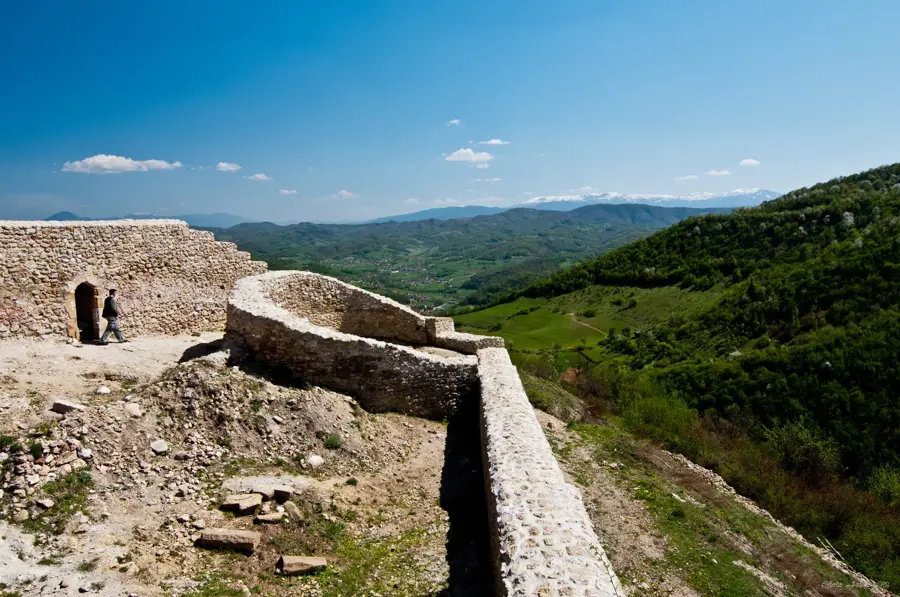
Vratar Fortress is a medieval fortification that stands majestically on a steep cliff above the confluence of the Žepa River into the Drina. It was one of the key strategic points held by the powerful Bosnian noble family Pavlović during the 14th and 15th centuries. The fortress served to control river traffic on the Drina and the land route through the canyons of eastern Bosnia. The complex consists of two parts, the upper and lower towns, which were connected by defensive walls, fragments of which are still visible today. Vratar is first mentioned in historical documents in 1444, when King Tvrtko II reinforced the strategic significance of the site. Its geographical isolation and difficult-to-access location protected the fortress from conquest for a long time, until it eventually fell under Ottoman rule. Today, the site is a significant archaeological monument, providing insights into medieval Bosnian military architecture and the feudal organization of the kingdom.
- Location: Bosnia and Herzegovina
- Nearby: Petrovići (9 km)
Best time to visit & climate
The most pleasant time to visit is Jun–Aug.
| Jan | Feb | Mar | Apr | May | Jun | Jul | Aug | Sep | Oct | Nov | Dec | |
|---|---|---|---|---|---|---|---|---|---|---|---|---|
| Avg °C | 0 | 1 | 6 | 11 | 15 | 20 | 22 | 23 | 17 | 12 | 7 | 1 |
| Rain mm | 60 | 60 | 65 | 65 | 94 | 94 | 67 | 63 | 74 | 66 | 65 | 66 |
📋 Practical info
Geography
Facts
- Vratar was first mentioned in official documents in 1444.
- The fortress belonged to the influential noble family Pavlović.
- It is situated at a strategic point above the confluence of the Žepa River.
- The complex includes two separate fortified areas (upper and lower town).
- Significant medieval Stećci tombstones are located in the vicinity.
- The fortress was designated a National Monument of Bosnia and Herzegovina in 2005.
Explore nearby
Notable places around
Route planner — Car & Motorhome
Where do you start? We build the route here, with stops and country notes along the way.
© OpenStreetMap contributors · OpenRouteService
Sights in the town Vratar Fortress (1)
Sights nearby
Frequently asked questions
Where is the Vratar fortress located?
Is the fortress well preserved?
How difficult is the climb?
Are there guided tours?
What is the historical significance of Vratar?
Vratar Fortress: where is it located?
Vratar Fortress: when is the best time to visit?
Vratar Fortress: why is it worth visiting?
Nearby cities