Plizio Visual Lab
Jerada
ℹ️Practical info — Jerada
▾
🌤 Weather — 5 days
📍 Nearby
Sights nearby
💡 Tips
- Jerada is off the beaten tourist path; expect few English speakers, so basic French or Arabic is very helpful.
- Explore the remnants of the old coal mining infrastructure for unique, brutalist-style photography.
- The city comes alive in the evening; join the locals for a walk in the main square.
- Hire a local taxi (Grand Taxi) if you want to see the more distant historic mine sites.
🍽 Food
The fragrant smoke from street vendors grilling spiced lamb skewers fills the central squares in the evening.
A robust tomato, lentil, and chickpea soup available at traditional cafes, first-rate for the cooler mountain evenings.
In this region, the classic Moroccan mint tea is often infused with unique local wild herbs.
🛍 Shopping · 🧘 Quiet spots
Rich, unrefined olive oil from farms surrounding the Oriental region, best bought at the central market.
The souk in Jerada gives excellent, freshly ground spices heavily used in the regional cuisine.
A pine forest surrounding the city providing a peaceful environment for a walk away from the urban center.
The Miners' Park is a green space dedicated to the city's coal mining heritage, offering shaded benches.
Water temperature…
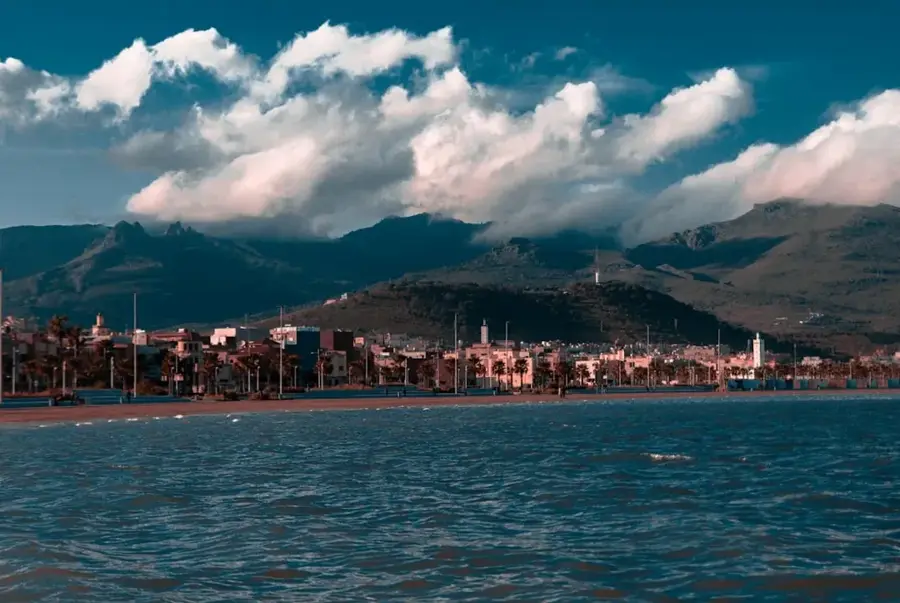
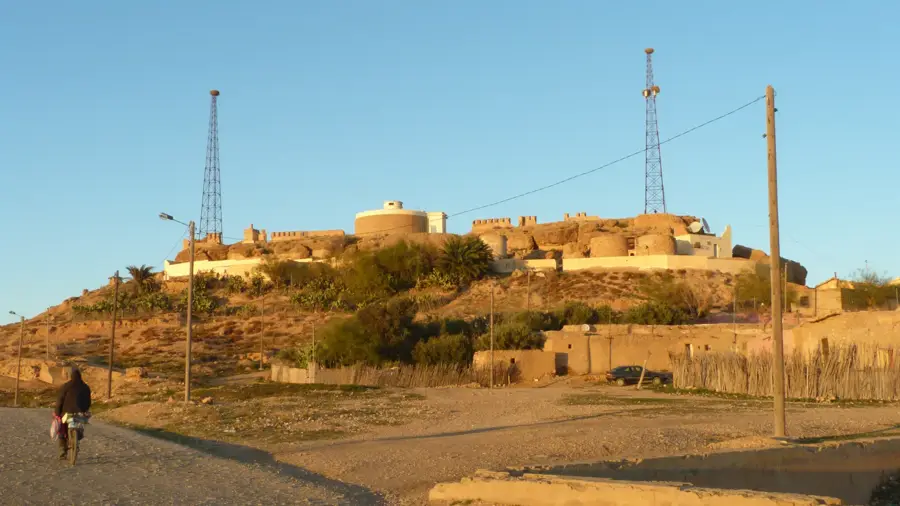
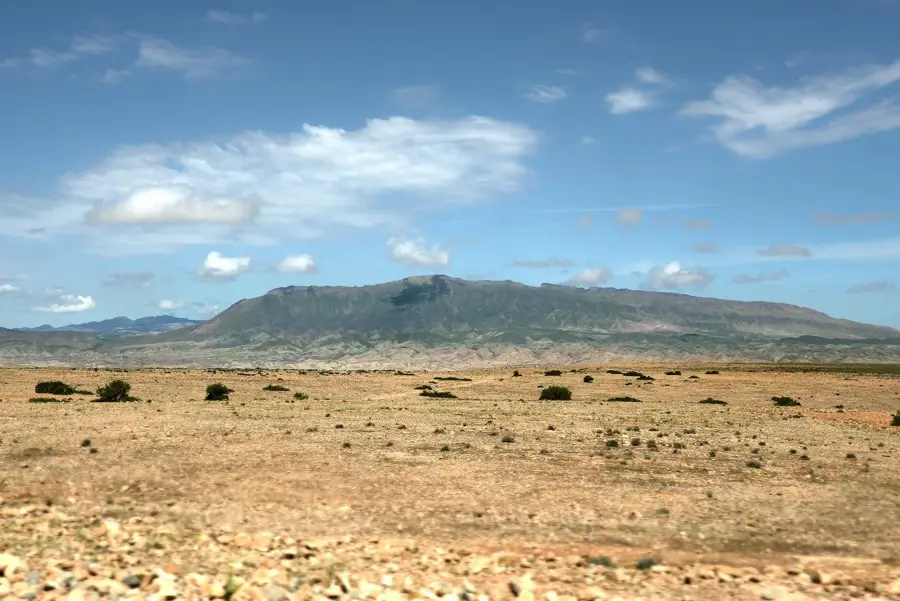
Jerada is located in eastern Morocco within the Oriental region, near the Algerian border, and is historically defined by its coal mining industry. The town's rapid growth began in 1927 following the discovery of significant anthracite deposits in the surrounding area. During the French Protectorate era, extensive infrastructure was developed to facilitate industrial-scale mining, turning Jerada into one of North Africa's primary energy hubs for much of the 20th century. Geographically, the region features arid highlands and sparse vegetation typical of eastern Morocco's steppe landscapes. The official closure of the state-run mines in 1998 led to a challenging period of economic transition, resulting in social unrest and a shift toward alternative livelihoods. Despite the decline in mining, the city remains an industrial center due to its large thermal power plant, which continues to supply a significant portion of Morocco's electricity. Recent government initiatives aim to diversify the local economy by supporting agriculture and small-scale manufacturing. Jerada's identity is deeply rooted in its working-class history, shaped by decades of labor migration from various parts of the country.
- Location: Morocco
- Nearby: Oujda (47 km)
- Population: ~47.507 (2025)
Best time to visit & climate
The most pleasant time to visit is May, Jun, Sep.
| Jan | Feb | Mar | Apr | May | Jun | Jul | Aug | Sep | Oct | Nov | Dec | |
|---|---|---|---|---|---|---|---|---|---|---|---|---|
| Avg °C | 7 | 8 | 11 | 14 | 18 | 23 | 27 | 26 | 22 | 17 | 11 | 8 |
| Rain mm | 61 | 45 | 49 | 56 | 39 | 10 | 7 | 21 | 35 | 60 | 71 | 53 |
Geography
Facts
- Anthracite coal was first discovered in the Jerada basin in 1927.
- The mining sector employed over 9,000 workers at its peak in the 1980s.
- The state-owned mining company Charbonnages du Maroc closed in 1998.
- Jerada's thermal power station contributes to the national electricity grid.
- The town is located at an altitude of approximately 1,100 meters.
- A new industrial zone is being developed to reduce reliance on mining.
Explore nearby
Notable places around


Route planner — Car & Motorhome
Where do you start? We build the route here, with stops and country notes along the way.
© OpenStreetMap contributors · OpenRouteService
Sights in the town Jerada (1)
Frequently asked questions
What is special about Jerada?
Can you visit the old mines?
What is there to discover nearby?
When is the best time to travel?
Are there hotels on site?
Jerada: where is it located?
Jerada: when is the best time to visit?
Jerada: why is it worth visiting?

Nearby cities
History & landmarks
Nature
More places