Plizio Visual Lab
Alsatian Plain
The Alsatian Plain is a prominent lowland in northeastern France, stretching between the Vosges Mountains to the west and the Rhine River to the east. It constitutes the western portion of the Upper Rhine Graben, a major tectonic rift valley that formed approximately 35 million years ago. Spanning roughly 170 kilometers in length and up to 30 kilometers in width, the plain is characterized by its exceptionally fertile soils, composed mainly of loess and Rhine alluvium. The Vosges range acts as a rain shadow, protecting the plain from Atlantic moisture and creating a microclimate that is notably dry and sunny, which is first-rate for the region's world-famous vineyards. Beyond viticulture, the plain is a densely populated industrial and political hub, anchored by the cities of Strasbourg, Colmar, and Mulhouse. Ecologically, it preserves important wetland areas known as 'Rieds,' while historically, its position as a borderland has shaped a unique Franco-German cultural identity that remains evident in its architecture, language, and governance.
- Location: Grand Est, France
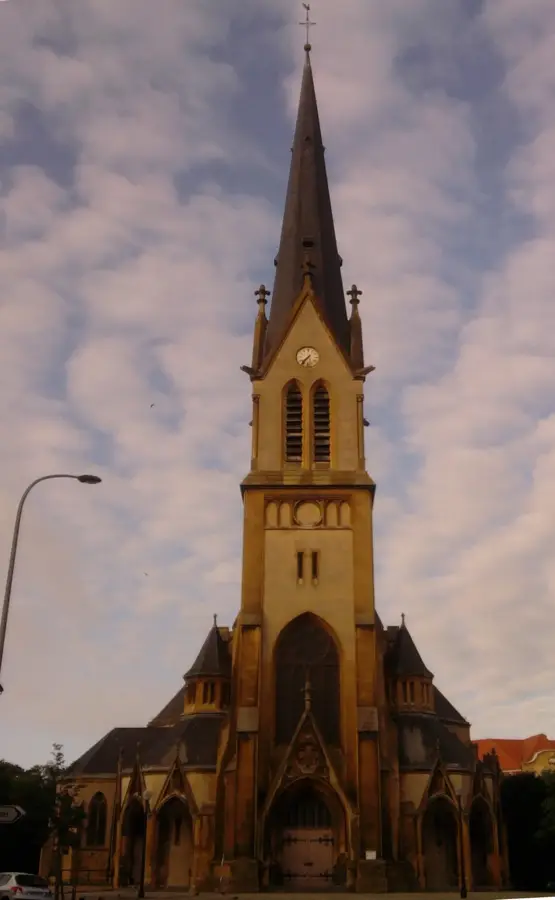
- Top sights: Chapelle Notre-Dame-de-Lourdes · Église Saint-Martin · Saint-Maurice Abbey Church
- Nearby: Sélestat (6 km)
Best time to visit & climate
The most pleasant time to visit is Jun–Aug.
| Jan | Feb | Mar | Apr | May | Jun | Jul | Aug | Sep | Oct | Nov | Dec | |
|---|---|---|---|---|---|---|---|---|---|---|---|---|
| Avg °C | 1 | 2 | 5 | 10 | 14 | 18 | 20 | 20 | 15 | 11 | 5 | 2 |
| Rain mm | 57 | 46 | 51 | 49 | 83 | 72 | 75 | 76 | 56 | 68 | 59 | 66 |
📋 Practical info
Geography
Facts
- The plain's elevation averages around 150 meters above sea level.
- It is part of the 'Blue Banana,' a corridor of high population density in Europe.
- The Vosges rain shadow results in only 500 mm of annual rainfall in some spots.
- Strasbourg is the formal seat of the European Parliament in the plain.
- The 'Grand Canal d'Alsace' is a major canal running parallel to the Rhine.
- Ancient Rhine forests, called 'Ried,' are protected nature reserves.
Explore nearby
Notable places around
Route planner — Car & Motorhome
Where do you start? We build the route here, with stops and country notes along the way.
© OpenStreetMap contributors · OpenRouteService
Sights in the town Alsatian Plain (3)
Saint-Maurice Abbey Church
An abbey church in the Bas-Rhin department, a historic ecclesiastical building.
Sights nearby
Frequently asked questions
What is the climate like in the Alsace Plain?
What role does viticulture play?
Which cities are worth visiting?
When is the best time to visit?
What is the terrain like for cyclists?
Alsatian Plain: where is it located?
Alsatian Plain: what is there to see?
Alsatian Plain: when is the best time to visit?
Alsatian Plain: why is it worth visiting?

Nearby cities