Plizio Visual Lab
Covarrubias
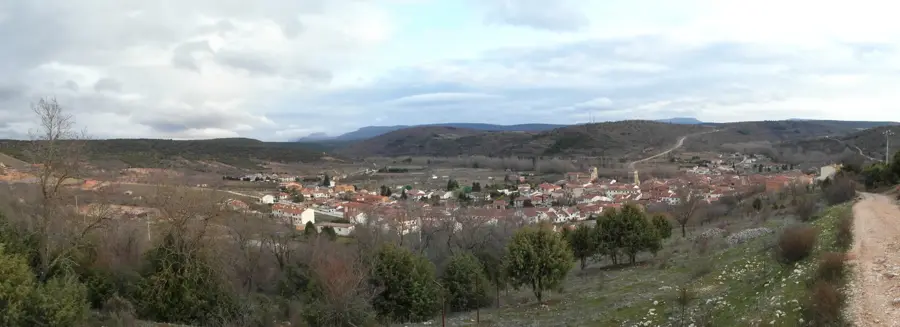
Tucked away on the banks of the Arlanza River, Covarrubias is known as the 'Cradle of Castile' due to its historical importance in the early days of the Castilian County. The village is a pristine example of traditional Castilian folk architecture, characterized by white-plastered walls, dark timber beams, and overhanging upper floors. Its entire historic center is protected, offering a walk through centuries-old streets that reflect the essence of rural Spain. The town's landmark is the Fernán González Tower (or Doña Urraca Tower), a 10th-century Mozarabic fortress with a unique truncated pyramid shape. Another essential visit is the Collegiate Church of San Cosme and San Damián, which houses the tombs of early Castilian counts. Surprisingly, the village has a strong link to Norway; the nearby Chapel of St. Olav was built to fulfill a 13th-century promise made to Princess Kristina of Norway, who traveled to Spain to marry a Castilian prince. Located 40 km south of Burgos, Covarrubias is famous for its 'morcilla' (blood sausage) and Arlanza wines. The best time to visit is during the cherry harvest in summer or in autumn when the riverside foliage turns gold. Combining a visit here with the nearby Monastery of Santo Domingo de Silos makes for a great historical itinerary through old Castile.
- Location: Galicia, Spain
- Top sights: Palacio de Fernán González · Casa de Doña Sancha · Museo del Libro
- Nearby: Burgos (35 km)
- Population: ~621 (2012)
Best time to visit & climate
The most pleasant time to visit is Jun–Aug.
| Jan | Feb | Mar | Apr | May | Jun | Jul | Aug | Sep | Oct | Nov | Dec | |
|---|---|---|---|---|---|---|---|---|---|---|---|---|
| Avg °C | 3 | 3 | 6 | 9 | 13 | 18 | 20 | 20 | 17 | 12 | 6 | 3 |
| Rain mm | 52 | 40 | 51 | 60 | 52 | 41 | 21 | 20 | 29 | 65 | 62 | 49 |
📋 Practical info
Geography
Facts
- Cradle of old Castile
- Timber-framed stone houses
- 10th-century Mozarabic tower
- Tomb of Princess Kristina
- Historic collegiate church
- Province of Burgos
- Located on Arlanza River
- Famous for cherry orchards
Explore nearby
Notable places around
Route planner — Car & Motorhome
Where do you start? We build the route here, with stops and country notes along the way.
© OpenStreetMap contributors · OpenRouteService
Sights in the town Covarrubias (10)
Taller ConTiento
An arts centre in Covarrubias offering workshops and creative activities.
Huerto del Cura
A theatre in Covarrubias, set in a former orchard.
Casa del Obispo Peña
A manor house in Covarrubias, former bishop's residence.
Casa del Boticario
A historic building in Covarrubias, once housed an apothecary.
Rollo Jurisdiccional
A monument in Covarrubias, a medieval jurisdictional pillar.
Capilla de San Olav
A chapel in Covarrubias dedicated to Saint Olav.
Sights nearby
Frequently asked questions
What is Covarrubias known for?
Who was Fernán González?
What is the Doña Urraca Tower?
What local specialty is there?
When is the best time to visit?
Covarrubias: where is it located?
Covarrubias: what is there to see?
Covarrubias: when is the best time to visit?
Covarrubias: why is it worth visiting?

Nearby cities