Plizio Visual Lab
Atapuerca
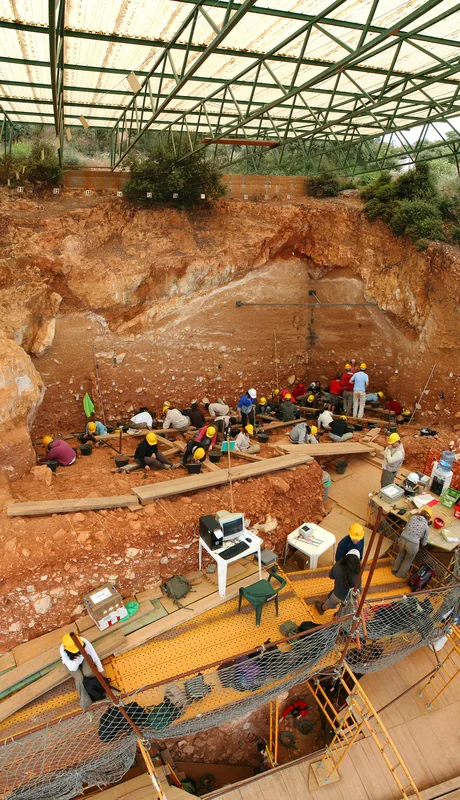
Atapuerca is an archaeological site in northern Spain, near Burgos, renowned for its wealth of hominid fossils. Discovered in the 1970s, it has become a key location for understanding early human evolution. The site contains several caves, including the Gran Dolina, where remains of Homo antecessor (c. 1.2 million years old) were found. The Sima de los Huesos (Pit of Bones) yielded more than 7,000 fossils of Homo heidelbergensis, dated to about 430,000 years ago. Atapuerca also provides evidence of early fire use, with hearths dating back 800,000 years. The site was designated a UNESCO World Heritage Site in 2000. It is managed by the Junta de Castilla y León and open to the public via guided tours. A modern museum, the Museo de la Evolución Humana in Burgos, displays many of the finds. Over 150,000 people visit the site annually.
- Location: Galicia, Spain
- Top sights: Parque Arqueológico de Atapuerca · Sima del Elefante · Gran Dolina
- Nearby: Burgos (15 km)
Best time to visit & climate
The most pleasant time to visit is Jun–Aug.
| Jan | Feb | Mar | Apr | May | Jun | Jul | Aug | Sep | Oct | Nov | Dec | |
|---|---|---|---|---|---|---|---|---|---|---|---|---|
| Avg °C | 3 | 3 | 6 | 9 | 12 | 16 | 19 | 19 | 16 | 12 | 6 | 3 |
| Rain mm | 64 | 51 | 59 | 63 | 55 | 45 | 25 | 25 | 35 | 68 | 78 | 63 |
📋 Practical info
Geography
Facts
- The oldest fossil, a mandible from Sima del Elefante, dates to 1.4 million years ago.
- Gran Dolina yielded the remains of Homo antecessor, dated to around 780,000 years ago.
- The Sima de los Huesos contains the world's largest collection of Middle Pleistocene hominid fossils.
- Over 7,000 human bones have been recovered from the Sima de los Huesos.
- The site covers an area of approximately 500 hectares, with multiple excavation zones.
- Atapuerca was declared a UNESCO World Heritage Site in 2000, one of 49 in Spain.
Explore nearby
Notable places around
Route planner — Car & Motorhome
Where do you start? We build the route here, with stops and country notes along the way.
© OpenStreetMap contributors · OpenRouteService
Sights in the town Atapuerca (4)
Sights nearby
Frequently asked questions
What was found at Atapuerca?
Do I need to book the tour in advance?
Where does the visit start?
Is the site open all year round?
Are you allowed to dig on the site?
Atapuerca: where is it located?
Atapuerca: what is there to see?
Atapuerca: when is the best time to visit?
Atapuerca: why is it worth visiting?

Nearby cities