Plizio Visual Lab
Soester Sand Hill
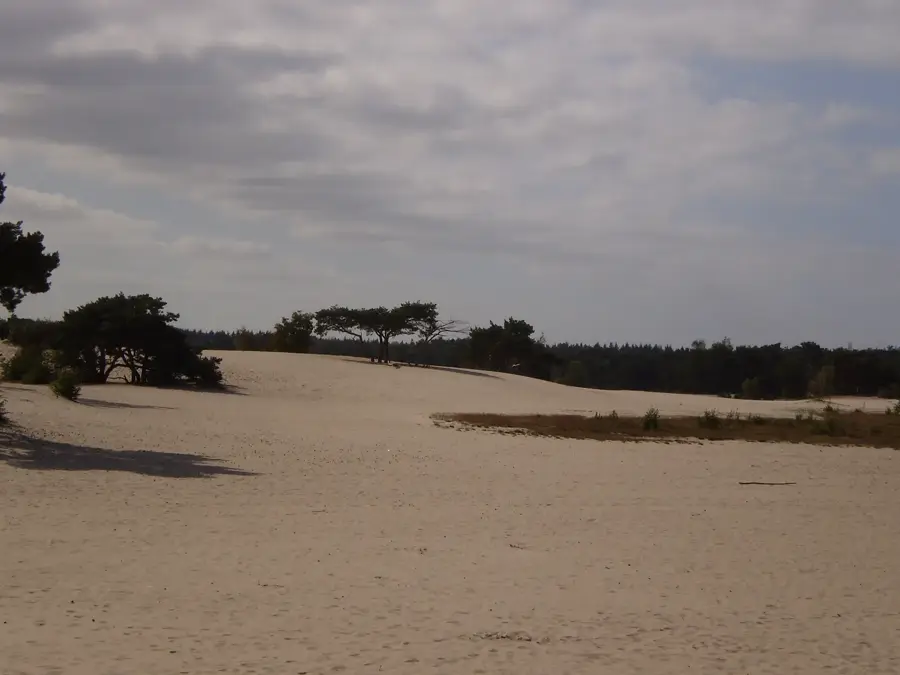
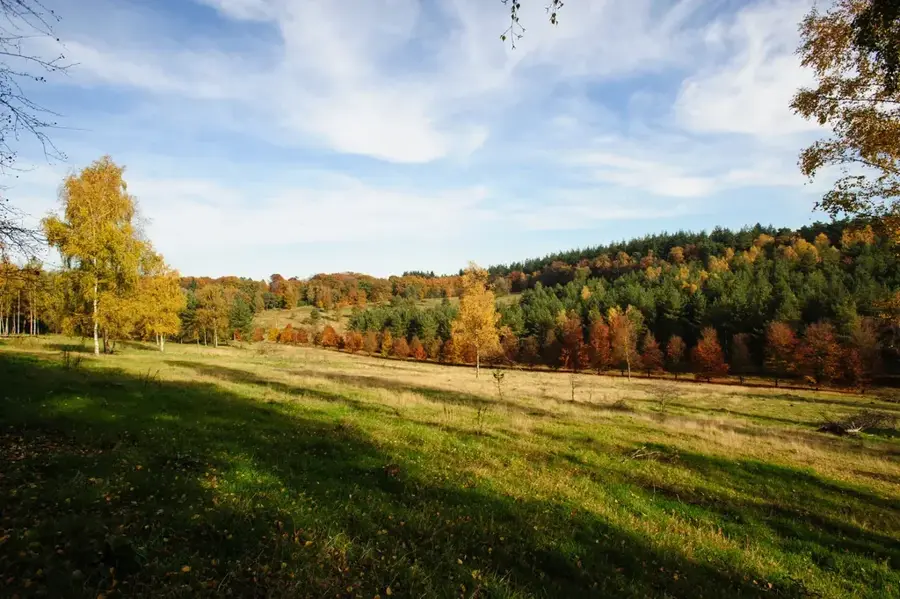
The Soester Zand, also known as Soesterduinen, is one of the largest active drift sand areas in the Netherlands. Geologically, it is an inland dune landscape that originated during the last ice age when fierce winds transported fine sand from dry river valleys. During the Middle Ages, overgrazing and deforestation stripped away the protective vegetation, causing the sand to become mobile once again. The dunes reach significant heights, creating a desert-like environment in the middle of the province of Utrecht. The area is divided into two parts, the Lange Duinen (Long Dunes) and Korte Duinen (Short Dunes), separated by forest belts. Today, Soester Zand is a protected natural monument, home to rare pioneer plants and specialized insect species. The area also serves as a vital water catchment zone, as the porous sand efficiently channels rainwater into the underlying groundwater reserves.
- Location: Utrecht, Netherlands
- Top sights: Doolhof met kluizenaarsgrot · Herman van Veen Arts Center Gallery · Landgoed De Paltz
- Nearby: Amersfoort (7 km)
Best time to visit & climate
The most pleasant time to visit is Jun–Aug.
| Jan | Feb | Mar | Apr | May | Jun | Jul | Aug | Sep | Oct | Nov | Dec | |
|---|---|---|---|---|---|---|---|---|---|---|---|---|
| Avg °C | 2 | 3 | 6 | 10 | 13 | 16 | 18 | 18 | 15 | 11 | 6 | 3 |
| Rain mm | 75 | 63 | 56 | 39 | 60 | 62 | 81 | 82 | 60 | 67 | 70 | 78 |
📋 Practical info
Geography
Facts
- One of the largest drift sand areas in the Netherlands
- Comprises the Lange Duinen and Korte Duinen sections
- Formed by wind activity following the last ice age
- Designated as a protected natural monument
- Sanctuary for rare pioneer plant and insect species
- Crucial for the replenishment of regional groundwater
Explore nearby
Notable places around
Route planner — Car & Motorhome
Where do you start? We build the route here, with stops and country notes along the way.
© OpenStreetMap contributors · OpenRouteService
Sights in the town Soester Sand Hill (10)
Herman van Veen Arts Center Gallery
Gallery in Soest featuring works of Dutch artist Herman van Veen.
Boscomplex Hees
Nature reserve with extensive forests near Soest.
Openluchttheater Cabrio
Open-air theatre in Soest, Netherlands, for summer performances.
Uitzichtpunt Radarheuvel
Viewpoint on a hill overlooking the Soest landscape.
Heilige Familiekerk
Church building in Soest, Netherlands, a Catholic church.
KunstenCentrum Idea
Theatre in Soest offering courses and performances.
Nationaal Militair Museum🏛 museum
Museum in Soest, the Netherlands, with military vehicles and exhibits.
Sights nearby
Frequently asked questions
What are the Soester Duinen?
Are children allowed to play in the sand?
Are there toilets on site?
Are the paths suitable for wheelchairs?
When is it most beautiful?
Soester Sand Hill: where is it located?
Soester Sand Hill: what is there to see?
Soester Sand Hill: when is the best time to visit?
Soester Sand Hill: why is it worth visiting?

Nearby cities
History & landmarks
Nature
More places