Plizio Visual Lab

Teatro La Fenice

Plizio editorial teamData Sources
theater
—°510
Teatro La Fenice (Italy)

Weather…

Highlights of 2026

5

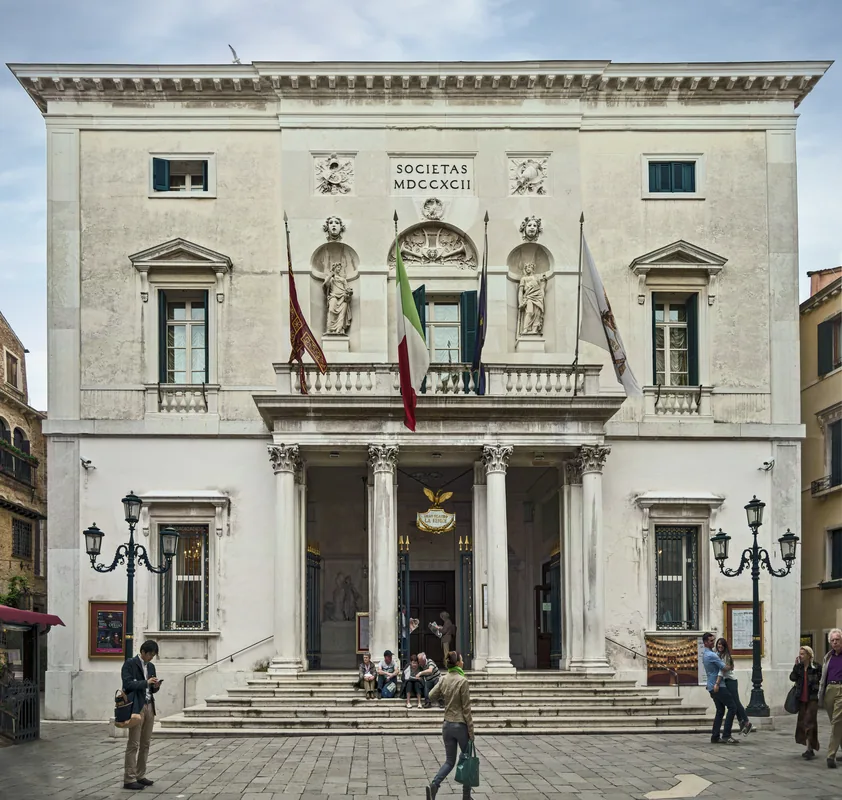
Teatro La Fenice in Venice is one of the world's most famous and historically significant opera houses. Its name, 'The Phoenix,' has proven prophetic, as the theater has risen from its ashes after three devastating fires in 1774, 1836, and 1996. Opened in 1792, the building has been the site of numerous world premieres by legendary composers such as Rossini, Bellini, Donizetti, and especially Giuseppe Verdi, whose operas 'Rigoletto' and 'La Traviata' debuted here. Following the 1996 fire, the theater was faithfully reconstructed according to the motto 'com'era, dov'era' (as it was, where it was) and reopened in 2003. The magnificent interior, designed in late Baroque and Neoclassical styles with gilded boxes and opulent ceiling frescoes, reflects the grandeur of Venetian operatic tradition. Today, it stands not only as a hub for world-class performances but also as a monument to the resilience and cultural identity of Venice.

Best time to visit & climate

The most pleasant time to visit is May, Jun, Sep.

JanFebMarAprMayJunJulAugSepOctNovDec
Avg °C56914182325252116117
Rain mm5373717193726680958710577

📋 Practical info

🚪
Visiting
Visitors can explore the lavishly restored interiors of this historic opera house by joining a daytime guided or audio tour. Beyond sightseeing, attending a live opera or classical music performance remains the most magical way to experience its remarkable acoustics.
🕒
Typical hours
Daytime visits are typically permitted throughout the day when no rehearsals are taking place, often from morning until late afternoon. Evening access is strictly reserved for ticket holders attending scheduled performances, so check the official calendar in advance.
📷
Photography
Photography without flash is generally allowed during daytime tours, enabling you to capture the intricate details of the opulent auditorium and royal box. Taking photos or recording videos during live performances is strictly prohibited out of respect for the artists.
⏱️
Time needed
A standard audio guide tour usually takes around forty-five minutes to an hour, covering the main foyer, auditorium, and historical exhibits. Allowing some extra time to admire the remarkable ceiling and decorative stucco work is highly recommended.
Combine with
Located in the heart of the San Marco district, it pairs perfectly with a visit to the nearby St. Mark's Square and the Doge's Palace. You can also wander through the surrounding labyrinth of easy on the eye canals and browse luxury boutiques.
🧭
Getting there
The theatre is best reached on foot from any central location in Venice, following the frequent yellow signs directing pedestrians towards San Marco or Rialto. The nearest vaporetto (water bus) stops are Santa Maria del Giglio and San Marco Vallaresso.
💡
Insider tip
To avoid long queues at the ticket office, purchase your audio tour tickets online in advance, especially during the busy summer months and carnival season. Take a moment to view the permanent exhibition detailing the fascinating reconstruction after the devastating 1996 fire.

Geography

Coordinates
45.43380, 12.33440

Facts

  • First inaugurated in: 1792
  • Date of the last major fire: January 29, 1996
  • Year of reopening after reconstruction: 2003
  • Number of tiers of boxes: 5
  • Seating capacity: approximately 1,100
  • Famous premiere: Verdi's 'La Traviata' in 1853

Explore nearby

Notable places around

Route planner — Car & Motorhome

Where do you start? We build the route here, with stops and country notes along the way.

Vehicle
Only stops with (optional):

© OpenStreetMap contributors · OpenRouteService

Sights in the town Teatro La Fenice (10)

Chiesa di San Fantin

Italian church in Venice dedicated to Saint Fantin, near the Teatro La Fenice.

Ponte de Piscina

Bridge in Venice, connecting the area around Teatro La Fenice.

Teatro La Fenice

Opera house in Venice, Italy, one of the most famous theatres in the world.

Ponte dei Barcaroli

Bridge in Venice, named after the gondoliers.

Scala Contarini del Bovolo

Spiral staircase in Venice, famous for its snail-shell architecture.

Palazzo Contarini del Bovolo

Small palazzo in Venice, Italy, with the famous Scala Contarini.

Ponte dei Fuseri

Venice bridge in the San Marco district, connecting narrow alleys.

Palazzo Pisani Revedin

Gallery in Venice, a historic palace with exhibition rooms.

Santa Maria del Giglio o Zobenigo

Church in Venice, known for its facade with maps and statues.

Campanile di Santo Stefano🗼 tower

Church tower in Venice, Italy, the bell tower of Santo Stefano church.

Sights nearby

Frequently asked questions

What does the name 'La Fenice' mean?
It means 'The Phoenix', fitting its history of being rebuilt after several fires.
Can you visit the theater without seeing a performance?
Yes, there are daily audio guide tours (approx. 10:00 AM - 6:00 PM).
What is the dress code for the opera?
Elegant is recommended; for premieres, dark suits and evening dresses are mandatory.
Is the theater accessible?
Yes, it has elevators and special seating for wheelchair users.
Where can I buy tickets?
Online on the official website or at the theater's box office.
Teatro La Fenice: where is it located?
Teatro La Fenice is located in Italy.
Teatro La Fenice: what is there to see?
Highlights include Chiesa di San Fantin, Ponte de Piscina, Teatro La Fenice.
Teatro La Fenice: when is the best time to visit?
The most pleasant time to visit is May, Jun, Sep.
Teatro La Fenice: why is it worth visiting?
Teatro La Fenice in Venice is one of the world's most famous and historically significant opera houses.
View on map → The Top 50 Attractions → Most beautiful beaches → OpenStreetMap →
Europe
Explore with Plizio Discover more places in Europe
More places in Italy →

Nearby cities

History & landmarks

More places