Plizio Visual Lab

Naqsh-e Rustam
Plizio editorial teamData Sources
monument
—°4
Naqsh-e Rustam (Iran)

Weather…

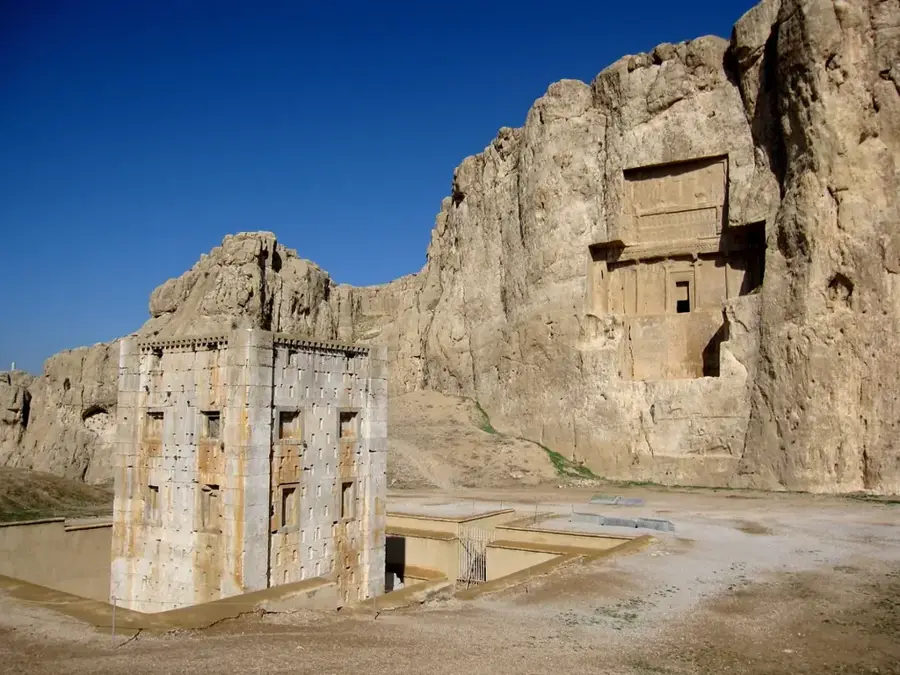
Naqsh-e Rustam is a monumental necropolis located near Persepolis, serving as a powerful testament to the grandeur of ancient Persian kings. Carved high into the vertical limestone cliffs of the Hossein Kuh mountain are four massive cross-shaped tombs belonging to Achaemenid rulers, including Darius the Great and Xerxes I. The facade of each tomb is intricately decorated with reliefs depicting the king standing before an altar under the protection of Ahura Mazda. Below these royal tombs, there are several significant rock reliefs from the Sasanian period, which commemorate imperial victories and divine investitures, most notably the triumph of Shapur I over the Roman Emperor Valerian. The site also features the Ka'ba-ye Zartosht, a mysterious square stone tower from the Achaemenid era that has sparked much debate regarding its function as either a fire temple or a royal archive. Naqsh-e Rustam provides a unique visual history of over a millennium of Persian dynastic rule and ideological evolution.

Best time to visit & climate

The most pleasant time to visit is May, Sep, Oct.

JanFebMarAprMayJunJulAugSepOctNovDec
Avg °C35914212628272318105
Rain mm473838268343143542

📋 Practical info

🚪
Visiting
Naqsh-e Rustam is an ancient necropolis with monumental rock tombs and reliefs, visitable outdoors. Visitors can view the four Achaemenid royal tombs and Sassanid reliefs from a fenced area.
🕒
Typical hours
The site is typically open daily from 8:00 to 17:00, often until 18:00 during summer months. On religious holidays, the necropolis may be closed; it's wise to check in advance.
📷
Photography
Photography is allowed throughout the site, but climbing the rocks or touching the reliefs is forbidden. A telephoto lens is useful to capture details of the high tombs and reliefs.
⏱️
Time needed
A visit to Naqsh-e Rustam typically takes 30 minutes to an hour if viewing the tombs and reliefs. Combine with nearby Persepolis, just a few kilometers away, and allow half a day for both sites.
Combine with
The necropolis lies right on the road between Persepolis and Pasargadae, so combining with Persepolis is convenient. The nearby Naqsh-e Rajab, with additional Sassanid reliefs, is also worth a short detour.
🧭
Getting there
Naqsh-e Rustam is about 6 kilometers northwest of Persepolis and 12 kilometers northeast of Marvdasht. Best reached by rental car or taxi; there is a small parking lot on site.
💡
Insider tip
Visit the site in the late afternoon when the sun lights up the rock walls golden, making the reliefs appear especially three-dimensional. Bring plenty of water as there is no shade in the area.

Geography

Coordinates
29.98860, 52.87440

Facts

  • Darius I's tomb is the only one explicitly identified by a trilingual inscription.
  • The cross-shaped facades are roughly 22.5 meters high and 19 meters wide.
  • The relief of Shapur I depicts the Roman Emperor Valerian kneeling in submission.
  • The Ka'ba-ye Zartosht tower contains a significant 3rd-century Sasanian inscription.
  • The name Naqsh-e Rustam refers to the mythical Persian hero Rustam.
  • The oldest rock relief at the site dates back to the Elamite period, around 1000 BC.

Explore nearby

Notable places around
Route planner — Car & Motorhome

Where do you start? We build the route here, with stops and country notes along the way.

Vehicle
Only stops with (optional):

© OpenStreetMap contributors · OpenRouteService

Sights in the town Naqsh-e Rustam (4)

Haji Abad Climbing Crag📍 landmark

A popular rock climbing location near the historic site of Naqsh-e Rustam.

Triumph of Shapur I.🏺 historical

This Sasanian rock relief at Naqsh-e Rustam depicts the victory of Shapur I over Roman emperors.

Estakhr🏺 historical

The ruins of Estakhr, once a major city in ancient Persia and the cradle of the Sasanian Empire.

Naqsh-e Rajab🏺 historical

An archaeological site known for its well-preserved Sassanid-era rock carvings.

Sights nearby

Frequently asked questions

Which kings are buried here?
Four Achaemenid Great Kings, including Darius I and Xerxes I, in monumental rock tombs.
How far is it from Persepolis?
Only about 6 km north; the two sites can be perfectly visited on the same day.
What is the Ka'ba-ye Zartosht (Cube of Zoroaster)?
A square tower opposite the tombs whose exact function (temple or archive) is still debated.
Can you enter the tombs?
No, the burial chambers are carved high into the rock and are not accessible to the public.
Are there sanitary facilities?
Yes, there are simple toilets and a small souvenir shop at the entrance.
Naqsh-e Rustam: where is it located?
Naqsh-e Rustam is located in Iran.
Naqsh-e Rustam: what is there to see?
Highlights include Haji Abad Climbing Crag, Triumph of Shapur I., Estakhr.
Naqsh-e Rustam: when is the best time to visit?
The most pleasant time to visit is May, Sep, Oct.
Naqsh-e Rustam: why is it worth visiting?

Naqsh-e Rustam is a monumental necropolis located near Persepolis, serving as a powerful testament to the grandeur of ancient Persian kings.
View on map → The Top 50 Attractions → OpenStreetMap →
Asia
Explore with Plizio Discover more places in Asia
More places in Iran →

More places