Plizio Visual Lab

Sajo River

Plizio editorial teamData Sources
River
—°5
Sajo River (Hungary)

Weather…

The Sajo River is a significant waterway in Central Europe, originating in the Stolica Mountains of Slovakia and flowing for approximately 229 kilometers before reaching its confluence with the Tisza River near Tiszaujvaros. Its drainage basin covers an area of roughly 12,700 square kilometers, making it a vital hydrological feature for both southern Slovakia and northern Hungary. Historically, the river is most notable for the Battle of Mohi in 1241, where the Hungarian forces were defeated by the invading Mongol Empire on its floodplains. During the 20th century, the Sajo valley became a major industrial corridor, particularly around the city of Miskolc, which led to substantial environmental stress from mining and heavy manufacturing. Today, ongoing rehabilitation projects focus on improving the river's water quality and preserving its natural riparian habitats. The Sajo remains a critical ecosystem supporting various protected fish species and serves as a primary drainage channel for the northern Hungarian highlands.

Best time to visit & climate

The most pleasant time to visit is Jun–Aug.

JanFebMarAprMayJunJulAugSepOctNovDec
Avg °C-205121721232317115-1
Rain mm353638396775795651494343

📋 Practical info

🧭
Getting there
The Sajo River is generally well and easily accessible via the regional road network of Northern Hungary. The various bridges and riverside settlements often offer favorable starting points for exploration.
📅
Best season
The warmer months from late spring to early autumn are mostly considered the most pleasant time for exploration. However, after heavy spring rains, the water level can temporarily rise significantly.
⛰️
Terrain & paths
The riverside landscape is often characterized by flat sections, which are, however, frequently left in their natural, wilder state. Continuous paved paths are not present everywhere, requiring a certain degree of surefootedness.
🎒
What to bring
Sturdy, water-resistant footwear is highly recommended due to the partially unpaved or muddy riverside areas. In the summer months, effective protection against mosquitoes and other insects should also not be missing.
🅿️
Parking
In the surrounding villages and small towns, parking options can usually be found at a reasonable distance from the river. For more remote sections, cars often need to be left by dirt tracks or on the edge of the village.
⚠️
Safety
The partially natural banks can be very slippery and unstable when wet, which is why careful walking is always advised. Since the current can vary depending on the water level, caution is required when in direct contact with the water.
⏱️
Time needed
The duration of the stay depends heavily on the planned activity, typically ranging from an hour for a short detour to several hours. Nature observers and anglers often effortlessly spend half a day on its banks.

Geography

Coordinates
48.00000, 20.90000

Facts

  • Total length of 229 kilometers.
  • Drainage basin of 12,700 square km.
  • Joins the Tisza near Tiszaujvaros.
  • Site of the Battle of Mohi in 1241.
  • The Hernad is its main tributary.
  • Flows through the city of Miskolc.

Explore nearby

Notable places around

Route planner — Car & Motorhome

Where do you start? We build the route here, with stops and country notes along the way.

Vehicle
Only stops with (optional):

© OpenStreetMap contributors · OpenRouteService

Sights in the town Sajo River (5)

Melczer-kastély🏰 castle

Castle in Hungary.

Tájház🏛 museum

Local history museum.

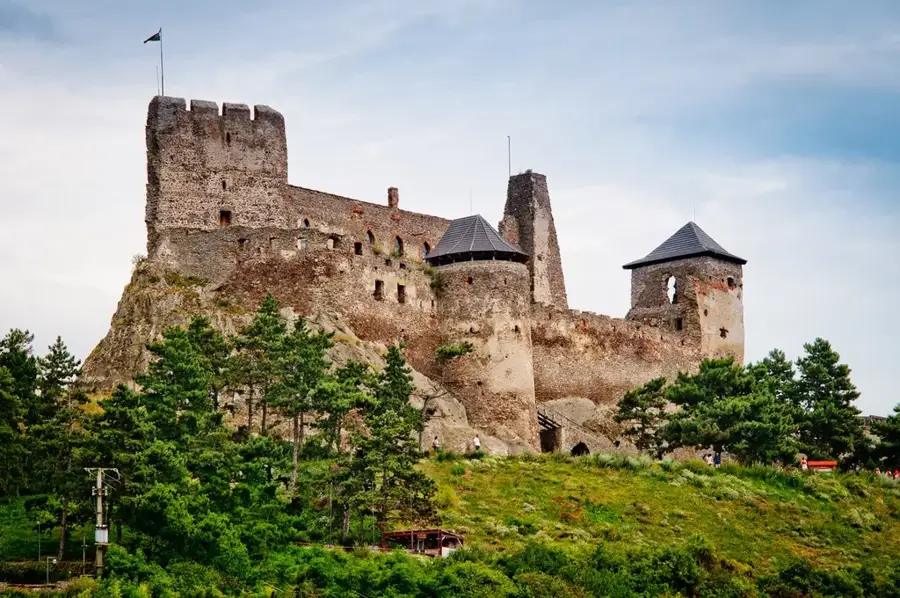
Ónodi vár

Hungarian castle.

RealXtreme

Beach in Hungary.

Muhi strand

Beach in Hungary.

Sights nearby

Frequently asked questions

Is swimming allowed in the Sajó river?
Swimming is generally not recommended due to unpredictable currents and water quality, and it is prohibited on most sections.
Are canoe trips possible on the river?
Yes, the Sajó is a popular water trekking destination, especially in spring and early summer when water levels are suitable.
What fish species can be caught here?
Anglers can mainly catch chub, barbell, and nase. A valid fishing license is mandatory.
Where does the Sajó river originate?
The river originates in Slovakia, in the Stolica Mountains, and flows into the Tisza near Tiszaújváros.
Are there bicycle paths along the river?
There is no dedicated bike path along the entire bank, but cycling is possible on the embankments and nearby low-traffic roads.
Sajo River: where is it located?
Sajo River is located in Hungary.
Sajo River: what is there to see?
Highlights include Melczer-kastély, Tájház, Ónodi vár.
Sajo River: when is the best time to visit?
The most pleasant time to visit is Jun, Aug.
Sajo River: why is it worth visiting?
The Sajo River is a significant waterway in Central Europe, originating in the Stolica Mountains of Slovakia and flowing for approximately 229 kilometers before reaching its confluence with the Tisza River near Tiszaujvaros.
View on map → The Top 50 Attractions → OpenStreetMap →
Europe
Explore with Plizio Discover more places in Europe
More places in Hungary →

Nearby cities

History & landmarks
Nature

More places