Visualia Festival
An innovative festival of light illuminating the city with 3D mapping and light installations.
PlizioGo
Enjoy pasta with local truffles at traditional konobas (taverns) in the city center.
Seafood stew cooked with wine and garlic, best tried in a seaside seafood restaurant.
Try this locally cured ham (pršut) as an appetizer at any wine bar.
A beautiful 19th-century building great for buying local olive oil, cheese, and fresh produce.
Look for small specialty shops selling truffle pastes, oils, and cheeses in the old town.
Take a quiet walk around this star-shaped fortress for panoramic views over Pula.
Stroll along the rocky coast away from the city buzz, exploring hidden coves.
Water temperature…
An innovative festival of light illuminating the city with 3D mapping and light installations.
An exciting run through the city that starts in the evening and passes through the illuminated amphitheater.
The celebration of the patron saint of the city of Pula with various cultural and religious events.
The oldest national film festival in Croatia, known for its stunning screenings inside the Roman amphitheater.
Renowned international artists perform every summer in the spectacular setting of the Roman arena.
A festival celebrating ancient Rome, bringing gladiator fights and traditional crafts back to Pula.
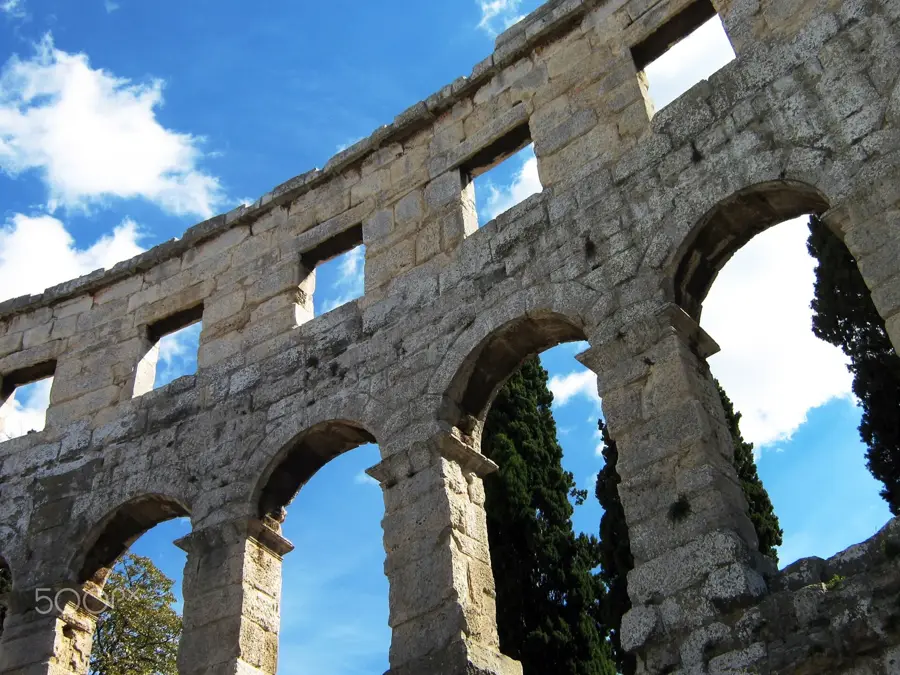
Pula functions as a living, open-air history book. Its crown jewel is the Arena, the world's sixth-largest Roman amphitheater, which once seated 23,000 spectators and now hosts prestigious film festivals and concerts. At the city's heart lies the Forum, the main square home to the exceptionally well-preserved Temple of Augustus. For centuries, Pula served as the Austro-Hungarian Empire's primary naval port, a legacy seen in its extensive fortress network and naval cemetery. The city presents a compelling mix of Roman ruins, Austrian architecture, and a modern industrial port. The surrounding coastline is famed for its pine forests and clear waters, particularly at the nearby Cape Kamenjak. The Brijuni Islands, Tito's former summer residence, are just a short boat ride away, featuring a safari park and diverse archaeological sites. The 2024-2025 concert season at Arena Pula expanded significantly with Sting, Tom Jones and Joe Bonamassa joining the traditional July Pula Film Festival. Tickets often sell out months in advance.
The most pleasant time to visit is Jun, Jul, Sep.
| Jan | Feb | Mar | Apr | May | Jun | Jul | Aug | Sep | Oct | Nov | Dec | |
|---|---|---|---|---|---|---|---|---|---|---|---|---|
| Avg °C | 6 | 6 | 9 | 13 | 17 | 22 | 24 | 24 | 20 | 16 | 11 | 7 |
| Rain mm | 78 | 95 | 74 | 67 | 84 | 64 | 49 | 71 | 113 | 101 | 133 | 102 |
See what it looks like near Pula right now.
Pula › North-east: Město - Arena · 0.7 km · Open webcam on Windy · Webcams provided by Windy.com
Notable places around
Where do you start? We build the route here, with stops and country notes along the way.
© OpenStreetMap contributors · OpenRouteService
Pula is an open history book of the Roman era. Start your day at the monumental Amphitheater and then walk to the ancient Forum with the Temple of Augustus. After a quick stop at the Arch of the Sergii, immerse yourself in the bustle of the Art Nouveau market hall. The afternoon offers Istrian culinary delights, a climb to the fortress for the best overview, and a mysterious tour through the underground Zerostrasse tunnel system.
Morning finds us in the Arena's underground passages, safe from the rain. At noon, the Archaeological Museum provides a dry cultural escape. In the afternoon, we retreat to the cafes of the Forum to watch the rain on the ancient stones. We end the day inside the Kastel fortress, exploring the indoor museum exhibits while staying warm and dry.
A winter morning at the Arena is peaceful, free from summer crowds. At noon, we warm up in the old town museums if the Bora wind picks up. In the afternoon, we enjoy the low sun at the Forum with a hot drink. For the early sunset, we climb to the Kastel fortress to witness the golden light over the Adriatic Sea.
Located in Valkane bay, this popular pebble and rock beach elegantly combines nature-oriented swimming with dedicated naturist sections. The varied coastline invites visitors to feel free and swim relaxedly in the cool seawater. Those who appreciate textile-free sunbathing will discover a marvelous retreat here during the warmer season.