Plizio Visual Lab
Small Roman Theater
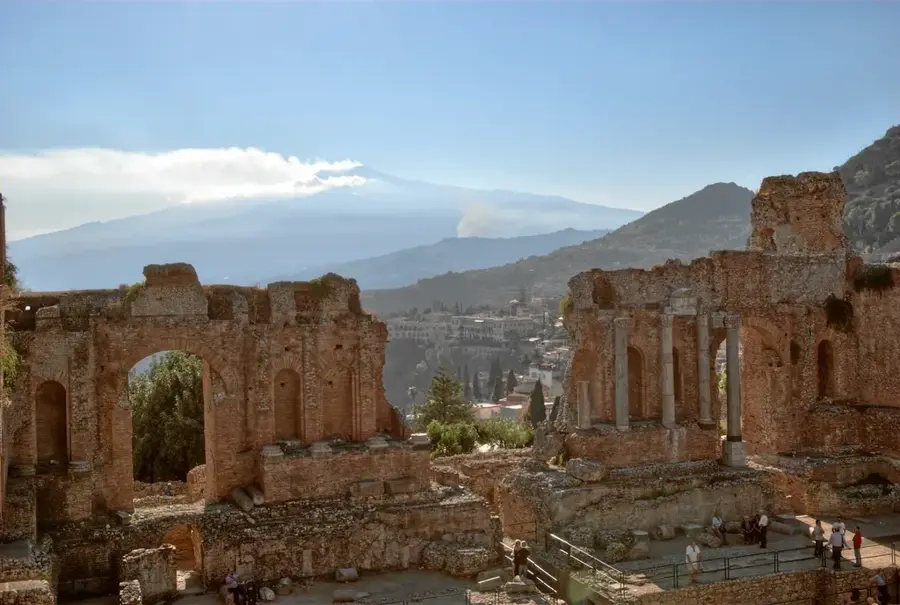
The Small Roman Theater in Pula was constructed in the 1st century AD during the reign of Emperor Augustus as a vital part of the Roman colony Pietas Iulia Pola. It is situated on the northeastern slope of the city's central hill, positioned directly beneath the Venetian citadel. Unlike the larger Amphitheater, this venue was dedicated to theatrical performances and dramatic plays, with an estimated capacity of 4,000 to 5,000 spectators. The architecture features a semicircular orchestra and remains of the stone seating rows that were cleverly integrated into the natural hillside terrain. Throughout the Middle Ages, the theater fell into ruin and was partially used as a quarry for the construction of the nearby fortress. A significant restoration project completed in 2023 revitalized the site by blending ancient masonry with modern architectural elements, once again transforming it into a functional venue for contemporary concerts and festivals.
- Location: Croatia
- Top sights: Hercules Gate · Malo rimsko kazalište · Archaeological Museum of Istria
- Nearby: Banjole (4 km)
Best time to visit & climate
The most pleasant time to visit is Jun, Jul, Sep.
| Jan | Feb | Mar | Apr | May | Jun | Jul | Aug | Sep | Oct | Nov | Dec | |
|---|---|---|---|---|---|---|---|---|---|---|---|---|
| Avg °C | 6 | 6 | 9 | 13 | 17 | 22 | 24 | 24 | 20 | 16 | 11 | 7 |
| Rain mm | 78 | 95 | 74 | 67 | 84 | 64 | 49 | 71 | 113 | 101 | 133 | 102 |
📋 Practical info
Geography
Facts
- Built in the 1st century AD during the early Roman Empire.
- The theater could accommodate between 4,000 and 5,000 people.
- Major archaeological excavations were conducted in 1930.
- Reopened as a performance space in 2023 after extensive renovation.
- Much of its original stone was used to build the Venetian fortress in 1630.
- It is one of the few Roman theaters in Croatia integrated into a natural slope.
Explore nearby
Notable places around
Route planner — Car & Motorhome
Where do you start? We build the route here, with stops and country notes along the way.
© OpenStreetMap contributors · OpenRouteService
Sights in the town Small Roman Theater (10)
Galerija C8
Gallery C8 in Pula, exhibition space for contemporary art.
Roman Twin gates
2nd-century Roman city gate in Pula, Croatia, a double-arched gate.
Rimski mauzolej
Roman mausoleum in Pula, remains of an ancient tomb structure.
Historical and Maritime Museum of Istria🏛 museum
Museum in Croatia, about the history and navigation of Istria, housed in Pula castle.
Arch of the Sergi
Triumphal arch in Pula, erected in honor of the Sergius family in the 1st century BC.
Istarsko narodno kazalište
Theatre in Pula, venue for plays, opera and ballet.
Sights nearby
Frequently asked questions
Where is the Small Roman Theater located?
Is there an entrance fee?
Are performances still held there today?
Is the theater accessible?
How long does a visit take?
Small Roman Theater: where is it located?
Small Roman Theater: what is there to see?
Small Roman Theater: when is the best time to visit?
Small Roman Theater: why is it worth visiting?

Nearby cities