Plizio Visual Lab
Hajjah
ℹ️Practical info — Hajjah
▾
🌤 Weather — 5 days
📍 Nearby
Sights nearby
💡 Tips
- The Al-Qahirah citadel is, but be prepared for a steep walk; wear good shoes.
- Due to its high elevation, evenings can be significantly cooler than in the coastal plains, so bring a jacket.
- Photography of military or government installations is strictly prohibited; always ask before photographing locals.
- Infrastructure may be basic; keep cash handy as cards are rarely accepted.
🍽 Food
Try the national dish of Yemen, a rich meat stew often served bubbling hot in traditional clay pots at local diners.
Look for restaurants serving this slow-cooked meat and rice dish, heavily flavored with local spices.
Freshly baked flatbreads from local bakeries are well-suited for scooping up stews.
🛍 Shopping · 🧘 Quiet spots
The local markets are great for observing daily life and purchasing fresh mountain produce or traditional Yemeni spices.
Look for locally grown coffee beans, known for their unique, earthy flavor profile.
Take a walk outside the town center to admire the ancient, lush agricultural terraces carved into the steep mountainsides.
The areas surrounding the citadel offer sweeping, quiet views of the surrounding valleys, especially at dawn.
Water temperature…
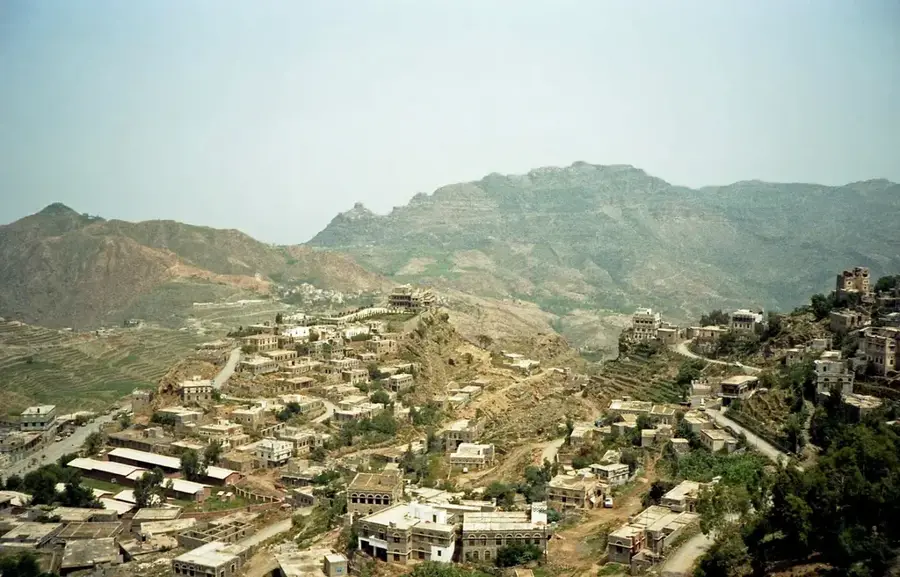
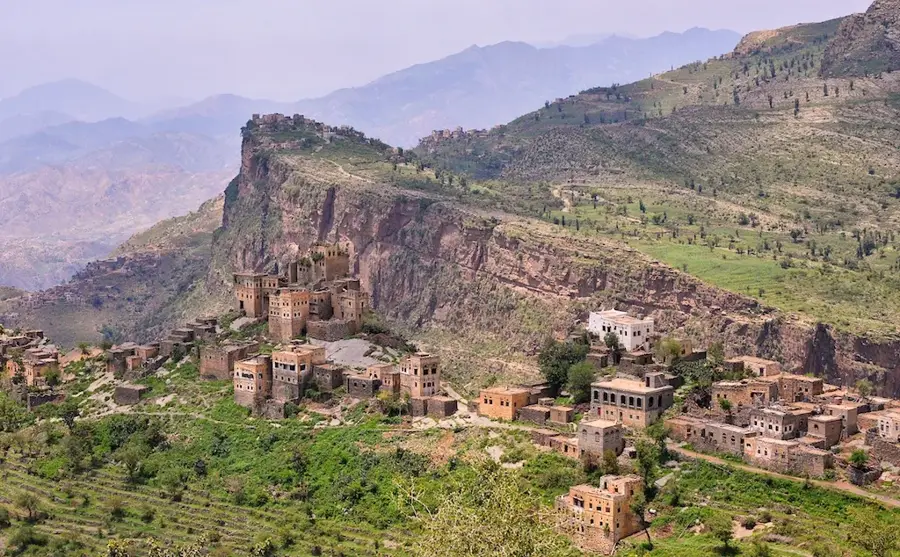
Hajjah is a striking mountain city and the capital of the Hajjah Governorate in northwestern Yemen, situated at an elevation of approximately 1,800 meters. The city is renowned for its wide-open topographical setting, perched precariously on a series of jagged mountain peaks and ridges that overlook the western highlands. Its most iconic feature is the Al-Qahira Fortress, a massive citadel built atop a sheer rock face that has historically served as a formidable defensive position and a political stronghold. Geographically, Hajjah acts as a bridge between the humid coastal Tihama plains and the higher, cooler central plateau. The surrounding landscape is famous for its intricate system of agricultural terraces, which are among the most beautiful and well-preserved in the Middle East. These terraces are used to grow high-quality coffee, cereal crops, and qat, sustained by seasonal rains and mists that frequently cloak the mountains. The architecture of Hajjah is characterized by its verticality and strength, with multi-story houses built from local mountain stone that blend seamlessly into the craggy environment. The climate is temperate and significantly cooler than the neighboring lowlands, making it a desirable place to live. Economically, Hajjah is the primary administrative and commercial center for the governorate, hosting several educational institutions and a bustling regional souk where goods from the coast are traded for mountain produce. Culturally, the city maintains a strong sense of independence and tribal pride, with a history of resisting foreign occupations. Hajjah stands as a testament to the endurance of Yemeni mountain culture and remains a vital pillar of the nation's high-altitude civilization.
- Location: Yemen
- Top sights: Jabal Jawb · Jabal Nudar · Jabbal `Izzan
- Nearby: Bajil (61 km)
- Population: ~43.549 (2026)
Best time to visit & climate
The most pleasant time to visit is Feb, Mar, Oct.
| Jan | Feb | Mar | Apr | May | Jun | Jul | Aug | Sep | Oct | Nov | Dec | |
|---|---|---|---|---|---|---|---|---|---|---|---|---|
| Avg °C | 18 | 19 | 21 | 23 | 25 | 26 | 25 | 24 | 25 | 21 | 19 | 18 |
| Rain mm | 2 | 1 | 2 | 8 | 3 | 1 | 8 | 10 | 1 | 2 | 4 | 6 |
Geography
Facts
- Hajjah is located at an altitude of 1,800 meters (5,905 feet).
- The Al-Qahira citadel was used as a royal prison in the 20th century.
- Terraced farming in Hajjah is considered a masterpiece of indigenous engineering.
- The city's location provides a strategic view of the Tihama coastal plain.
- Hajjah is one of the wettest regions in Yemen due to orographic rainfall.
- The local architecture features dark stone masonry with white trim.
- It is a central hub for the distribution of agricultural tools in the north.
- The town is famous for its lively weekly markets held on various days.
Explore nearby
Notable places around
Route planner — Car & Motorhome
Where do you start? We build the route here, with stops and country notes along the way.
© OpenStreetMap contributors · OpenRouteService
Sights in the town Hajjah (4)
Frequently asked questions
How is Hajjah located?
Are there fortresses there?
Is the city safe?
What characterizes the cityscape?
What is the weather like?
Hajjah: where is it located?
Hajjah: what is there to see?
Hajjah: when is the best time to visit?
Hajjah: why is it worth visiting?

Nearby cities

History & landmarks
Nature
More places