Plizio Visual Lab
Small Nambas Territory
ℹ️Practical info — Small Nambas Territory
▾
🌤 Weather — 5 days
📍 Nearby
Sights nearby
💡 Tips
- Hiring a local guide from Malakula is essential and highly recommended for visiting the custom villages safely.
- Bring plenty of cash in local Vatu, as there are absolutely no ATMs or card facilities in the tribal areas.
- Always ask for the village chief's or locals' permission before taking photographs of people or sites.
- Dress modestly; cover your shoulders and knees out of respect for the deeply rooted local customs.
🍽 Food
The traditional national dish made of grated root crops and coconut milk baked in an earth oven. Often offered during village tours.
A traditional, mildly sedative root drink. Try it at a local 'nakamal' (kava bar) after the sun goes down.
Buy fresh papaya, bananas, and coconuts directly from the villagers' gardens or roadside market stalls.
🛍 Shopping · 🧘 Quiet spots
Purchase authentic, hand-carved masks or ancestral figures directly from the artisans in the custom villages.
Local women weave beautiful bags and mats from pandanus leaves, making for excellent, sustainable souvenirs.
A tranquil stretch of coastline, well-suited for watching the ocean and resting after a jungle trek.
Enjoy the deep silence of nature on the narrow walking paths that connect the traditional villages.
Water temperature…
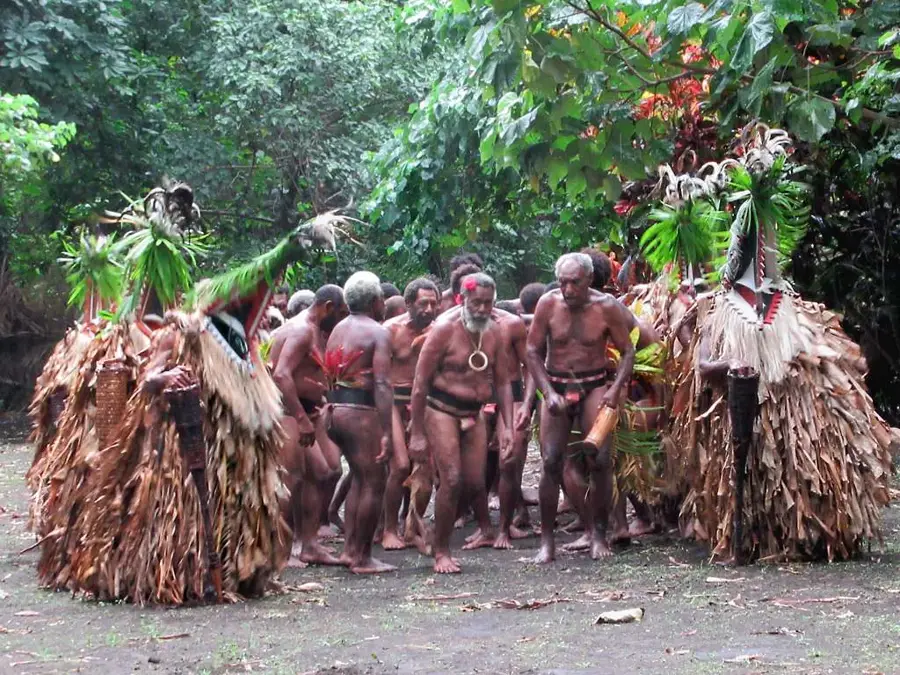
The Small Nambas Territory, situated in the southern and central parts of Malakula Island, is a region of exceptional cultural vitality. The name derives from the smaller fiber penis sheath (namba) worn by the men, distinguishing them from the Big Nambas group in the north. Historically, this area was the site of complex ritual cycles, including the famous masked Rom dances, where secret societies played a central role in village life. Small Nambas villages were traditionally organized into clans with extensive nasaras (ceremonial grounds) decorated with slit-gongs and monoliths. Despite the influence of Christian missions during the 20th century, many communities have actively preserved or revived their 'Kastom' (custom) traditions. The artistic heritage of the Small Nambas, particularly the creation of tree-fern masks and intricate sand drawings, is globally recognized for its complexity. The territory encompasses both coastal areas and the rugged, mountainous interior, leading to a rich diversity of local dialects and customs. Today, visiting this region provides a rare glimpse into a society where social prestige is still achieved through ritual achievements and pig sacrifice.
- Location: Vanuatu
- Nearby: Big Nambas Territory (22 km)
Best time to visit & climate
The most pleasant time to visit is Jul–Sep.
| Jan | Feb | Mar | Apr | May | Jun | Jul | Aug | Sep | Oct | Nov | Dec | |
|---|---|---|---|---|---|---|---|---|---|---|---|---|
| Avg °C | 28 | 28 | 28 | 27 | 26 | 26 | 25 | 25 | 25 | 26 | 26 | 27 |
| Rain mm | 221 | 229 | 249 | 248 | 174 | 138 | 95 | 88 | 107 | 140 | 154 | 163 |
Geography
Facts
- The territory is primarily located in southern Malakula.
- The Rom dance is a prestigious ritual involving elaborate masks.
- Traditional masks are constructed from tree-fern, clay, and fiber.
- The region's sand drawings are recognized as UNESCO Intangible Heritage.
- Social status is gained through the 'Nimangki' rank-taking system.
- The Small Nambas speak several distinct languages, such as Unua.
Explore nearby
Notable places around


Route planner — Car & Motorhome
Where do you start? We build the route here, with stops and country notes along the way.
© OpenStreetMap contributors · OpenRouteService
Frequently asked questions
Who are the Small Nambas?
Can I visit their territory?
What is their cultural specialty?
Do you need a guide?
Is it family-friendly?
Small Nambas Territory: where is it located?
Small Nambas Territory: when is the best time to visit?
Small Nambas Territory: why is it worth visiting?
Nearby cities
History & landmarks
Nature
More places