Plizio Visual Lab

Gur-e-Amir Mausoleum
Plizio editorial teamData Sources
historical-site
—°9
Gur-e-Amir Mausoleum (Uzbekistan)

Weather…

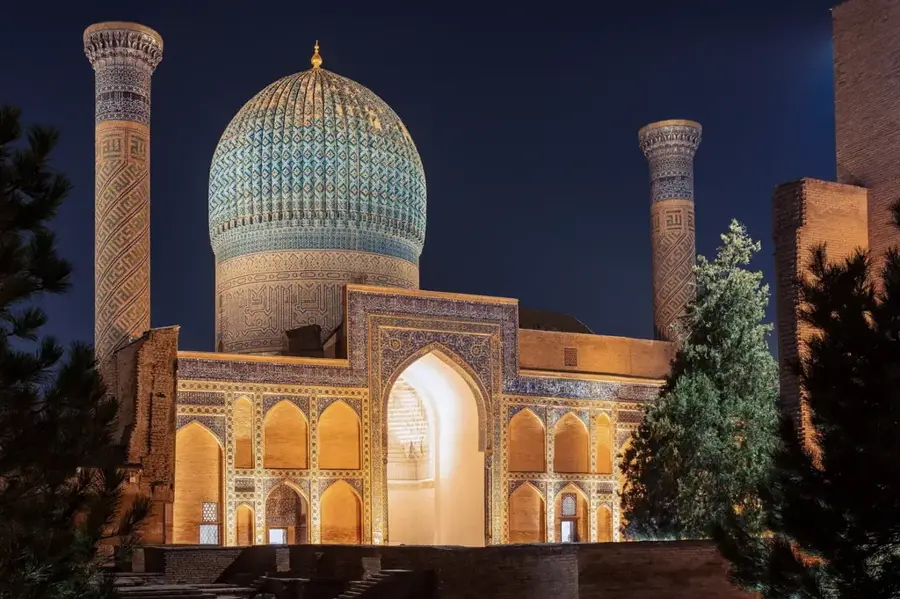
The Gur-e-Amir Mausoleum in Samarkand is the magnificent resting place of the conqueror Tamerlane (Timur) and his descendants. Construction began in 1404 and is considered a pinnacle of Timurid architecture. Particularly impressive is the ribbed, azure dome that towers over the city. The mausoleum stands out for its elaborate interior decoration of onyx, gold, and fine mosaics. The crypt contains the tombs of Timur, his sons, and grandsons, including the famous astronomer Ulugh Beg. Gur-e-Amir served as an architectural model for later monumental tombs of the Mughal Empire, such as the Taj Mahal in India. Legend has it that an inscription on Timur's tomb warns against opening it, a curse allegedly linked to the outbreak of World War II in the Soviet Union in 1941. The site is a place of deep historical significance and a testament to the power and cultural sophistication of the Timurid dynasty.

Best time to visit & climate

The most pleasant time to visit is May, Jun, Sep.

JanFebMarAprMayJunJulAugSepOctNovDec
Avg °C1391420262826211472
Rain mm35485856307212143530

📋 Practical info

🚪
Visiting
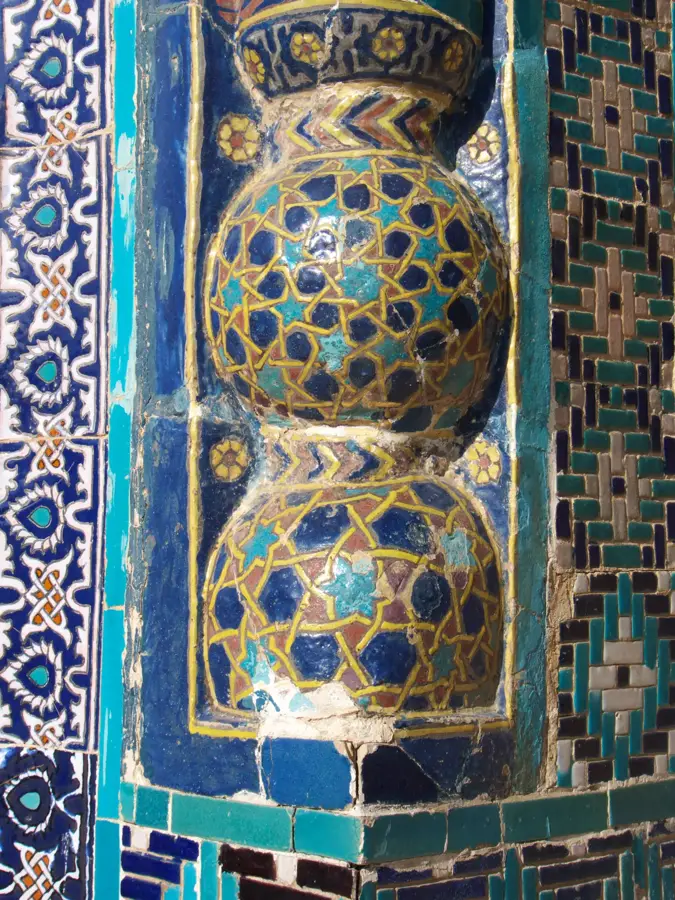
The Gur-e-Amir Mausoleum welcomes visitors daily, allowing entry into the main chamber where Timur and his descendants are buried beneath an ornate dome. You can explore the entire interior, examining the intricate ceramic tiles, marble inlays, and gold leaf decorations that inspired the Taj Mahal.
🕒
Typical hours
Opening times typically follow standard daylight hours, with the mausoleum usually open from around 9:00 to 17:00 or later in summer. It is closed on some religious holidays, so check local listings before your visit.
📷
Photography
Photography is generally allowed inside without the use of flash to protect the delicate artwork and tiles. You are welcome to take pictures of the exterior and courtyard freely, but tripods may be restricted inside the mausoleum; natural light works best.
⏱️
Time needed
Plan to spend at least one to two hours exploring the mausoleum interior and the surrounding courtyard. The compact site is rich in detail, so take your time to admire the intricate tile work and calligraphy, and sit in the courtyard to reflect.
Combine with
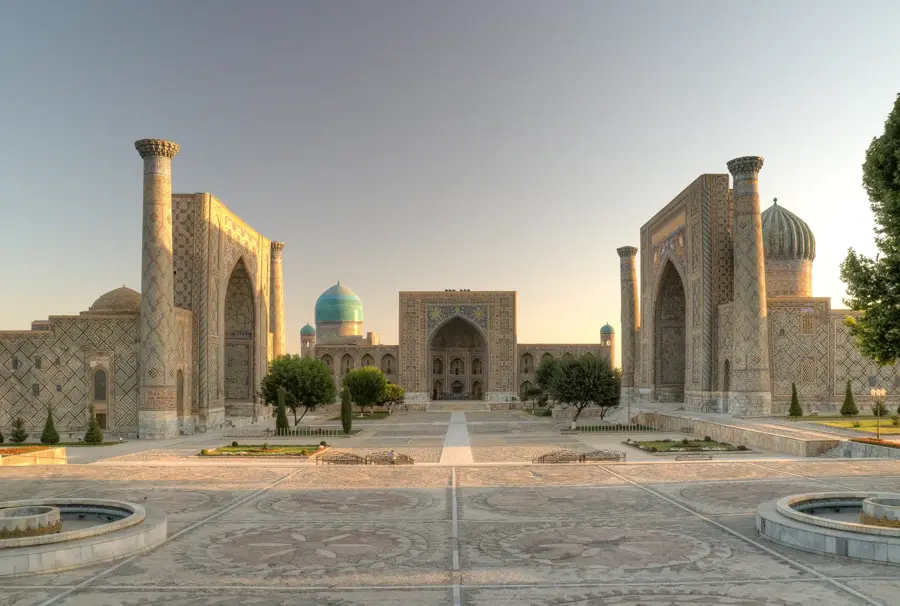
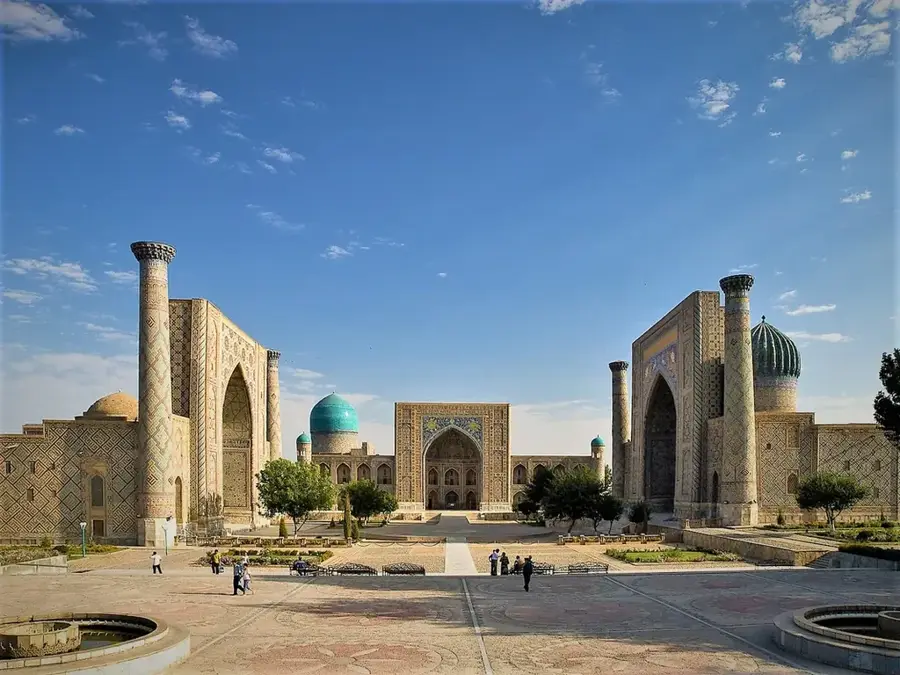
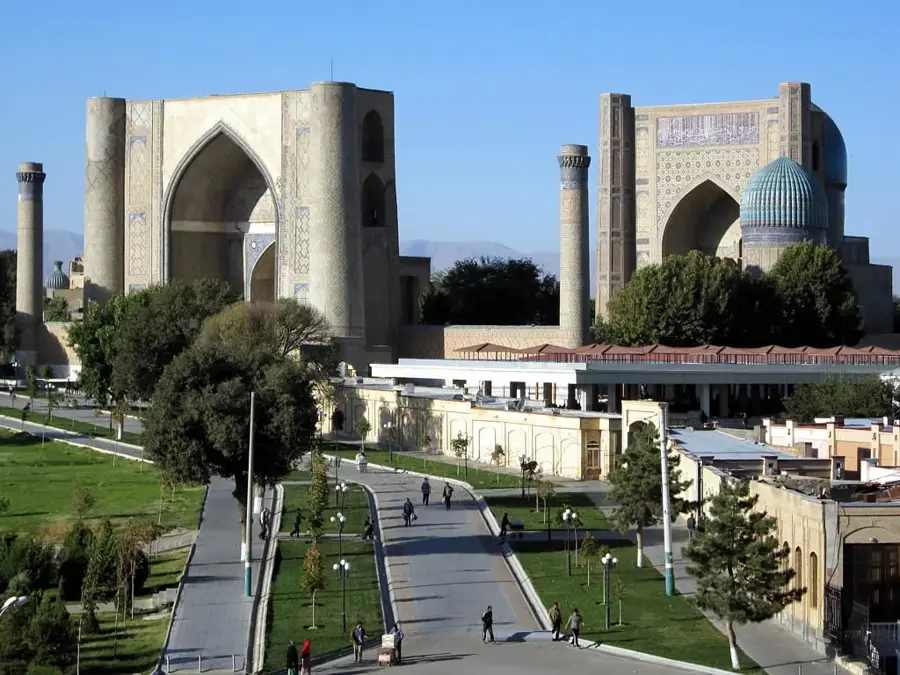
Combine your visit with the nearby Registan square and Shah-i-Zinda necropolis, both within walking distance in Samarkand. The entire historic center is compact, allowing you to see multiple UNESCO sites in one day, including the Bibi-Khanym Mosque.
🧭
Getting there
The mausoleum is located in central Samarkand, easily reachable by taxi or on foot from major hotels and the train station. Local buses also stop near the site; a short walk from the main road leads to the entrance, and there is parking for private vehicles nearby.
💡
Insider tip
Arrive early in the morning to avoid crowds and enjoy the best light for photography on the turquoise dome. Consider hiring a local guide near the entrance to learn the fascinating history behind the tile patterns, and afterwards visit the nearby bazaar for refreshments.

Geography

Coordinates
39.64830, 66.96980

Facts

  • Resting place of Tamerlane (Timur), built from 1404
  • Famous for its distinctive ribbed blue dome
  • Architectural prototype for the Taj Mahal
  • Contains the tomb of the astronomer Ulugh Beg
  • Interior decoration with gold leaf and blue mosaic
  • Soviet tomb opening occurred in June 1941

Explore nearby

Notable places around

Route planner — Car & Motorhome

Where do you start? We build the route here, with stops and country notes along the way.

Vehicle
Only stops with (optional):

© OpenStreetMap contributors · OpenRouteService

Sights in the town Gur-e-Amir Mausoleum (9)

Zoological Museum of Samarkand State University🏛 museum

Features an extensive collection of fauna specimens from Uzbekistan and Central Asia.

🕒 Mo-Su 09:00-21:00

Ikkinchi zhakhon urushidan🏺 historical

A monument dedicated to the victims and participants of World War II.

Khoja Nisbatdar Mosque⛪ religious

A historic neighborhood mosque featuring traditional Uzbek wooden architecture.

Gur-e-Amir🏺 historical

The magnificent turquoise-domed mausoleum of the conqueror Tamerlane (Amir Timur).

Hoji Muin House Museum🏛 museum

Dedicated to the life of Hoji Muin, a prominent Jadid intellectual and playwright.

Tiger Guardians🏺 historical

Sculptures of tigers flanking the entrance to the historical area near Gur-e-Amir.

Hamid Alimjan Samarkand Theatre🎭 culture

A major cultural venue in Samarkand named after the famous Uzbek poet Hamid Alimjan.

Minora📍 landmark

A tall traditional minaret located in the historical district near the Gur-e-Amir complex.

🕒 24/7

Naqshin mosque📍 landmark

A mosque dating from the 19th-20th centuries, known for its intricate painted decorations.

Sights nearby

Frequently asked questions

What is the Gur-e-Amir Mausoleum?
The tomb of Timur.
How long does a visit take?
About an hour.
Are there dress codes?
Respectful clothing recommended.
Can you see the dome?
Yes, it is impressively blue.
Best time to visit?
Mornings, less crowded.
Gur-e-Amir Mausoleum: where is it located?
Gur-e-Amir Mausoleum is located in Uzbekistan.
Gur-e-Amir Mausoleum: what is there to see?
Highlights include Zoological Museum of Samarkand State University, Ikkinchi zhakhon urushidan, Khoja Nisbatdar Mosque.
Gur-e-Amir Mausoleum: when is the best time to visit?
The most pleasant time to visit is May, Jun, Sep.
Gur-e-Amir Mausoleum: why is it worth visiting?

The Gur-e-Amir Mausoleum in Samarkand is the magnificent resting place of the conqueror Tamerlane (Timur) and his descendants.
View on map → The Top 50 Attractions → OpenStreetMap →
Asia
Explore with Plizio Discover more places in Asia
More places in Uzbekistan →

Nearby cities

History & landmarks
Nature
More places