Plizio Visual Lab
Oleshky Sands
Weather…
Water temperature…
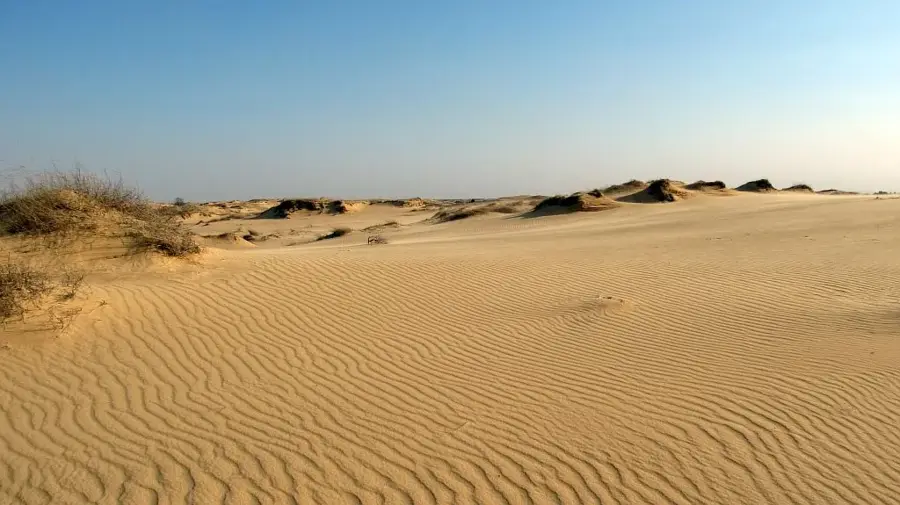
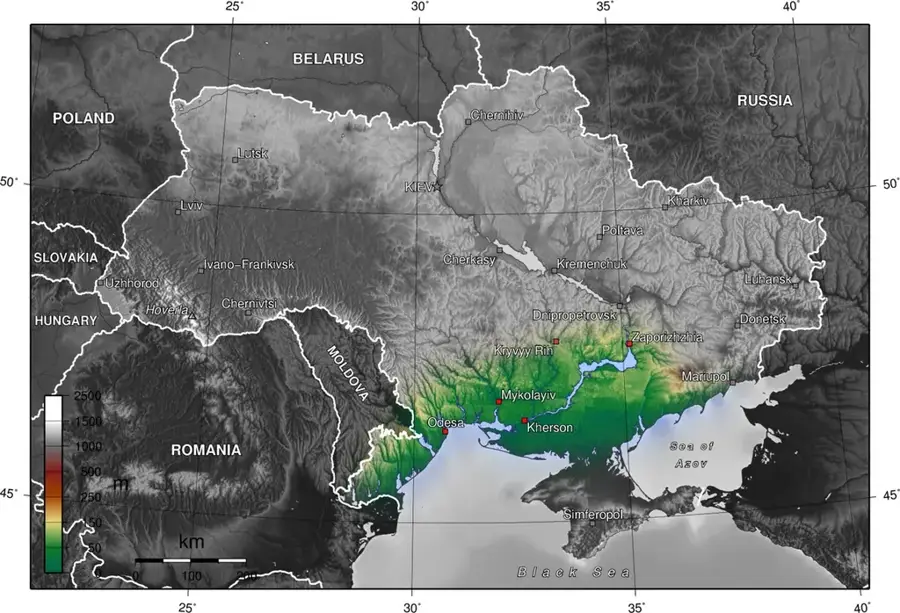
The Oleshky Sands are the largest sand massif in Ukraine and are often incorrectly referred to as Europe's only desert, though ecologically they are classified as semi-desert. Located in the Kherson region, east of the city of Kherson, they span approximately 160,000 hectares. The formation of these vast dunes is attributed to intensive sheep grazing in the 18th and 19th centuries, which destroyed the protective vegetation layer and exposed the sand. To halt the sand's expansion, massive pine forests were planted around the perimeter in the 20th century, which today rank among the world's largest artificial forests. Dunes here reach heights of up to 20 meters, and ground temperatures in summer can exceed 70 degrees Celsius. Since 2010, a portion of the area has been protected as a national nature park to preserve the specific flora and fauna of the sandy steppe. Geographically, the massif is divided into seven distinct 'arenas', each with unique landscape features. Despite extreme conditions, it remains a fascinating destination for researchers and adventure seekers.
- Location: Ukraine
- Nearby: Oleshky (36 km)
Best time to visit & climate
The most pleasant time to visit is May, Jun, Sep.
| Jan | Feb | Mar | Apr | May | Jun | Jul | Aug | Sep | Oct | Nov | Dec | |
|---|---|---|---|---|---|---|---|---|---|---|---|---|
| Avg °C | -2 | 0 | 5 | 11 | 18 | 23 | 26 | 25 | 19 | 11 | 5 | 1 |
| Rain mm | 39 | 33 | 31 | 28 | 43 | 48 | 38 | 25 | 32 | 38 | 34 | 33 |
📋 Practical info
Geography
Facts
- Largest sand area in Ukraine, covering about 161,000 hectares.
- Features shifting dunes reaching heights of up to 20 meters.
- Ground temperatures can hit 75 degrees Celsius in summer.
- Surrounded by the largest man-made forests in the world.
- Was used as a military testing ground in the 20th century.
- The National Nature Park was officially established in 2010.
Explore nearby
Notable places around
Route planner — Car & Motorhome
Where do you start? We build the route here, with stops and country notes along the way.
© OpenStreetMap contributors · OpenRouteService
Sights nearby
Frequently asked questions
Is Oleschky Sands a real desert?
How was the desert formed?
Can you hike there?
How hot does it get in summer?
Are there oases?
Oleshky Sands: where is it located?
Oleshky Sands: when is the best time to visit?
Oleshky Sands: why is it worth visiting?

Nearby cities