Plizio Visual Lab
Kilimanjaro Farmland
Weather…
Water temperature…
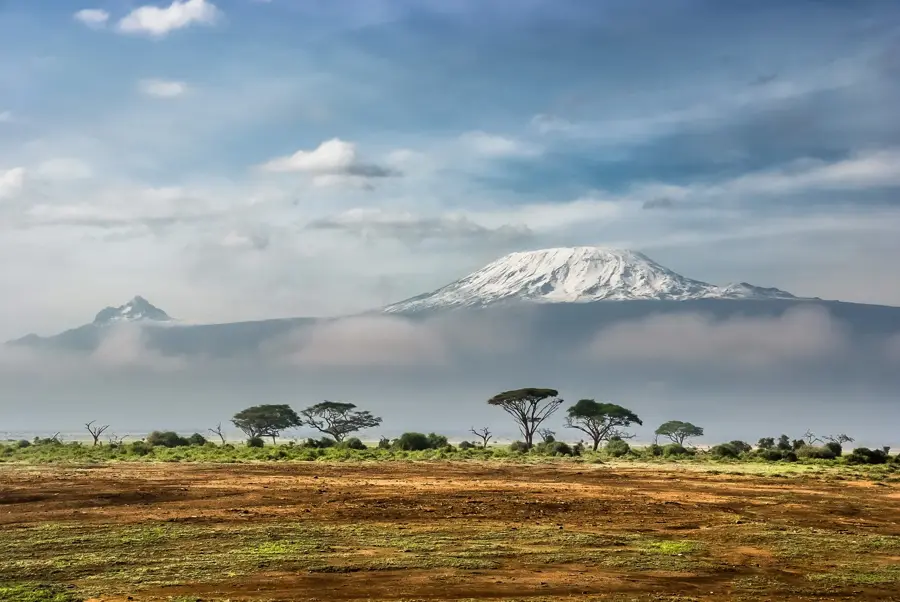
The farmlands on the lower slopes of Mount Kilimanjaro are among Tanzania's most fertile agricultural regions, showcasing a centuries-old cultural landscape. Situated at altitudes between 1,000 and 1,800 meters, farmers, predominantly from the Chagga ethnic group, utilize the nutrient-rich volcanic soil for intensive polyculture. The core of this system is the traditional 'Chagga home garden,' a sophisticated agroforestry model where banana trees provide essential shade for high-quality Arabica coffee. This farming is supported by an ancient network of irrigation furrows that channel meltwater from the mountain's glaciers directly to the fields. In addition to coffee and bananas, the area produces maize, beans, and various vegetables for local consumption. The region is not only economically significant for national exports but also supports one of the most densely populated rural communities in the country.
- Location: Tanzania
- Nearby: Moshi (12 km)
Best time to visit & climate
The most pleasant time to visit is Feb, Aug, Sep.
| Jan | Feb | Mar | Apr | May | Jun | Jul | Aug | Sep | Oct | Nov | Dec | |
|---|---|---|---|---|---|---|---|---|---|---|---|---|
| Avg °C | 18 | 19 | 19 | 18 | 17 | 16 | 15 | 16 | 17 | 18 | 18 | 18 |
| Rain mm | 75 | 68 | 100 | 151 | 109 | 28 | 17 | 19 | 22 | 78 | 142 | 131 |
📋 Practical info
Geography
Facts
- Altitude between 1,000 and 1,800 meters
- Rich volcanic soil from Mt Kilimanjaro
- Main crops are Arabica coffee and bananas
- Uses the traditional 'Chagga home garden' system
- Ancient furrow irrigation network
- One of Tanzania's densest rural populations
Explore nearby
Notable places around
Route planner — Car & Motorhome
Where do you start? We build the route here, with stops and country notes along the way.
© OpenStreetMap contributors · OpenRouteService
Sights in the town Kilimanjaro Farmland (1)
Sights nearby
Frequently asked questions
Can you visit the farms?
When is harvest time?
What is special about it?
Is it family-friendly?
Is there accommodation?
Kilimanjaro Farmland: where is it located?
Kilimanjaro Farmland: when is the best time to visit?
Kilimanjaro Farmland: why is it worth visiting?

Nearby cities
History & landmarks

Nature
More places