Plizio Visual Lab
Swiss National Park
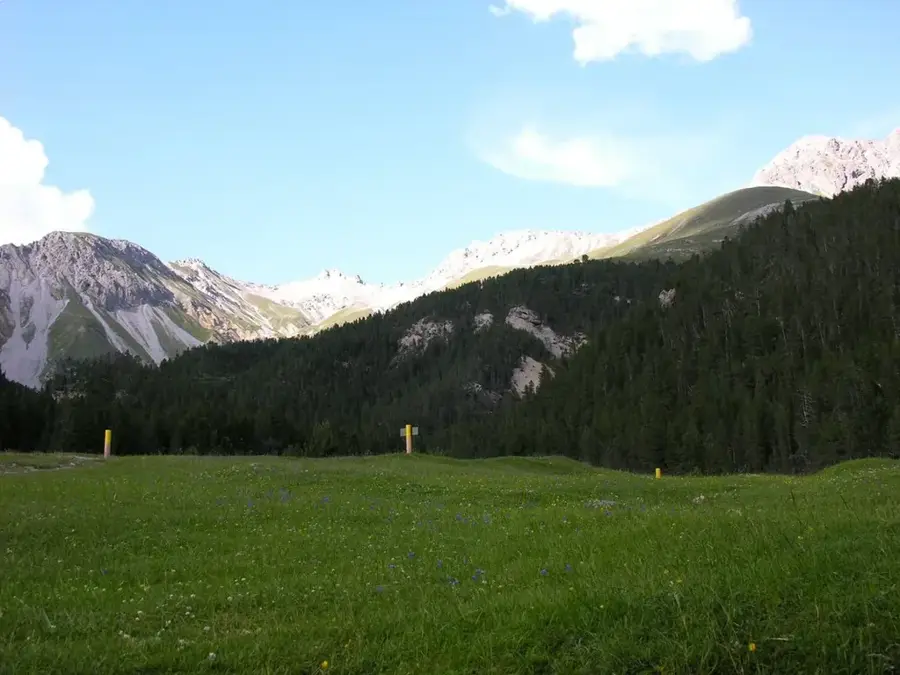
The Swiss National Park in the canton of Graubünden is the oldest protected area of its kind in the Alps and Central Europe. Founded on August 1, 1914, it currently covers an area of approximately 170 square kilometers within the municipalities of Zernez, S-chanf, Scuol, and Val Müstair. It is classified as an IUCN Category Ia strict nature reserve, meaning human intervention is entirely prohibited to allow natural processes to unfold without interference. Visitors must adhere strictly to marked paths to protect sensitive ecosystems and resident wildlife, such as Alpine ibex, chamois, red deer, and marmots. The landscape is defined by rugged peaks, extensive larch forests, and alpine meadows, ranging in elevation from 1,400 to 3,174 meters above sea level. For over a century, the park has functioned as an open-air laboratory for ecological research, providing invaluable data on alpine biodiversity and long-term environmental changes.
- Location: Switzerland
- Top sights: Swiss National Park · Piz Terza · Piz dal Fuorn
- Nearby: Scuol (18 km)
Best time to visit & climate
The most pleasant time to visit is Jun–Aug.
| Jan | Feb | Mar | Apr | May | Jun | Jul | Aug | Sep | Oct | Nov | Dec | |
|---|---|---|---|---|---|---|---|---|---|---|---|---|
| Avg °C | -10 | -10 | -6 | 0 | 5 | 9 | 11 | 11 | 7 | 2 | -3 | -9 |
| Rain mm | 55 | 47 | 61 | 81 | 120 | 129 | 129 | 145 | 99 | 99 | 102 | 65 |
📋 Practical info
Geography
Facts
- The park was officially established on August 1, 1914.
- The total protected area covers 170.3 square kilometers.
- The highest peak in the park is Piz Pisoc at 3,174 meters.
- There are over 80 kilometers of marked hiking trails available.
- The park is home to a population of approximately 1,500 red deer.
- Since 1979, the park has been part of a UNESCO Biosphere Reserve.
Explore nearby
Notable places around

Route planner — Car & Motorhome
Where do you start? We build the route here, with stops and country notes along the way.
© OpenStreetMap contributors · OpenRouteService
Sights in the town Swiss National Park (4)
Sights nearby
Frequently asked questions
Is it allowed to leave the hiking trails?
Are there entrance fees?
Are dogs allowed?
Can one see marmots?
Is camping allowed?
Swiss National Park: where is it located?
Swiss National Park: what is there to see?
Swiss National Park: when is the best time to visit?
Swiss National Park: why is it worth visiting?

Nearby cities