Plizio Visual Lab

Kootwijkerzand
Plizio editorial teamData Sources
valley
—°4
Kootwijkerzand (Netherlands)

Weather…

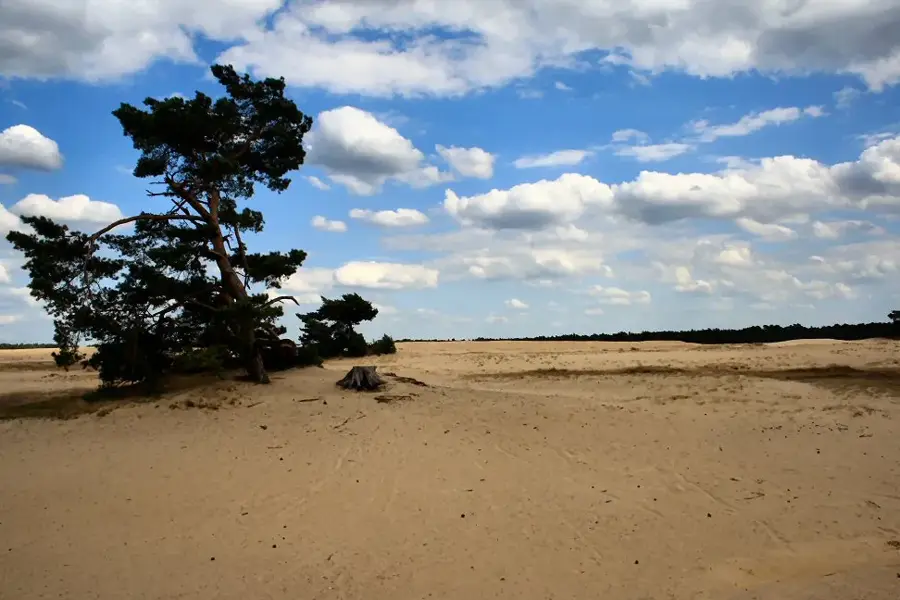
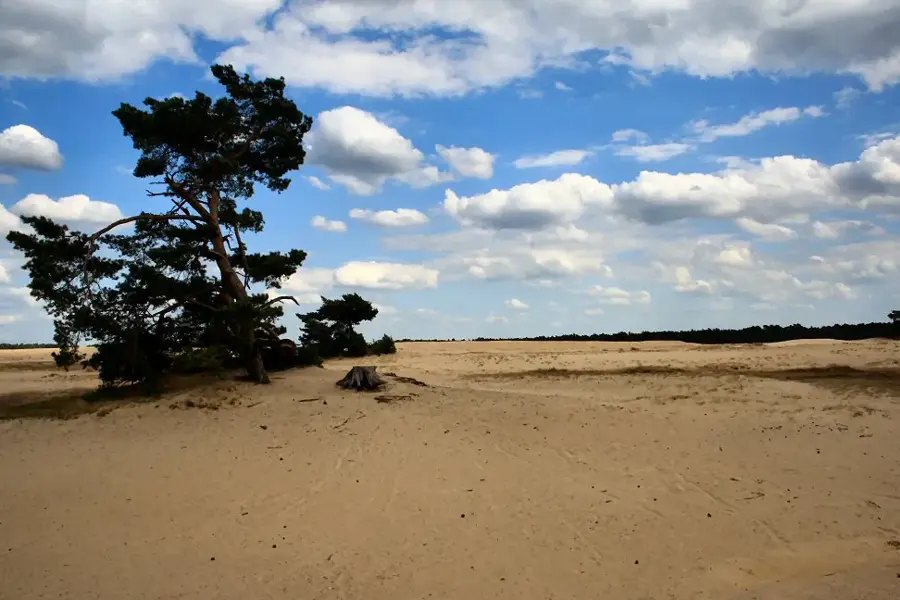
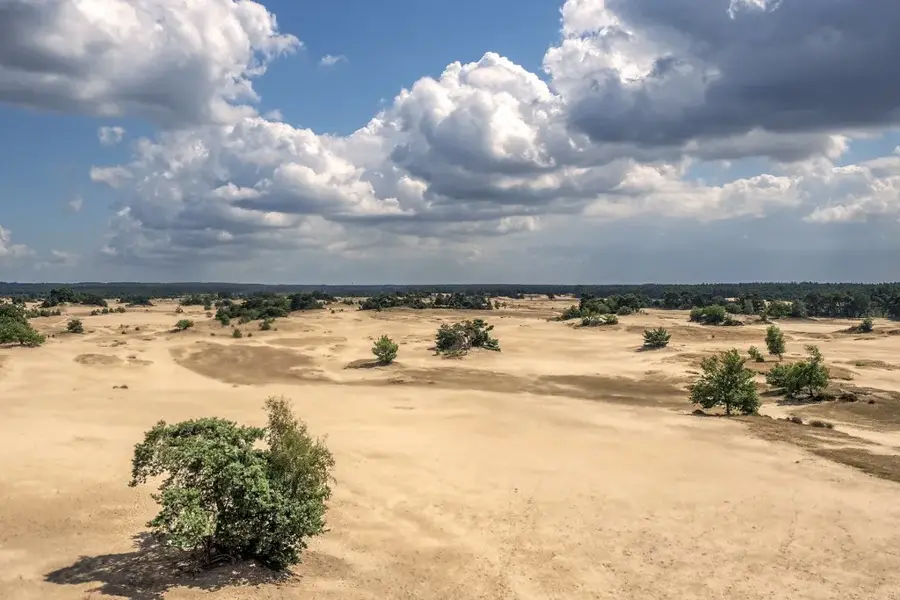
Kootwijkerzand is the largest active sand drift area in Western Europe, covering approximately 700 hectares. Located in the heart of the Veluwe in Gelderland, it was created by medieval overgrazing and sod-cutting, which exposed the loose sand beneath the heathland. Today, the area is actively managed to remain open, protecting rare pioneer plants and insect species that thrive in the extreme temperature fluctuations of the sand. In the center of this 'Dutch Sahara' stands the monumental Radio Kootwijk building, a former telecommunications station built in Art Deco style from reinforced concrete. An observation tower provides visitors with expansive views over the rolling dunes and surrounding forests. The area is a critical habitat for the woodlark and other rare birds. Archaeological excavations have uncovered the remains of a medieval settlement that was eventually buried by the drifting sands.

Best time to visit & climate

The most pleasant time to visit is Jun–Aug.

JanFebMarAprMayJunJulAugSepOctNovDec
Avg °C2351013171918151163
Rain mm746055395959778058646876

📋 Practical info

🧭
Getting there
The open sand landscape in the Veluwe is mostly best reached by car or by bicycle. Starting points for various hikes are typically located in the nearby surrounding villages, such as the town of Kootwijk.
📅
Best season
The area is generally fascinating year-round but can become extremely hot in mid-summer due to the lack of shade. Early morning or late afternoon typically provide the most beautiful lighting for photography.
⛰️
Terrain & paths
Visitors mostly walk through loose drifting sand, which can make hiking quite tiring in certain sections. The open and dynamic structure of the dunes typically ensures a constant transformation of the landscape.
🎒
What to bring
Closed shoes are generally advisable so you don't have to constantly empty sand from them. Sufficient water and strong sun protection are typically essential, as the sun can be quite relentless on the open sand.
🅿️
Parking
There are usually designated parking areas near the edge of the dunes, for example near the watchtower. From there, marked paths typically lead directly into the impressive, desert-like drifting sand landscape.
⚠️
Safety
Due to the exposed terrain, visitors should typically seek shelter in the nearby forests in case of thunderstorms or strong winds. Getting disoriented is usually only a risk during very poor visibility conditions.
⏱️
Time needed
For a walk through the sand and climbing the observation tower, you should typically calculate one to three hours. Walking in the loose sand generally requires more time than hiking on solid, well-paved trails.

Geography

Coordinates
52.16670, 5.75000

Facts

  • Largest active sand drift in Western Europe (700 ha)
  • Located within the Veluwe National Park
  • Radio Kootwijk building in Art Deco style (1918)
  • Extreme ground-level temperature fluctuations
  • Remains of a buried medieval village found here
  • Significant habitat for the rare woodlark

Explore nearby

Notable places around
Route planner — Car & Motorhome

Where do you start? We build the route here, with stops and country notes along the way.

Vehicle
Only stops with (optional):

© OpenStreetMap contributors · OpenRouteService

Sights in the town Kootwijkerzand (4)

De Passiflorahoeve🎡 recreation

A botanical garden and butterfly park known for its passion flowers and exotic insects.

Boswachterij Kootwijk🌿 nature

An extensive forest area and nature reserve near Kootwijkerzand.

De Zandloper🌿 nature

A viewpoint offering wide vistas over the sand dune landscape.

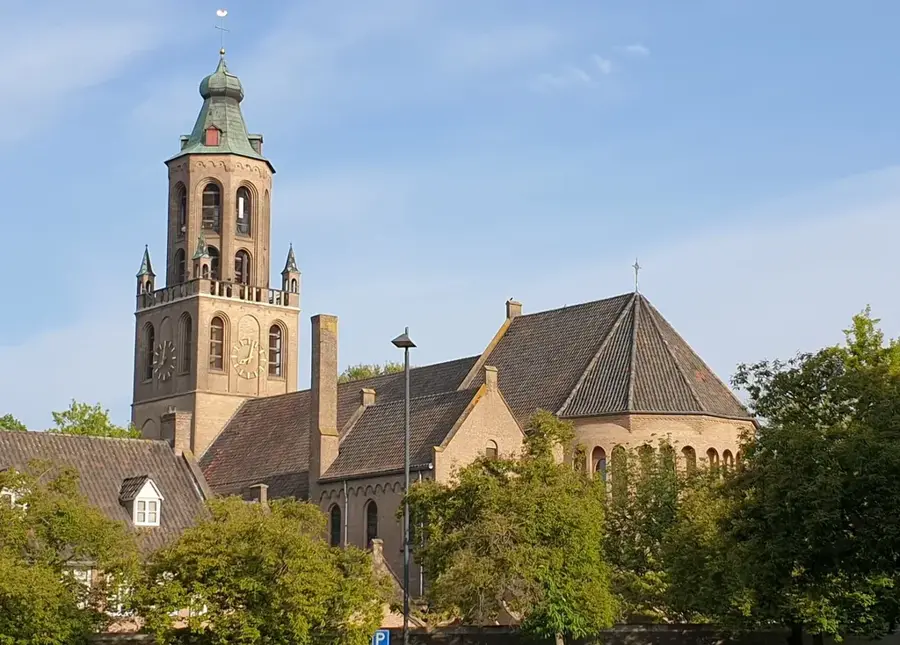
Hervormde kerk Kootwijk⛪ religious

The Reformed Church in Kootwijkerzand, built around 1600 and a listed monument.

Sights nearby

Frequently asked questions

What is Kootwijkerzand?
It is the largest active inland shifting sand area in Western Europe, often called the 'Sahara of the Netherlands'.
Is hiking allowed on the dunes?
Yes, there are marked trails, but the open sand area can be explored freely on foot.
Are there parking lots nearby?
Free parking lots are located at the edge of the area, near the iconic Radio Kootwijk building.
Are dogs allowed?
Dogs are welcome on a leash to protect the local wildlife and the dune structure.
When is the best time to visit?
Early morning or sunset, when the light emphasizes the sand ripples beautifully.
Kootwijkerzand: where is it located?
Kootwijkerzand is located in Gelderland, Netherlands.
Kootwijkerzand: what is there to see?
Highlights include De Passiflorahoeve, Boswachterij Kootwijk, De Zandloper.
Kootwijkerzand: when is the best time to visit?
The most pleasant time to visit is Jun, Aug.
Kootwijkerzand: why is it worth visiting?

Kootwijkerzand is the largest active sand drift area in Western Europe, covering approximately 700 hectares.
View on map → The Top 50 Attractions → OpenStreetMap →
Europe
Explore with Plizio Discover more places in Europe
More places in Netherlands →

Nearby cities

History & landmarks
Nature
More places