Plizio Visual Lab

Khaju Bridge
Plizio editorial teamData Sources
Landmark
—°10
Khaju Bridge (Iran)

Weather…

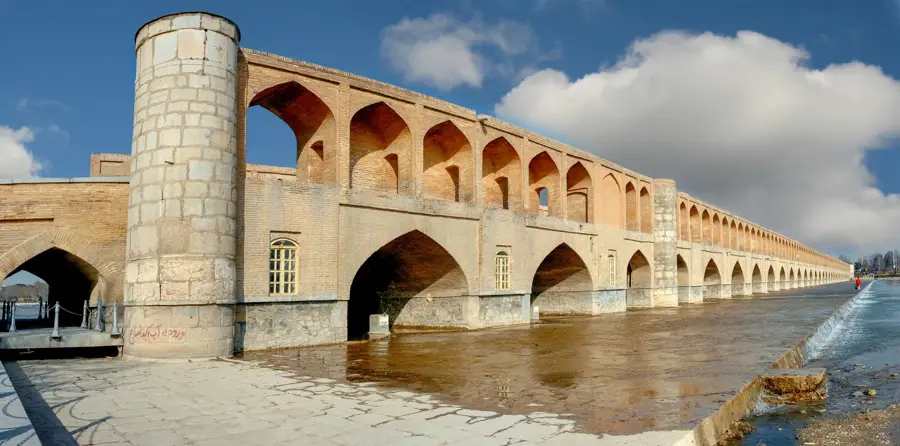
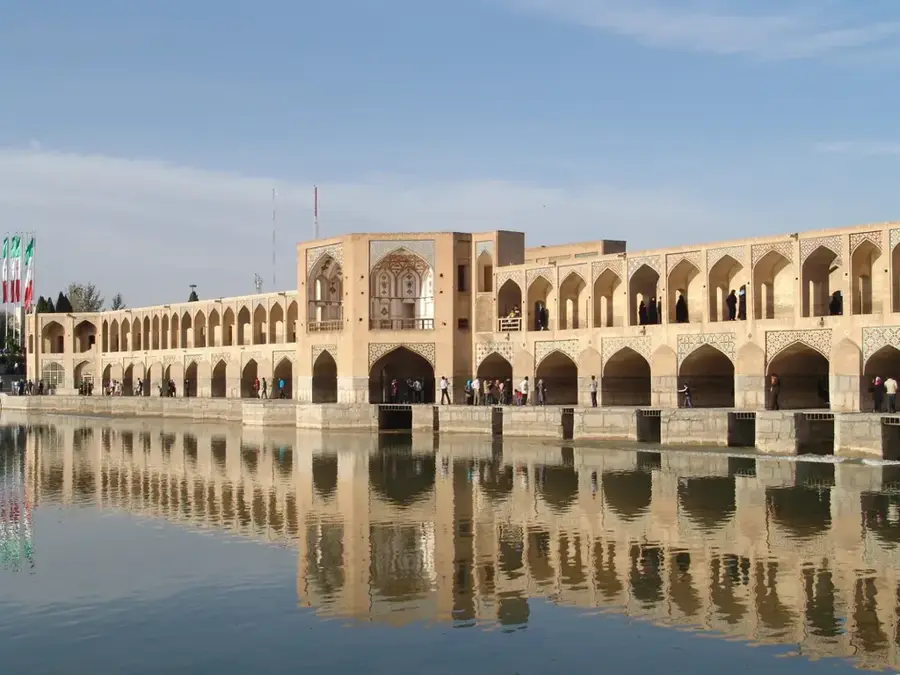
The Khaju Bridge in Isfahan was constructed around 1650 under the reign of Shah Abbas II, built upon the foundations of an older structure. Measuring 133 meters in length and 12 meters in width, it is one of the finest examples of Safavid architectural brilliance, serving dual purposes as both a bridge and a dam. The structure features 23 arches and is designed with two levels, where the lower level provides shaded areas for pedestrians to relax by the water. In the center of the bridge sits a decorative pavilion, which was originally intended for the Shah and his court to observe water festivals and firework displays. Khaju Bridge is not merely a transport route but also a significant social venue, where the acoustics beneath the arches are often utilized for traditional singing by locals. Integrated sluice gates allow for the regulation of the Zayandeh Rud river's water level to facilitate the irrigation of downstream gardens. The intricate tile mosaics and frescoes found within the pavilion reflect the high aesthetic standards of the Safavid period.

Best time to visit & climate

The most pleasant time to visit is May, Jun, Sep.

JanFebMarAprMayJunJulAugSepOctNovDec
Avg °C1381319252726221683
Rain mm2927353411221173134

📋 Practical info

🚪
Visiting
The bridge is a public pedestrian walkway open day and night without any entry fee. You can walk across and admire the architecture from both inside the pavilions and outside on the riverbank.
🕒
Typical hours
As an open-air structure, it is accessible 24 hours a day, but the best time to visit is during daylight to see the tile work. At night, the bridge is often lit, making it a popular evening spot.
📷
Photography
Photography is unrestricted on the bridge; bring a tripod for night shots of the reflections. Be mindful of other pedestrians and avoid obstructing the path.
⏱️
Time needed
A leisurely walk across the bridge takes about 15 to 20 minutes, but you can easily spend an hour taking photos and sitting in the alcoves. Combine with the surrounding park for a longer stay.
Combine with
Combine your visit with the nearby Si-o-se-pol (Allahverdi Khan Bridge) and the Hasht Behesht Palace. The entire Zayandeh Rud riverbank is a scenic promenade with cafes and gardens.
🧭
Getting there
The bridge is located in central Isfahan, a short walk from the city's main square (Naqsh-e Jahan). You can reach it by taxi, bus, or by walking along the river's edge.
💡
Insider tip
Visit at sunset when the golden light enhances the stonework and the river reflects the colors. Then stay for the nighttime illumination - especially beautiful during the Persian New Year (Nowruz).

Geography

Coordinates
32.63670, 51.68300

Facts

  • The Khaju Bridge was completed in 1650 by order of Shah Abbas II.
  • The bridge spans 133 meters in length and is exactly 12 meters wide.
  • It features 23 distinct stone arches that also house sluice gates.
  • The structure acts as a dam to regulate the flow of the Zayandeh Rud.
  • The central pavilion once contained elaborate frescoes for the royal court.
  • Two stone lions guard the entrances at both ends of the bridge.

Explore nearby

Notable places around
Route planner — Car & Motorhome

Where do you start? We build the route here, with stops and country notes along the way.

Vehicle
Only stops with (optional):

© OpenStreetMap contributors · OpenRouteService

Sights in the town Khaju Bridge (10)

khane sabz complex🌿 nature

The khane sabz complex serves as a viewpoint located in khaju-bridge-landmarks-v2.

Khajoo bridge🏺 historical

Khajoo bridge is a historical monument situated in khaju-bridge-landmarks-v2.

Arthur Pope & Phyllis Ackerman Tomb🏺 historical

The Arthur Pope & Phyllis Ackerman Tomb is a notable monument located in khaju-bridge-landmarks-v2.

Joubi Bridge📍 landmark

Joubi Bridge is a local attraction found in khaju-bridge-landmarks-v2.

Carvansary📍 landmark

Carvansary is a tourist attraction situated in khaju-bridge-landmarks-v2.

Negarestan-e-Emam🏛 museum

Negarestan-e-Emam is a museum located in khaju-bridge-landmarks-v2.

Masjid Khajo📍 landmark

Masjid Khajo is a Muslim religious site in khaju-bridge-landmarks-v2.

Keshavarzi Marketplace🎭 culture

Keshavarzi Marketplace is a local marketplace in khaju-bridge-landmarks-v2.

Armaghan🎭 culture

Armaghan is a marketplace situated in khaju-bridge-landmarks-v2.

Qaem🎭 culture

Qaem is a bustling marketplace located in khaju-bridge-landmarks-v2.

Sights nearby

Frequently asked questions

What is Khaju Bridge famous for?
It is famous for its two-story architecture and its function as a weir and sluice system.
Can you walk on the bridge?
Yes, the bridge is a pedestrian-only zone and a popular meeting spot for locals.
Why do people sing under the bridge?
The arches provide excellent acoustics, attracting evening singers from all over Isfahan.
When does the Zayandeh Rud river have water?
Unfortunately, the river is often dry; it is most likely to have water in spring during snowmelt.
Is there nighttime lighting?
Yes, at night the bridge is beautifully illuminated, and the atmosphere is very lively.
Khaju Bridge: where is it located?
Khaju Bridge is located in Iran.
Khaju Bridge: what is there to see?
Highlights include khane sabz complex, Khajoo bridge, Arthur Pope & Phyllis Ackerman Tomb.
Khaju Bridge: when is the best time to visit?
The most pleasant time to visit is May, Jun, Sep.
Khaju Bridge: why is it worth visiting?

The Khaju Bridge in Isfahan was constructed around 1650 under the reign of Shah Abbas II, built upon the foundations of an older structure.
View on map → The Top 50 Attractions → OpenStreetMap →
Asia
Explore with Plizio Discover more places in Asia
More places in Iran →

Nearby cities

History & landmarks
More places