Plizio Visual Lab
Mirogoj Cemetery Zagreb
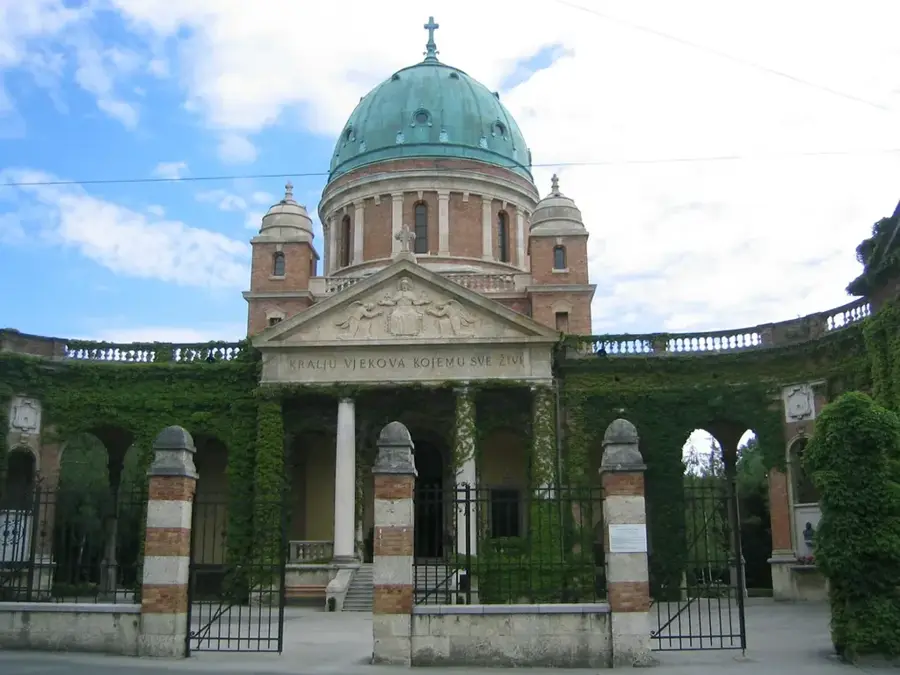
Mirogoj Cemetery in Zagreb is widely regarded as one of the most beautiful cemeteries in Europe, serving as much more than just a resting place; it is a comprehensive architectural masterpiece. Established in 1876 on the former estate of the linguist Ljudevit Gaj, it was designed by the renowned architect Hermann Bollé. Its most striking feature is the impressive 500-meter-long arcade sequence with its 20 green copper domes, giving the cemetery the appearance of a monumental fortress or palace. Mirogoj is a symbol of Zagreb's religious and cultural diversity, as people of all faiths, Catholic, Orthodox, Muslim, and Jewish, are buried here side by side. Many prominent figures in Croatian history, including politicians, poets, and scientists, have found their final resting place here. The expansive parklands and ornate funerary monuments make the cemetery an open-air museum of sculpture. A walk through the arcades provides an atmosphere of profound silence and architectural elegance.
- Location: Croatia
- Top sights: kapela Krista Kralja · Spomenik neidentificiranim žrtvama željezničke nesreće 1974. Vojina Bakića · kapela svetih apostola Petra i Pavla
- Nearby: Zaprešić (14 km)
Best time to visit & climate
The most pleasant time to visit is Jun–Aug.
| Jan | Feb | Mar | Apr | May | Jun | Jul | Aug | Sep | Oct | Nov | Dec | |
|---|---|---|---|---|---|---|---|---|---|---|---|---|
| Avg °C | -1 | 1 | 6 | 11 | 16 | 20 | 23 | 22 | 17 | 11 | 6 | 1 |
| Rain mm | 52 | 60 | 59 | 62 | 92 | 86 | 82 | 83 | 107 | 83 | 80 | 63 |
📋 Practical info
Geography
Facts
- The cemetery was officially opened as a municipal burial ground in 1876.
- The famous arcades were constructed by Hermann Bollé between 1879 and 1917.
- The complex spans a total length of 500 meters and features 20 domes.
- Mirogoj was the first cemetery in Zagreb to be open to all religious denominations.
- The grave of the first Croatian president, Franjo Tuđman, is located here.
- The arcades house the ornate mausoleums of Zagreb's most prominent families.
Explore nearby
Notable places around

Route planner — Car & Motorhome
Where do you start? We build the route here, with stops and country notes along the way.
© OpenStreetMap contributors · OpenRouteService
Sights in the town Mirogoj Cemetery Zagreb (10)
Gradsko kazalište Žar ptica
Croatian Theater for Children and Youth in Zagreb, performing educational and entertaining plays.
crkva svetog Franje Ksaverskog
Church building in Zagreb, dedicated to Saint Francis of Assisi, located in the Ksaver district.
Capanik
Manor house in Zagreb, historic estate with a park, now used for events.
Gliptoteka Hrvatske akademije znanosti i umjetnosti🏛 museum
Museum of the Croatian Academy of Sciences and Arts, collection of plaster casts and sculptures.
Mala scena
Theatre in Zagreb, known for contemporary and experimental performances.
Popov toranj
Fortification tower in Zagreb, part of the medieval city walls, popularly called Priest's Tower.
Sights nearby
Frequently asked questions
Who designed the Mirogoj cemetery?
Is entry free?
How do you get there from the city center?
What is special about the arcades?
Is Mirogoj only for Catholics?
Mirogoj Cemetery Zagreb: where is it located?
Mirogoj Cemetery Zagreb: what is there to see?
Mirogoj Cemetery Zagreb: when is the best time to visit?
Mirogoj Cemetery Zagreb: why is it worth visiting?

Nearby cities