Plizio Visual Lab
Ghardaia
ℹ️Practical info — Ghardaia
▾
🌤 Weather — 5 days
📍 Nearby
Sights nearby
💡 Tips
- Explore the ancient ksar (fortified city) with a local guide, as entry into some traditional neighborhoods is restricted for unaccompanied visitors.
- Respect the conservative local culture by dressing modestly; women should ensure shoulders and knees are covered.
- Photography of people, especially women, is strictly forbidden in many areas of the M'zab valley. Always ask first.
- Visit the market square in the morning to see the bustling trade, but note that it closes during mid-day prayers.
🍽 Food
A regional M'zab specialty often served in local family-run eateries near the old town.
Enjoy a strong, sweet mint tea in one of the small cafes bordering the main market square.
The region is famous for its high-quality dates, available fresh or dried from market vendors.
🛍 Shopping · 🧘 Quiet spots
Look for hand-woven carpets with traditional geometric patterns in the old town's souk.
Local artisans produce distinctive, simple clay pottery first-rate for souvenirs.
Walk through the vast palm groves outside the city center, a peaceful oasis system with ancient irrigation.
A quiet, architecturally unique site reflecting the austere beauty of the region (maintain respectful silence).
Water temperature…
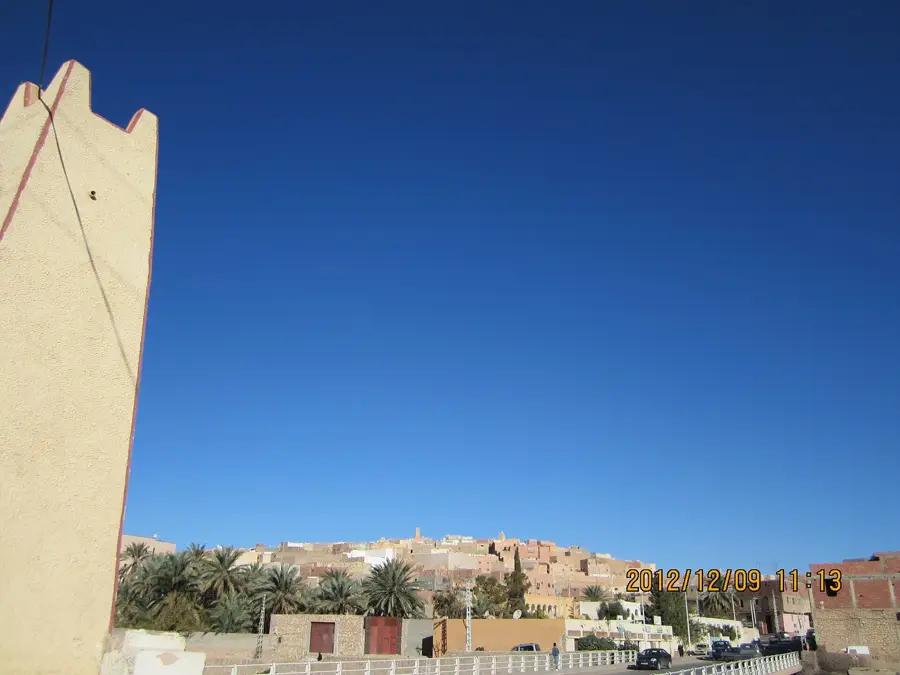
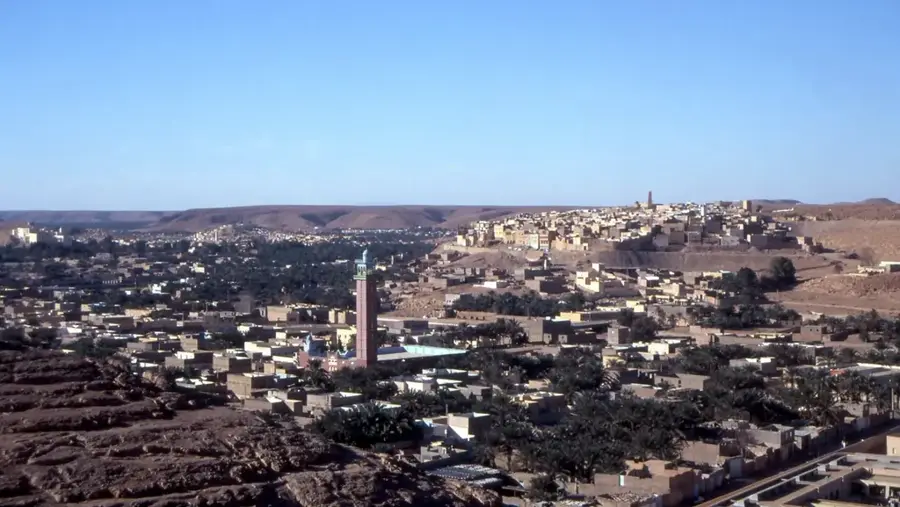
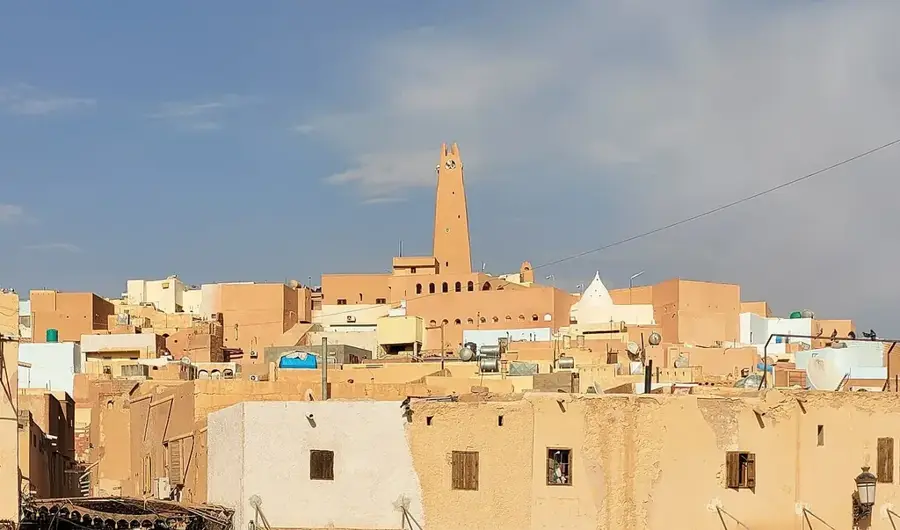
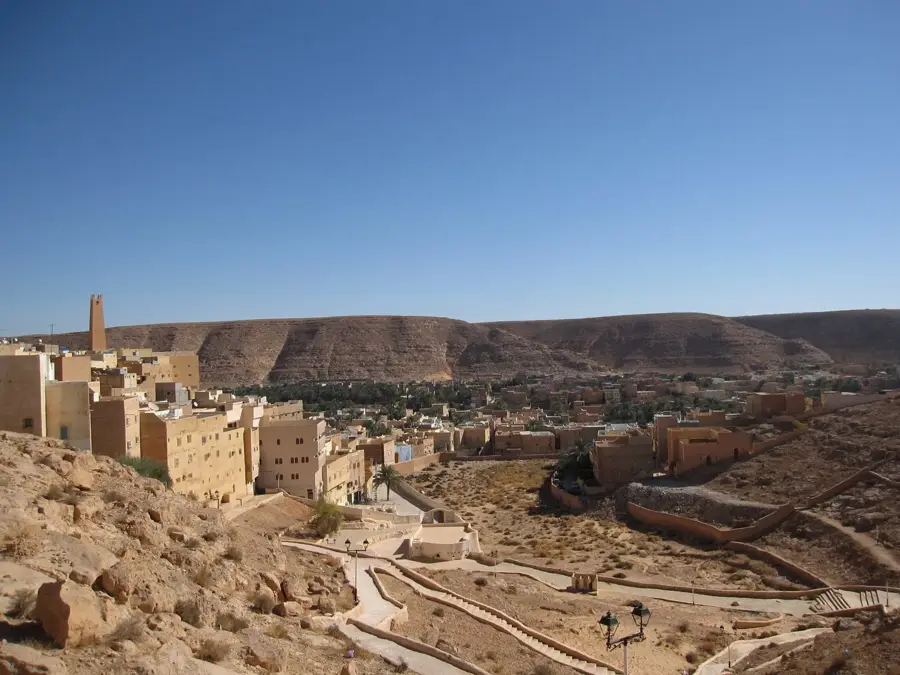
Ghardaia, the heart of the M'zab Valley at the edge of the Sahara, is one of Algeria's most architecturally fascinating cities and has been a UNESCO World Heritage site since 1982. Founded in the 11th century by the Mozabites, it is part of a Pentapolis consisting of five fortified cities (ksour) planned strictly according to religious and social principles. The architecture of Ghardaia is characterized by its functional, ochre-colored earthen buildings and the distinctive minaret of the central mosque crowning the city's highest point. A sophisticated traditional irrigation system allowed the extensive palm groves to survive in the region's extreme aridity. The social structure of the Mozabites remains deeply rooted today, reflected in the preservation of traditional crafts like carpet weaving and the maintenance of a strict urban order. Ghardaia serves as a vital commercial hub for the region and is famous for its spirited marketplace where handcrafted goods and agricultural products are traded. The city stands as an outstanding example of a human settlement perfectly adapted to an exceptionally challenging environment.
- Location: Algeria
- Population: ~142.913 (2026)
Best time to visit & climate
The most pleasant time to visit is Apr, May, Oct.
| Jan | Feb | Mar | Apr | May | Jun | Jul | Aug | Sep | Oct | Nov | Dec | |
|---|---|---|---|---|---|---|---|---|---|---|---|---|
| Avg °C | 9 | 10 | 15 | 19 | 24 | 30 | 34 | 33 | 28 | 22 | 14 | 10 |
| Rain mm | 11 | 4 | 11 | 7 | 7 | 4 | 2 | 4 | 13 | 10 | 8 | 9 |
Geography
Facts
- Founded in 1048 by the Mozabite community.
- UNESCO World Heritage site (M'zab Valley) since 1982.
- One of the five cities forming the M'zab Pentapolis.
- Renowned for its traditional handmade carpet production.
- Features a centuries-old, complex hydraulic irrigation system.
- The urban layout inspired modern architects like Le Corbusier.
Explore nearby
Notable places around


Route planner — Car & Motorhome
Where do you start? We build the route here, with stops and country notes along the way.
© OpenStreetMap contributors · OpenRouteService
Sights in the town Ghardaia (1)
Frequently asked questions
What is the M'Zab Valley?
Who are the Mozabites?
Do you need a guide for Ghardaia?
Is photography allowed in Ghardaia?
What is special about the architecture?
Ghardaia: where is it located?
Ghardaia: when is the best time to visit?
Ghardaia: why is it worth visiting?

Nearby cities
History & landmarks
Nature
More places