Plizio Visual Lab
Kairouan
ℹ️Practical info — Kairouan
▾
🌤 Weather — 5 days
📍 Nearby
Sights nearby
💡 Tips
- Dress modestly, especially when visiting the Great Mosque; ensure your shoulders and knees are covered.
- Buy a unified ticket from the tourist office, which grants access to the main historical sites.
- Explore the city early in the morning to beat the intense midday heat.
- Enjoy haggling in the Medina, as it feels much more genuine and less touristy than the coastal towns.
🍽 Food
Sweet date-filled semolina pastries; buy them freshly made from stalls in the Medina.
A spicy mix of fried vegetables, popular as street food and often served in a baguette.
Try the hearty local version at family-run restaurants just outside the old town.
🛍 Shopping · 🧘 Quiet spots
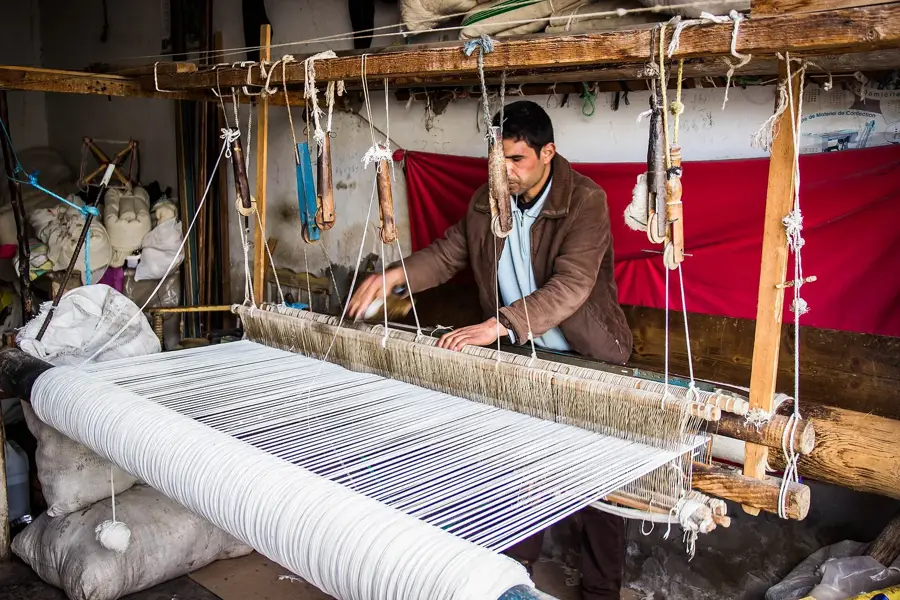
Visit a traditional workshop in the Medina for authentic, world-famous hand-knotted rugs.
The souks are filled with beautifully decorated trays and lamps made by local artisans.
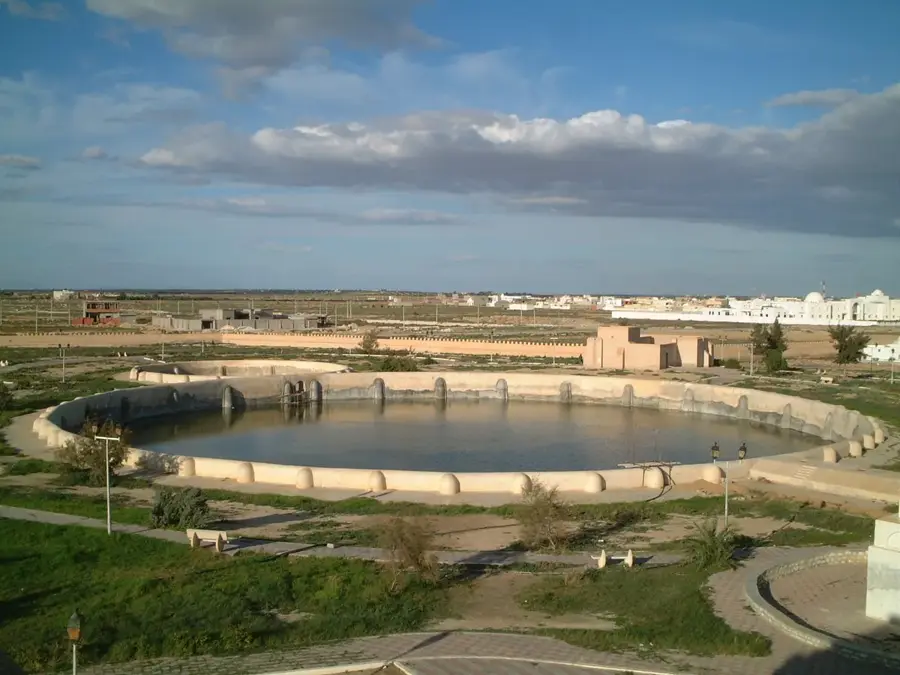
These ancient water reservoirs offer a peaceful atmosphere, especially in the evening.
Admire the beautiful tilework in the quiet, spiritual setting of this mausoleum complex.
Water temperature…
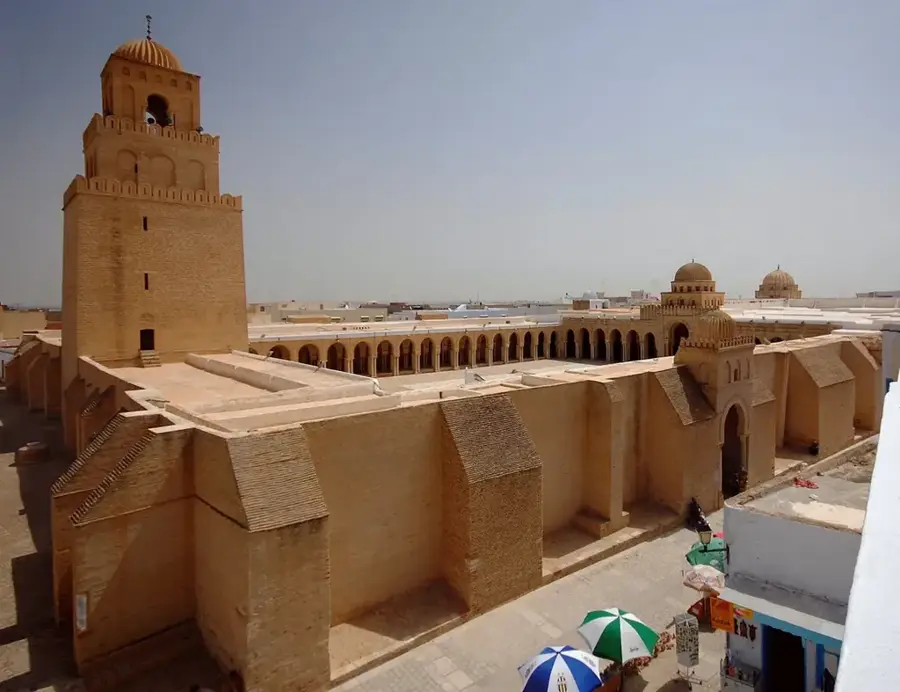
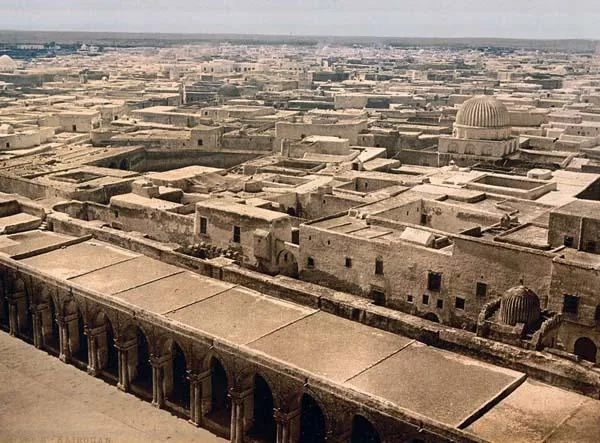
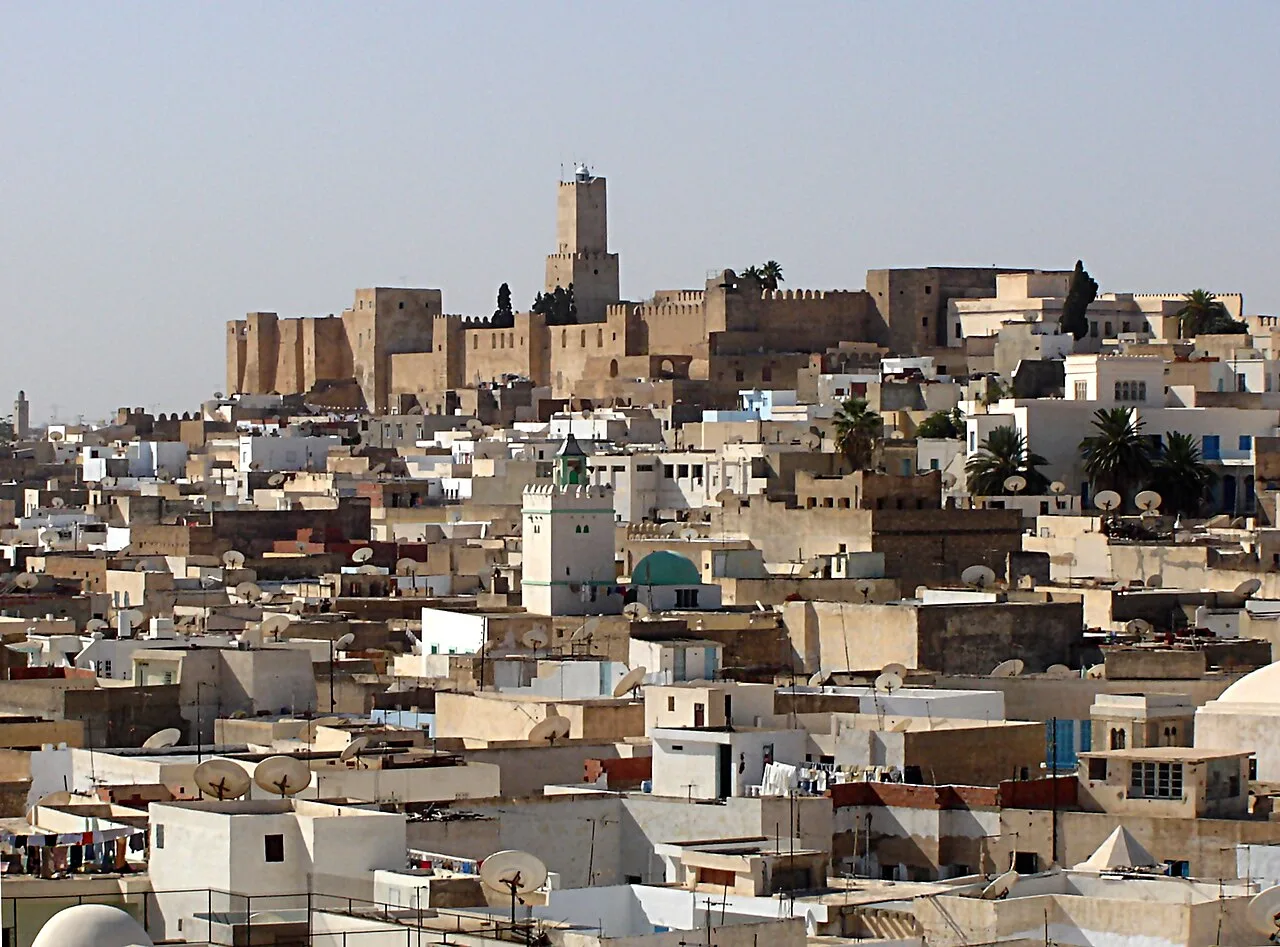
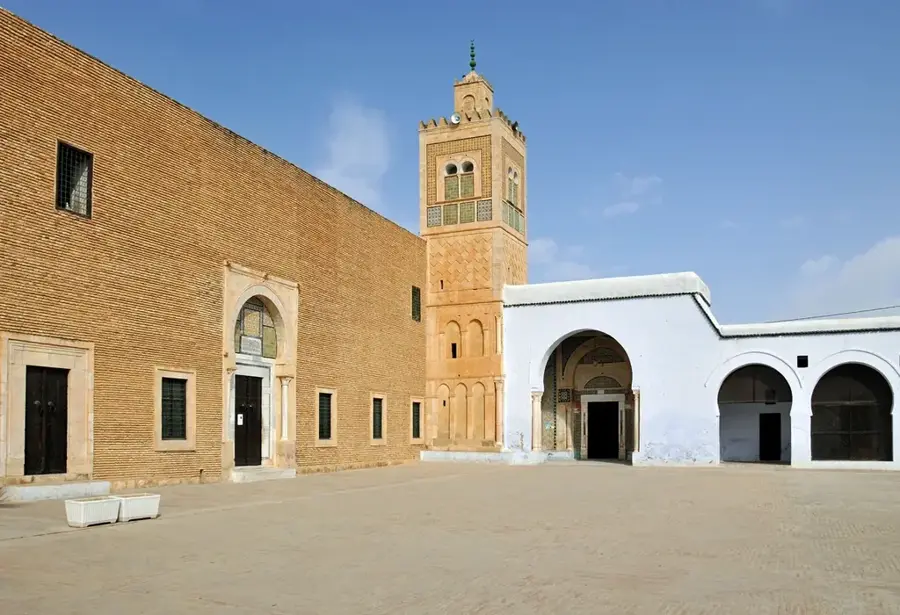
Kairouan, situated in the central plains of Tunisia, stands as the spiritual heart of the nation and the fourth holiest city in Islam after Mecca, Medina, and Jerusalem. Founded in 670 AD by the Arab general Uqba ibn Nafi, it became the first Islamic capital in North Africa and a launchpad for the expansion of Arab culture across the Maghreb and into Andalusia. The city's crown jewel is the Great Mosque of Kairouan, a masterpiece of Islamic architecture that features a forest of ancient columns and a massive prayer hall. Under the Aghlabid dynasty in the 9th century, Kairouan flourished as a global center of learning, attracting scientists, physicians, and poets from across the Islamic world. To sustain its population in a semi-arid environment, the Aghlabids constructed the massive open-air cisterns known as the Aghlabid Basins, which remain a testament to medieval engineering. The Medina of Kairouan, a UNESCO World Heritage site since 1988, is a pristine example of an early Islamic urban center, with its labyrinthine streets, monumental gates, and the exquisite Mosque of the Three Doors. The city is world-renowned for its hand-knotted carpets, a craft tradition passed down through generations of local women, and for 'Makroudh', a traditional honey-soaked pastry that has become a national symbol. Economically, Kairouan serves as a vital administrative hub for the interior, with its surroundings dominated by olive groves and sheep farming. The city's atmosphere is one of profound historical gravitas, where the call to prayer echoes through the ancient alleyways, yet it remains a dynamic center for modern education and trade, bridging the gap between its glorious medieval past and the aspirations of 21st-century Tunisia.
- Location: Tunisia
- Top sights: Barrouta Well · Sidi Abid el-Ghariani Zaouia
- Nearby: Akouda (47 km)
- Population: ~139.070 (2026)
Best time to visit & climate
The most pleasant time to visit is Apr, May, Oct.
| Jan | Feb | Mar | Apr | May | Jun | Jul | Aug | Sep | Oct | Nov | Dec | |
|---|---|---|---|---|---|---|---|---|---|---|---|---|
| Avg °C | 10 | 10 | 14 | 17 | 21 | 26 | 30 | 29 | 25 | 21 | 15 | 11 |
| Rain mm | 37 | 27 | 50 | 35 | 29 | 19 | 9 | 25 | 53 | 46 | 34 | 41 |
Geography
Facts
- Kairouan is known as the 'City of 50 Mosques' due to its numerous religious structures.
- The Great Mosque's prayer hall features 17 aisles and a majestic mihrab from the 9th century.
- The city was the capital of the Aghlabid Emirate, which ruled over parts of Italy and Malta.
- Kairouan's rugs are classified by the number of knots per square meter, reaching up to 500,000.
- The Aghlabid Basins were part of a 36-kilometer-long aqueduct system.
- The city's Medina has preserved its layout and character for over a millennium.
- Kairouan is a major center for the production of olive oil in central Tunisia.
- The 'Festival of Mouled' (Prophet's Birthday) is celebrated here with great fanfare.
Explore nearby
Notable places around

Route planner — Car & Motorhome
Where do you start? We build the route here, with stops and country notes along the way.
© OpenStreetMap contributors · OpenRouteService
Sights in the town Kairouan (2)
Frequently asked questions
Do I need to pay for entry in Kairouan?
Can non-Muslims visit the mosques?
When should I visit Kairouan?
What is the local dish?
How long to stay?
Kairouan: where is it located?
Kairouan: what is there to see?
Kairouan: when is the best time to visit?
Kairouan: why is it worth visiting?

Nearby cities
History & landmarks
More places