Plizio Visual Lab
Saint-Ursanne
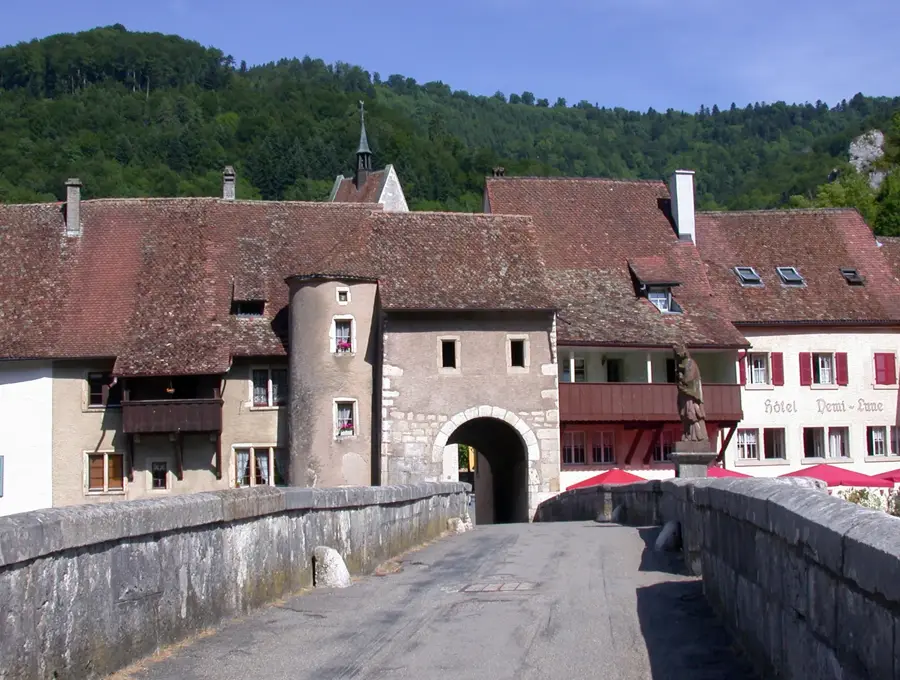
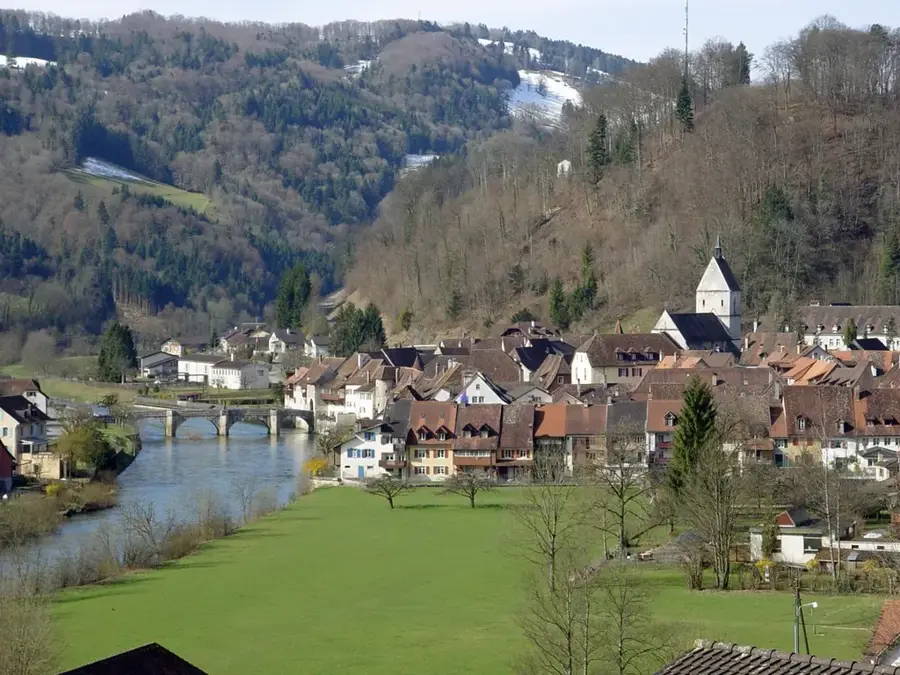
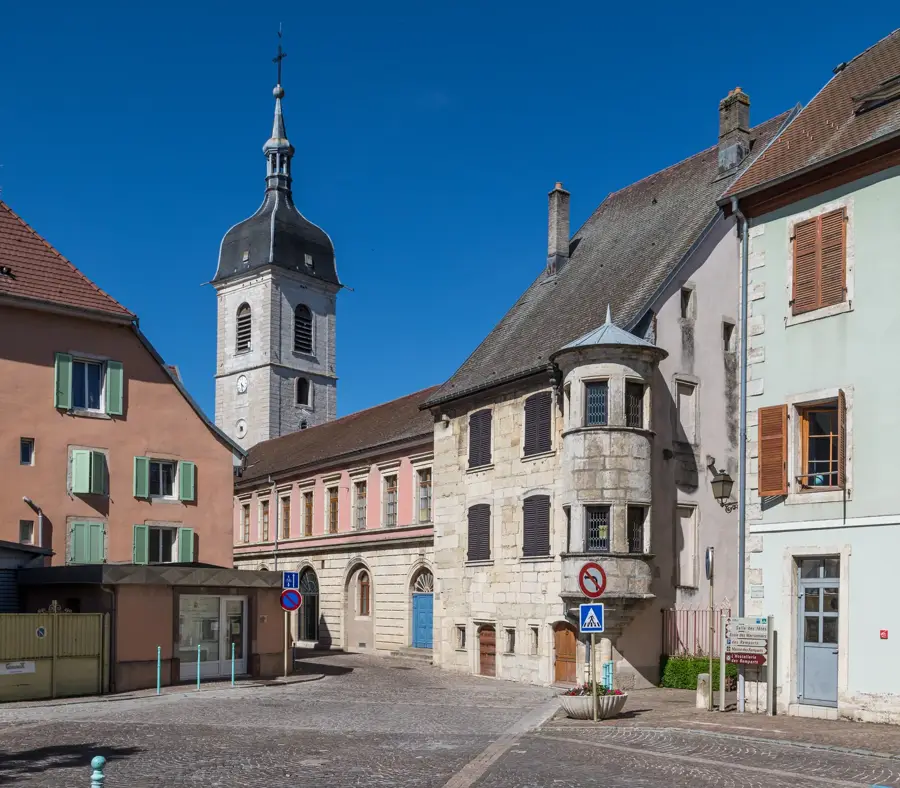
Saint-Ursanne is often called the 'Pearl of the Jura'. The small town is picturesquely situated in a loop of the Doubs river and seems frozen in time. The settlement traces its origins back to the hermitage of Saint Ursicinus, who settled here in the 7th century. Its centerpiece is the monumental collegiate church with a Romanesque cloister and a magnificent 12th-century south portal. Three medieval city gates mark the entrances to the historical core, which is almost entirely pedestrianized. The stone bridge Pont Saint-Jean over the Doubs, guarded by a statue of Saint John of Nepomuk, is one of the region's most photographed spots. The surrounding nature of the Clos du Doubs invites canoeing, hiking, and mountain bike tours. Every two years, the 'Médiévales' takes place here, one of Switzerland's largest medieval festivals, attracting tens of thousands of visitors. Culinary-wise, the region is famous for Doubs trout and Damassine brandy. Arrival is possible by train through the Mont-Terri tunnel. The best time to visit is from May to October, when river activities can be fully enjoyed. Saint-Ursanne features an incomparable atmosphere of silence and historical depth.
- Location: Switzerland
- Top sights: Atelier 104 · Grotte de l'ermitage · Foto-Spot Saint-Ursanne
- Nearby: Delémont (14 km)
- Population: ~683 (2013)
Best time to visit & climate
The most pleasant time to visit is Jun–Aug.
| Jan | Feb | Mar | Apr | May | Jun | Jul | Aug | Sep | Oct | Nov | Dec | |
|---|---|---|---|---|---|---|---|---|---|---|---|---|
| Avg °C | 0 | 1 | 4 | 9 | 13 | 17 | 19 | 18 | 14 | 10 | 5 | 1 |
| Rain mm | 77 | 62 | 74 | 69 | 105 | 95 | 91 | 98 | 73 | 91 | 80 | 89 |
📋 Practical info
Geography
Facts
- Founded by the hermit Ursicinus
- 12th-century collegiate church
- Located on the banks of the Doubs
- Historic Pont Saint-Jean stone bridge
- Three preserved medieval city gates
- Host of the 'Médiévales' festival
- Gateway to the Clos du Doubs nature park
- Famous for Doubs trout dishes
Explore nearby
Notable places around

Route planner — Car & Motorhome
Where do you start? We build the route here, with stops and country notes along the way.
© OpenStreetMap contributors · OpenRouteService
Sights in the town Saint-Ursanne (6)
Sights nearby
Frequently asked questions
Which landmark is particularly well-known in Saint-Ursanne?
Can you swim or canoe on the river Doubs?
Is there an entrance fee for the historic collegiate church?
What culinary specialty is typical for the region?
When does the famous medieval festival take place?
Saint-Ursanne: where is it located?
Saint-Ursanne: what is there to see?
Saint-Ursanne: when is the best time to visit?
Saint-Ursanne: why is it worth visiting?

Nearby cities
History & landmarks
Nature
More places