Plizio Visual Lab
St. Ursanne City Walls
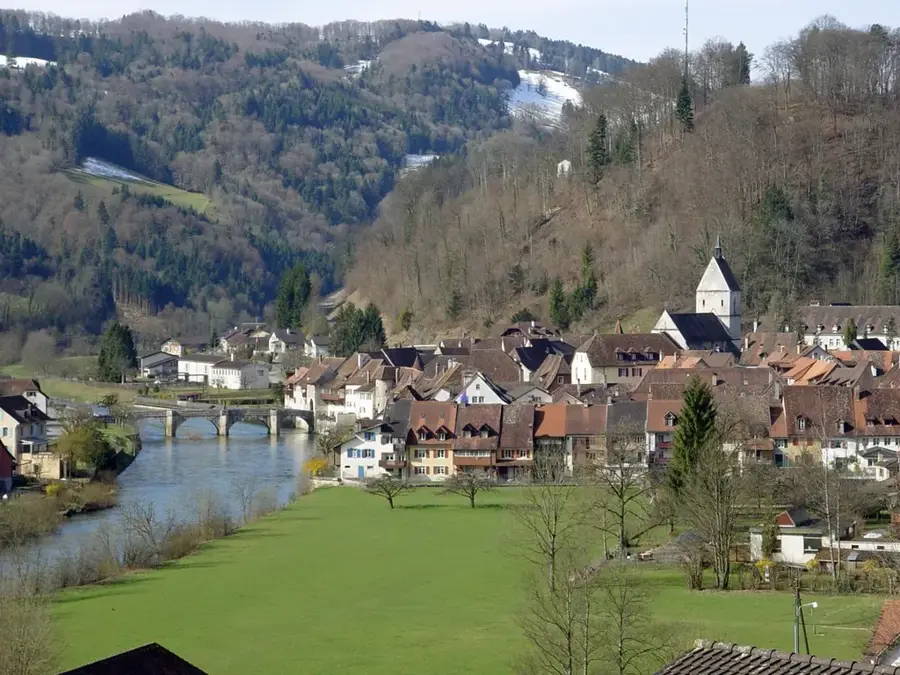
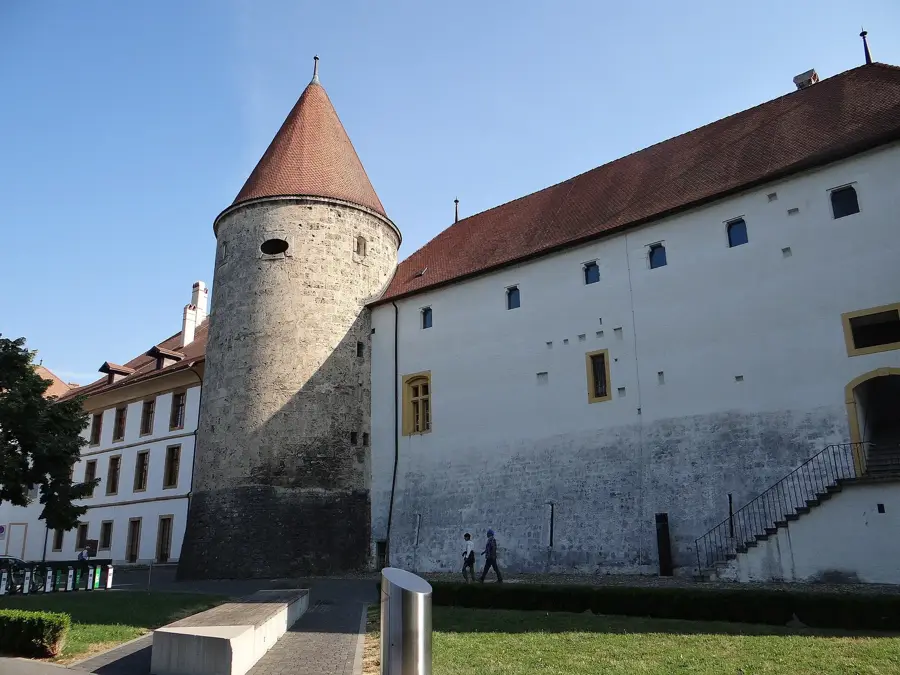
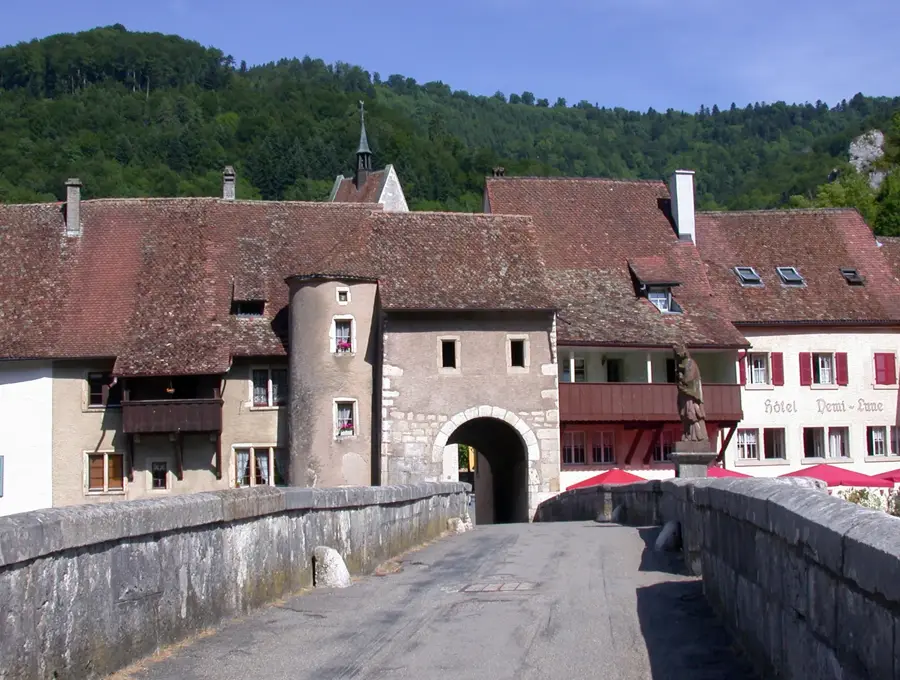
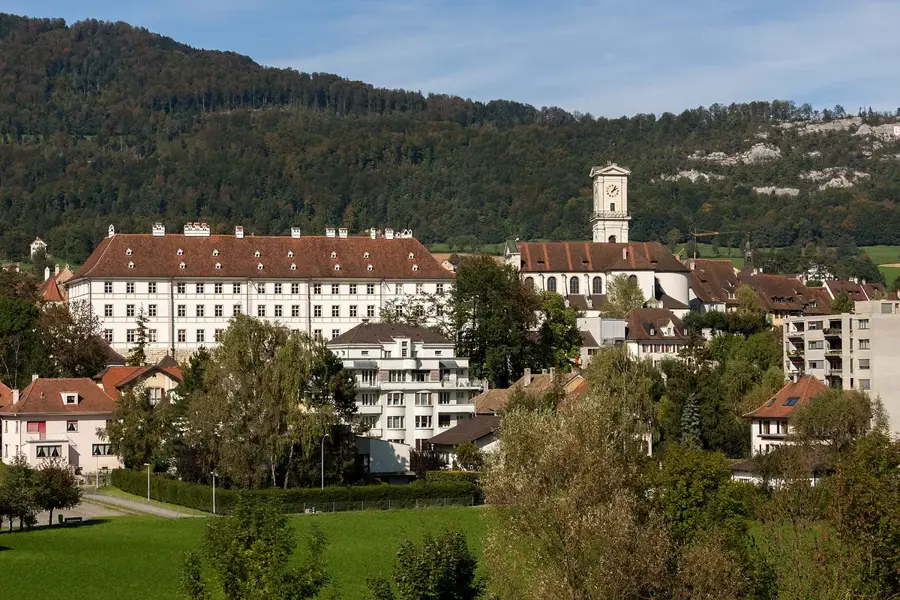
Saint-Ursanne, often called the 'Pearl of the Jura,' is a medieval small town on the banks of the Doubs river whose fortifications remain largely intact. The city walls were constructed in the 14th century to protect the significant monastery and the surrounding settlement from raids. Even today, the three monumental city gates, Porte Saint-Paul, Porte Saint-Pierre, and Porte Saint-Nicolas, characterize the townscape and mark the historical access points. The defensive walls encircle the compact town center and have been integrated into residential houses in several areas. For centuries, Saint-Ursanne was an important religious hub, as it housed the relics of Saint Ursicinus, a 7th-century hermit. The combination of formidable walls, the Romanesque-Gothic collegiate church, and the photogenic setting in the deep valley of the Doubs makes the town one of Switzerland's most significant historical ensembles.
- Location: Switzerland
- Top sights: Ruines du Château de Sainte Ursanne · Musée Lapidaire · Réserve naturelle Le Martinet
- Nearby: Delémont (14 km)
Best time to visit & climate
The most pleasant time to visit is Jun–Aug.
| Jan | Feb | Mar | Apr | May | Jun | Jul | Aug | Sep | Oct | Nov | Dec | |
|---|---|---|---|---|---|---|---|---|---|---|---|---|
| Avg °C | 0 | 1 | 4 | 9 | 13 | 17 | 19 | 18 | 14 | 10 | 5 | 1 |
| Rain mm | 77 | 62 | 74 | 69 | 105 | 95 | 91 | 98 | 73 | 91 | 80 | 89 |
📋 Practical info
Geography
Facts
- The Porte Saint-Paul was built in the 14th century and faces westward.
- The Porte Saint-Nicolas leads directly to the famous Nepomuk Bridge over the Doubs.
- The city fortifications were expanded under the rule of the Prince-Bishops of Basel.
- The city wall is up to 8 meters high in parts of the southern section.
- Saint-Ursanne hosts a large medieval festival in its old town every two years.
- The historical town center is listed in the Federal Inventory of Heritage Sites of national importance.
Explore nearby
Notable places around

Route planner — Car & Motorhome
Where do you start? We build the route here, with stops and country notes along the way.
© OpenStreetMap contributors · OpenRouteService
Sights in the town St. Ursanne City Walls (7)
Sights nearby
Frequently asked questions
What can still be seen of the city fortifications?
Is St. Ursanne a medieval town?
Are cars allowed in the old town?
Where is St. Ursanne located?
When does the medieval festival take place?
St. Ursanne City Walls: where is it located?
St. Ursanne City Walls: what is there to see?
St. Ursanne City Walls: when is the best time to visit?
St. Ursanne City Walls: why is it worth visiting?

Nearby cities