Plizio Visual Lab
Dukla Pass
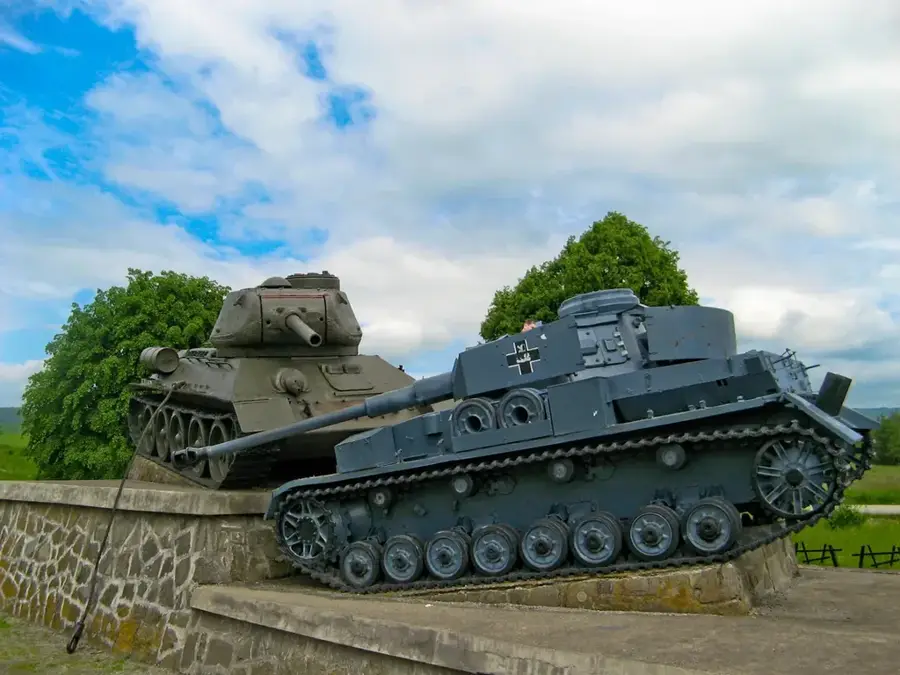
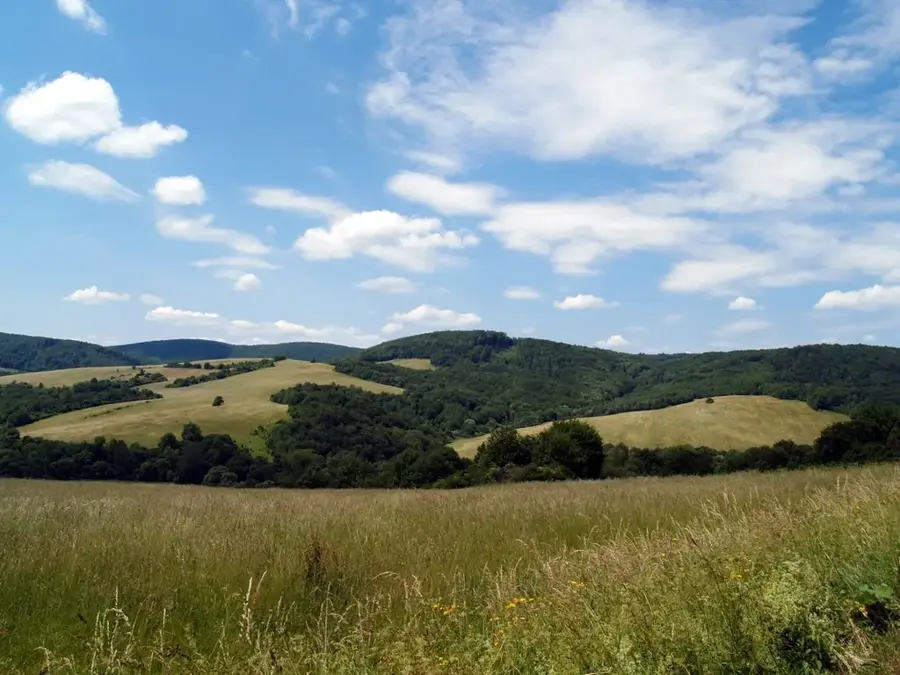
The Dukla Pass is a strategically vital mountain pass in the Laborec Highlands on the border between Slovakia and Poland, famous for one of the bloodiest battles of World War II. In the autumn of 1944, it was the site of the Carpathian-Dukla Operation, a massive Soviet and Czechoslovak offensive aimed at providing aid to the Slovak National Uprising. The fighting took place in extremely difficult mountainous terrain against well-fortified German positions, resulting in staggering casualties that exceeded 100,000 soldiers. The battle commenced on September 8, 1944, and while the pass was eventually breached in October, the heavy losses led to the area being nicknamed the "Valley of Death." Today, the pass is home to a vast open-air military museum featuring preserved trenches, bunkers, and heavy weaponry like tanks and aircraft scattered across the landscape. The iconic 28-meter-high monument and the military cemetery serve as a national cultural monument, commemorating the liberation of Czechoslovakia from Nazi occupation.
- Location: Slovakia
- Top sights: Monument and cemetery of 1st Czechoslovak Army Corps · Hraničný stĺp ČSR · Tank T34
- Nearby: Medzilaborce (21 km)
Best time to visit & climate
The most pleasant time to visit is Jun–Aug.
| Jan | Feb | Mar | Apr | May | Jun | Jul | Aug | Sep | Oct | Nov | Dec | |
|---|---|---|---|---|---|---|---|---|---|---|---|---|
| Avg °C | -5 | -3 | 1 | 8 | 13 | 17 | 19 | 19 | 13 | 8 | 3 | -3 |
| Rain mm | 46 | 43 | 46 | 52 | 99 | 104 | 115 | 75 | 71 | 63 | 47 | 44 |
📋 Practical info
Geography
Facts
- The operation at Dukla Pass resulted in approximately 85.000 allied soldiers killed or wounded.
- The pass is situated at an elevation of 502 meters above sea level in the Laborec Highlands.
- The Czechoslovak Army Monument at the pass was erected and unveiled in 1949.
- The 'Valley of Death' near Kapišová features eight Soviet T-34 tanks preserved in combat positions.
- On October 6, 1944, the first Czechoslovak units crossed the border back into their homeland here.
- The open-air museum display includes a 49-meter-high observation tower built near the monument.
Explore nearby
Notable places around
Route planner — Car & Motorhome
Where do you start? We build the route here, with stops and country notes along the way.
© OpenStreetMap contributors · OpenRouteService
Sights in the town Dukla Pass (10)
Rozhľadňa Dukla
Observation tower on Dukla Pass, offering panoramic views.
svätého Kozmu a Damiána
Church of Saints Cosmas and Damian at Dukla Pass.
Lietadlo Lisjunov Li-2
Lisunov Li-2 aircraft, displayed as a monument at Dukla Pass.
Cerkiew św. Mikołaja
Greek Catholic church of Saint Nicholas in Poland.
Muzeum Kultury Łemkowskiej🏛 museum
Museum in Poland, showcasing Lemko culture.
Modrzyna
Nature reserve in Slovakia, protecting local flora and fauna.
Sights nearby
Frequently asked questions
What can you see at the Dukla Pass?
Is entrance to the memorial free?
Where is the Dukla Pass located?
When is the best time to visit?
How long does the visit take?
Dukla Pass: where is it located?
Dukla Pass: what is there to see?
Dukla Pass: when is the best time to visit?
Dukla Pass: why is it worth visiting?

Nearby cities
History & landmarks