Plizio Visual Lab

Stobi

Plizio editorial teamData Sources
Landmark
—°3
Stobi (North Macedonia)

Weather…

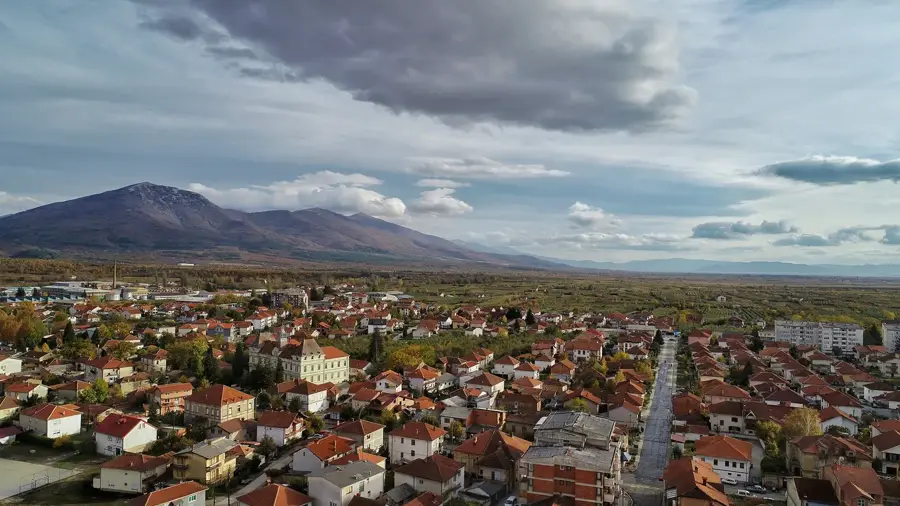
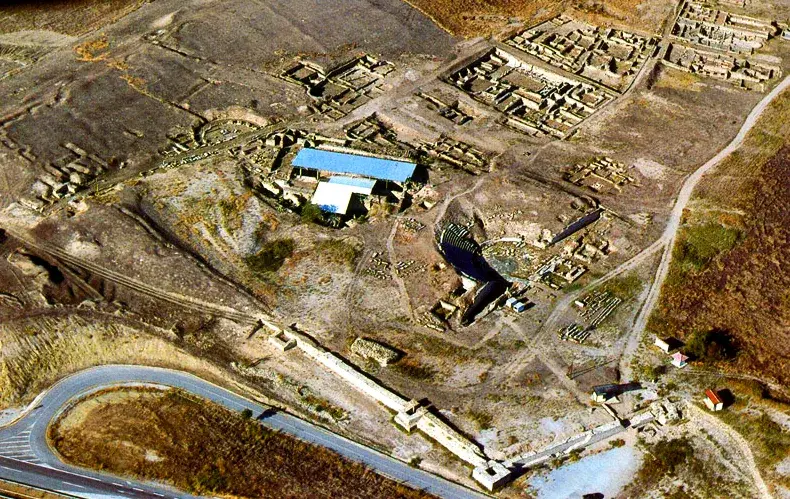
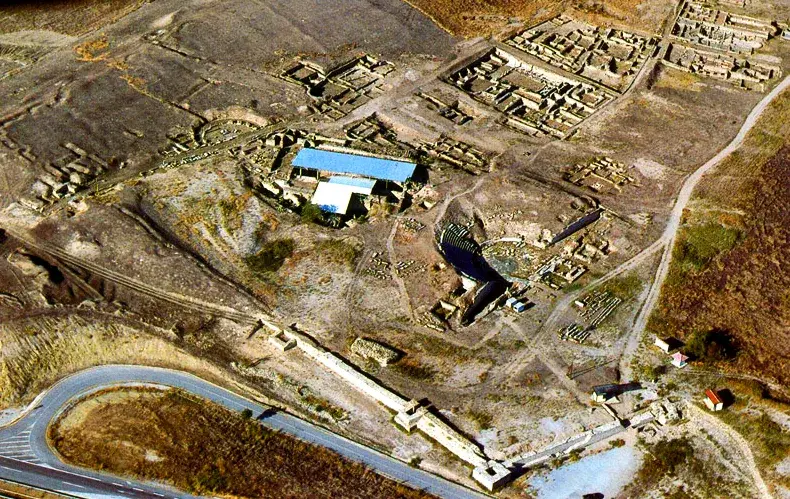
Stobi is regarded as the most significant archaeological site in North Macedonia, having once been an important ancient city in the region of Paeonia before being incorporated into the Roman Empire. The city was strategically built at the confluence of the Crna and Vardar rivers. This location made Stobi a crucial node on the Via Axiaca, an ancient commercial route that played a central role in the settlement's economic development. Excavations at the site have revealed an impressive variety of architectural remains. Key attractions include a large Roman amphitheater, early Christian basilicas, and the ruins of ancient streets and public baths. Stobi is particularly renowned for its highly detailed and well-preserved floor mosaics, which have been discovered in various buildings across the city, including the magnificent baptistery. Today, the site is open to visitors and provides a detailed look into daily life during antiquity and late antiquity. On-site information panels assist visitors in understanding the history of the diverse civilizations that inhabited the area. Stobi is easily accessible directly from the E75 highway, making it a convenient stop for travelers.

Best time to visit & climate

The most pleasant time to visit is Jun, Jul, Sep.

JanFebMarAprMayJunJulAugSepOctNovDec
Avg °C0261116212424191371
Rain mm534652576759414554615760

📋 Practical info

🚪
Visiting
The archaeological site of Stobi is open to visitors; you can see the ruins and mosaics outdoors. A small entrance fee is charged.
🕒
Typical hours
Typically open daily from 8:00 to 19:00 in season, shorter in winter. It is advisable to check the official website for exact hours.
📷
Photography
Photography is allowed throughout the site. For commercial use or drones, a permit may be required.
⏱️
Time needed
Allow at least 1.5-2 hours to walk the extensive site and appreciate the detailed mosaics.
Combine with
Combine Stobi with a visit to the nearby Tikveš Lake or the town of Kavadarci, known for wine production.
🧭
Getting there
Accessible by car via the A1 highway; the exit is signed. From Skopje about 1 hour drive. Parking available on site.
💡
Insider tip
Wear sturdy shoes as the terrain is uneven. Bring water, especially on hot days.

Geography

Population
3,737 (2026)
Coordinates
41.55174, 21.97497

Facts

  • Ancient city
  • Roman Empire
  • Via Axiaca route
  • Roman amphitheater
  • Early Christian basilicas
  • Floor mosaics
  • Crna and Vardar confluence
  • Near E75 highway

Explore nearby

Notable places around

Route planner — Car & Motorhome

Where do you start? We build the route here, with stops and country notes along the way.

Vehicle
Only stops with (optional):

© OpenStreetMap contributors · OpenRouteService

Sights in the town Stobi (3)

Stobi📍 landmark

Ruins of the ancient Roman city Stobi at the confluence of Crna and Vardar rivers.

🕒 Mo-Sa 08:00-16:00

Roman theater🏺 historical

The Roman theater consists of prominent ancient ruins preserved within the archaeological site of Stobi.

thermae🏺 historical

Roman thermae (baths) at the ancient city of Stobi.

Sights nearby

Frequently asked questions

What are the opening hours of Stobi?
Daily from 8:00 to 18:00 in summer; in winter, the site closes earlier at 16:00.
How much is the entrance fee?
The entrance fee is approximately 120 MKD (about 2 euros) per person.
Is the site accessible?
Only partially; the uneven gravel paths are difficult for wheelchairs to navigate.
Is photography allowed in Stobi?
Yes, private photography is allowed, but professional equipment requires a permit.
How much time is needed?
Plan for about 1.5 to 2 hours to see the mosaics and the theater.
Stobi: where is it located?
Stobi is located in North Macedonia.
Stobi: what is there to see?
Highlights include Stobi, Roman theater, thermae.
Stobi: when is the best time to visit?
The most pleasant time to visit is Jun, Jul, Sep.
Stobi: why is it worth visiting?
Stobi is regarded as the most significant archaeological site in North Macedonia, having once been an important ancient city in the region of Paeonia before being incorporated into the Roman Empire.
View on map → The Top 50 Attractions → OpenStreetMap →
Europe
Explore with Plizio Discover more places in Europe
More places in North Macedonia →

Nearby cities

History & landmarks

More places