Plizio Visual Lab

Sebkha
Plizio editorial teamData Sources
Lake
—°
Sebkha (Morocco)

Weather…

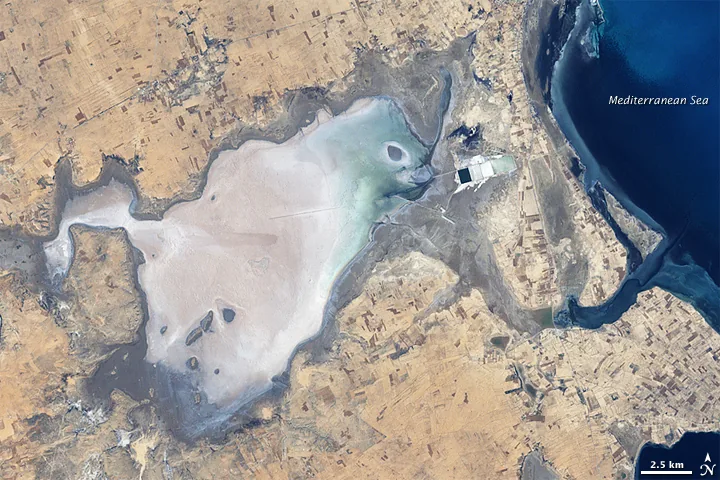
The Sebkha of Tindouf is an extensive endorheic basin spanning the border between Morocco and Algeria. It functions as a seasonal salt lake, consisting of a dry plain covered by salt crusts for most of the year. Geologically, the sebkha is a depression area where water collects after rare but intense rainfall, only to vanish quickly due to high evaporation rates. The landscape is characterized by extreme aridity and sparse vegetation adapted to saline soils. Historically, the region holds political significance due to its strategic location and proximity to the city of Tindouf and surrounding refugee camps. The surrounding terrain is primarily hammada, a stony desert that is difficult to traverse. Despite the hostile conditions, the sebkha is a compelling subject for geologists studying evaporation processes and salt deposits in desert regions. The region's natural resources, such as phosphates and iron ore, also make the area economically relevant.

Best time to visit & climate

The most pleasant time to visit is Mar, Apr, Nov.

JanFebMarAprMayJunJulAugSepOctNovDec
Avg °C131519232630353430251914
Rain mm477221151113116

📋 Practical info

🧭
Getting there
Accessing these desert salt lakes usually involves a rugged 4x4 drive departing from southern desert outposts like M'Hamid or Merzouga. A local guide is strongly recommended as the surrounding tracks shift with the wind.
📅
Best season
The cooler winter months from December to February are the only comfortable times to visit these barren depressions. The summer heat is violently oppressive and poses severe, life-threatening dehydration risks.
⛰️
Terrain & paths
The lakebed consists of blinding white salt crusts and dry, cracked mud which can unexpectedly give way to thick, sticky mire underneath. The surrounding edges transition abruptly into rolling Saharan sand dunes.
🎒
What to bring
Intense UV-blocking sunglasses are utterly essential to prevent snow-blindness from the glowing salt crusts. Sturdy boots that you don't mind ruining are better than sandals, as the salt crystals are razor-sharp.
🅿️
Parking
Vehicles are parked at the absolute edges of the sebkha to prevent the heavy 4x4s from sinking into the unstable, crusty mud. Never attempt to drive directly across the center of a dry salt lake without expert local guidance.
⚠️
Safety
The harsh glare and lack of landmarks make getting disoriented dangerously easy if wandering far from your transport. Always travel with vast reserves of water and a fully functioning satellite communication device.
⏱️
Time needed
A typical stop to photograph the surreal, crusty landscapes lasts roughly an hour. The overall expedition, factoring in the grueling off-road driving from the nearest settlement, occupies at least a half or full day.

Geography

Coordinates
27.00000, -8.00000

Facts

  • Located in the border region of Morocco and Algeria.
  • An endorheic basin with no natural outlet.
  • Consists primarily of a dry salt crust.
  • Features seasonal water levels after rare heavy rains.
  • Surrounded by the stony hammada desert.
  • The region possesses rich iron ore deposits.

Explore nearby

Notable places around
Route planner — Car & Motorhome

Where do you start? We build the route here, with stops and country notes along the way.

Vehicle
Only stops with (optional):

© OpenStreetMap contributors · OpenRouteService

Sights nearby

Frequently asked questions

What is a Sebkha?
A Sebkha is a shallow, often dried-up salt lake or salt flat in desert regions.
Does the lake have water all year round?
No, it mostly fills up only after rare, heavy winter rainfalls.
Can you drive on the Sebkha?
Caution! The crust can be deceptive, and vehicles can sink into the soft mud.
Is there tourist infrastructure there?
Hardly any, it is a very remote and wild natural area without hotels or restaurants.
What equipment is needed for the visit?
Plenty of water, sun protection, GPS, and a well-maintained 4x4 are indispensable.
Sebkha: where is it located?
Sebkha is located in Morocco.
Sebkha: when is the best time to visit?
The most pleasant time to visit is Mar, Apr, Nov.
Sebkha: why is it worth visiting?
The Sebkha of Tindouf is an extensive endorheic basin spanning the border between Morocco and Algeria.
View on map → The Top 50 Attractions → OpenStreetMap →
Africa
Explore with Plizio Discover more places in Africa
More places in Morocco →

Nearby cities

More places