Plizio Visual Lab
Timbuktu
ℹ️Practical info — Timbuktu
▾
🌤 Weather — 5 days
📍 Nearby
Sights nearby
💡 Tips
- The security situation requires constant attention; always consult official sources and use local guides.
- The desert is moving ever closer to the city; sturdy, closed-toe shoes are essential on the sandy streets.
- Visit the Ahmed Baba Institute to take a look at the fascinating, centuries-old Islamic manuscripts.
- The dry desert air quickly draws moisture from the body; always carry plenty of drinking water with you.
🍽 Food
A traditional Tuareg bread baked slowly in the hot ash and sand of the desert.
A nutritious dish, often refined with dates, that brings you closer to the local hospitality.
Take your time for the traditional tea ceremony; the tea becomes sweeter and milder with each round.
🛍 Shopping · 🧘 Quiet spots
The delicate silver craftsmanship of the Tuareg, especially the Cross of Agadez, is a world-famous souvenir.
You will find traditional, leather-decorated swords and handmade leather boxes at the artisan markets.
Buy small pieces of the legendary salt slabs imported from Taoudenni, which were once weighed in gold.
Leave the city limits early in the morning to experience the absolute silence of the Sahara at sunrise.
The thick mud walls of the manuscript centers offer a cool and reverent silence.
Water temperature…
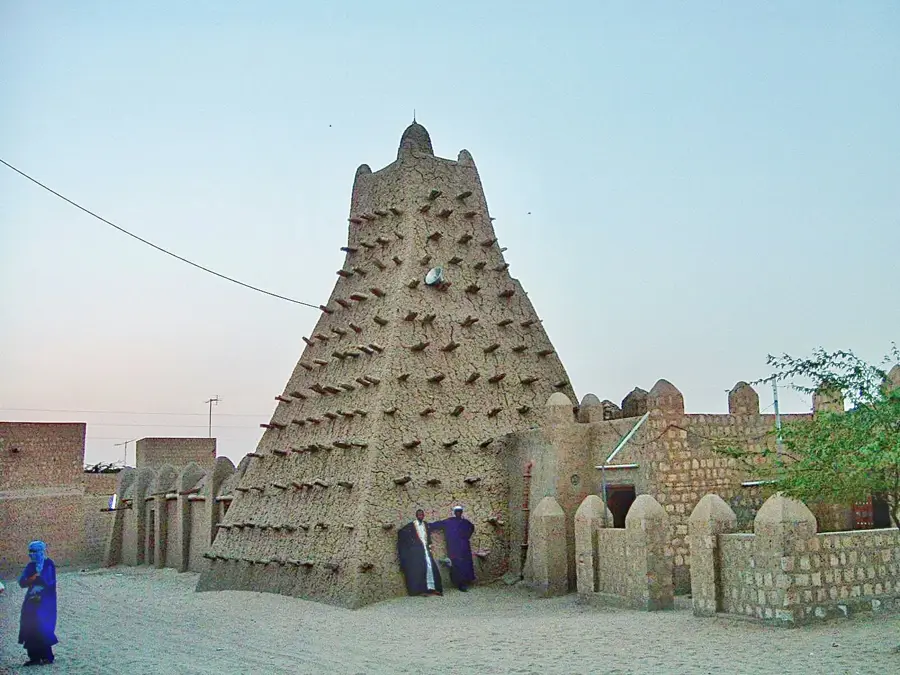
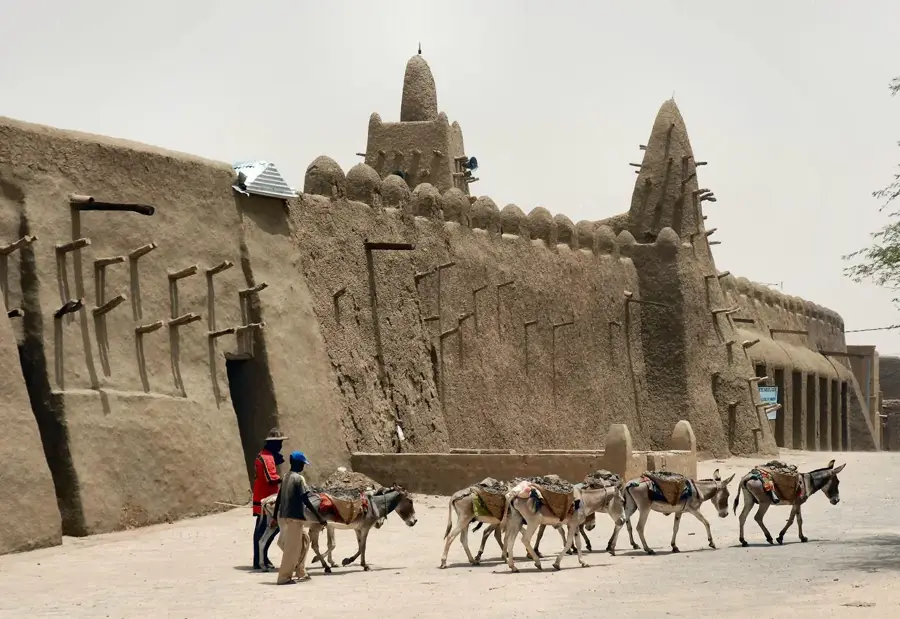
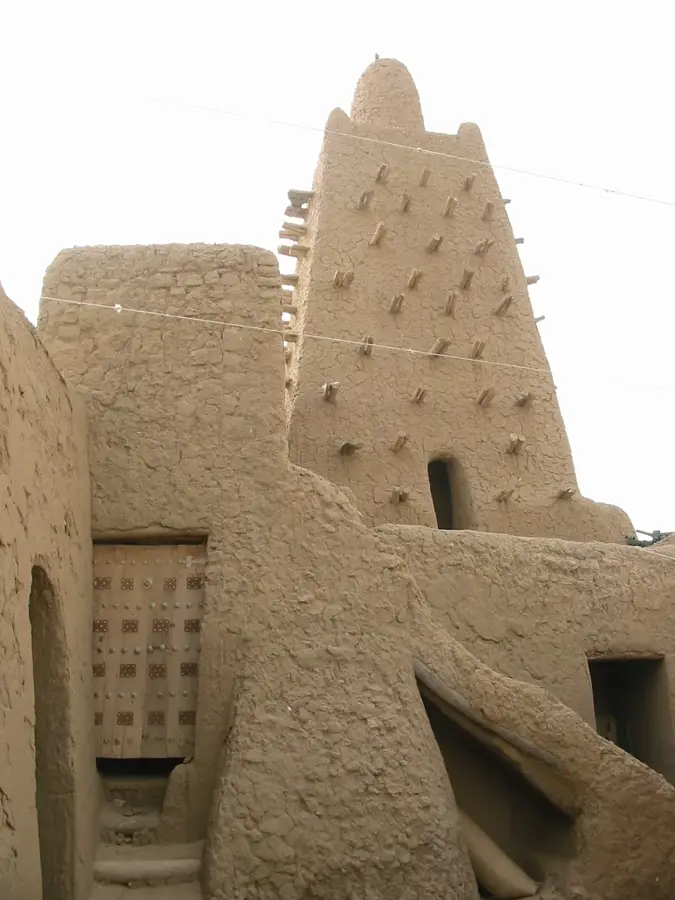
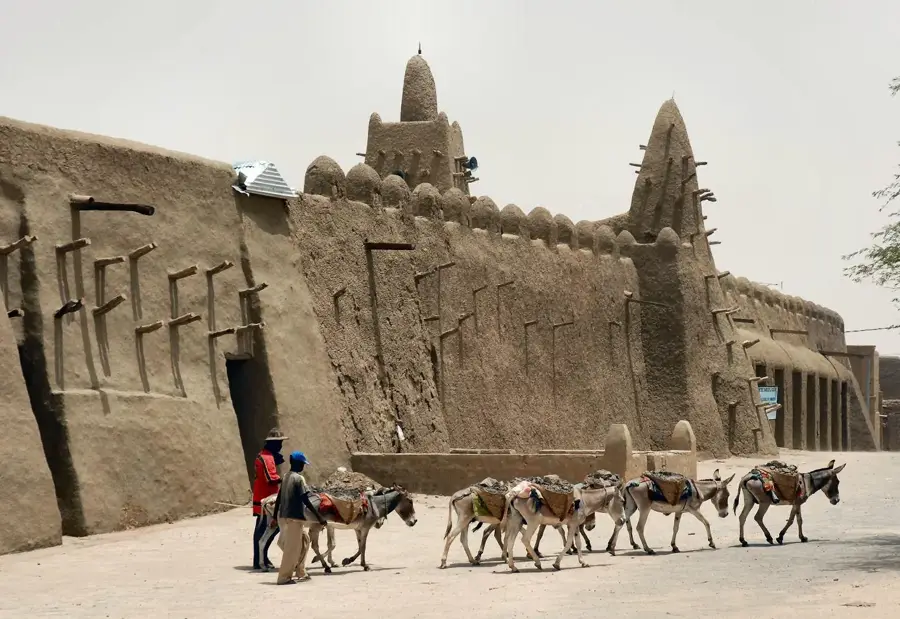
Timbuktu, located on the southern edge of the Sahara Desert near the Niger River, has been a legendary center of trade and Islamic scholarship since the 12th century. As a crucial terminal for the trans-Saharan salt and gold trade, the city reached its intellectual and economic zenith during the Mali and Songhai Empires. It is world-renowned for its three great mosques, Sankore, Djinguereber, and Sidi Yahya, which housed thousands of manuscripts detailing medieval African science, law, and history. In 1988, UNESCO designated Timbuktu as a World Heritage Site due to its profound cultural and architectural legacy. Despite challenges from desertification and regional instability, the city remains a powerful symbol of West African intellectual history. Modern Timbuktu continues to struggle with its remote location but preserves a unique identity shaped by centuries of cross-cultural exchange between Berber, Arab, and Sub-Saharan populations. It is currently the focus of global efforts to digitize and protect its fragile ancient library collections.
- Location: Mali
- Top sights: Museum Almansur · Maison René Caille · Museum d'Archéologie
- Nearby: Diré (59 km)
- Population: ~84.208 (2026)
Best time to visit & climate
The most pleasant time to visit is Jan, Feb, Dec.
| Jan | Feb | Mar | Apr | May | Jun | Jul | Aug | Sep | Oct | Nov | Dec | |
|---|---|---|---|---|---|---|---|---|---|---|---|---|
| Avg °C | 20 | 23 | 27 | 31 | 35 | 36 | 34 | 32 | 32 | 30 | 25 | 21 |
| Rain mm | 1 | 1 | 0 | 1 | 3 | 15 | 51 | 86 | 35 | 5 | 1 | 0 |
Geography
Facts
- Timbuktu was founded around 1100 AD as a seasonal Tuareg nomad camp.
- The city became part of the Mali Empire in the early 14th century under Mansa Musa.
- It is home to the Sankore Madrasah, one of the oldest universities in the world.
- Timbuktu's libraries contain over 700.000 medieval Islamic manuscripts.
- The city was designated a UNESCO World Heritage Site in 1988.
- The capture of the city by the Moroccan army in 1591 ended its golden age.
Explore nearby
Notable places around


Route planner — Car & Motorhome
Where do you start? We build the route here, with stops and country notes along the way.
© OpenStreetMap contributors · OpenRouteService
Sights in the town Timbuktu (3)
Frequently asked questions
Why is Timbuktu so famous?
Is it safe to travel?
What can be visited historically?
How is the climate there?
Are there still old manuscripts?
Timbuktu: where is it located?
Timbuktu: what is there to see?
Timbuktu: when is the best time to visit?
Timbuktu: why is it worth visiting?

Nearby cities

History & landmarks
Nature
More places