Plizio Visual Lab
Al-Farouk Monument

Weather…
Water temperature…
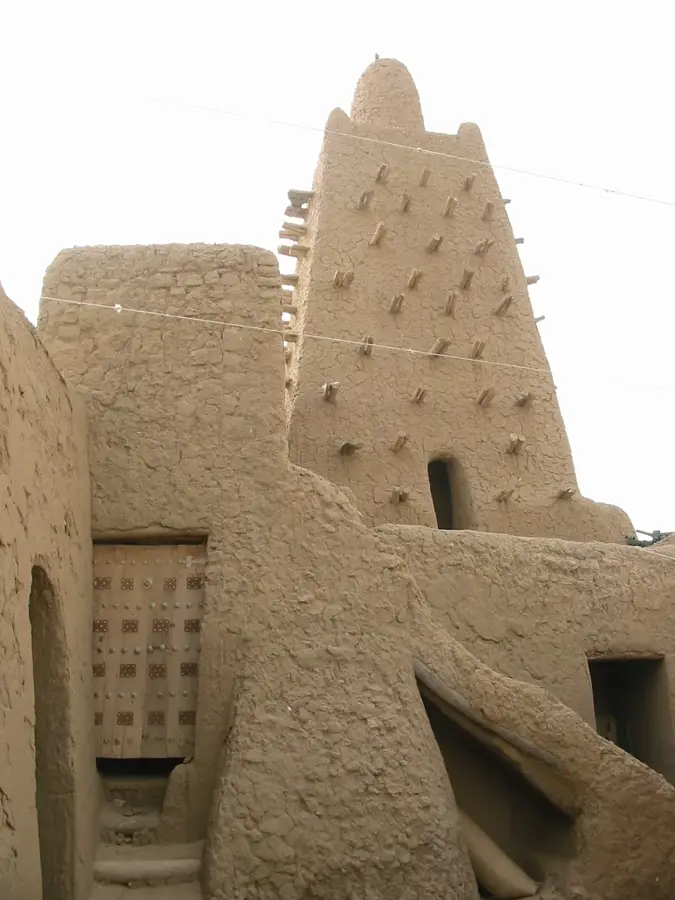
The Al-Farouk Monument in Timbuktu is a prominent landmark dedicated to the mythical protector of the city. According to local folklore, Al-Farouk is a spirit depicted as a rider on a white horse who watches over Timbuktu at night to protect the righteous. The original monument was tragically destroyed in 2012 by extremist groups during their occupation of the city amid the conflict in Northern Mali. Under the auspices of UNESCO and with the direct involvement of the local community, the monument was faithfully rebuilt between 2013 and 2015. It stands as a powerful symbol of resilience and the cultural pride of Timbuktu's residents against intolerance and violence. The monument features a stylized depiction of the horseman and is painted white, representing purity and safeguarding. Situated in a central public square, it serves as a gathering point and a reminder of the desert city's turbulent yet enduring history. Its restoration was part of a larger international effort to repair damaged mausoleums and heritage sites in Timbuktu.
- Location: Mali
- Top sights: Famille El Oumrany · Mosquée de Sankoré · Maison de Heinrich-Barth
- Nearby: Diré (59 km)
Best time to visit & climate
The most pleasant time to visit is Jan, Feb, Dec.
| Jan | Feb | Mar | Apr | May | Jun | Jul | Aug | Sep | Oct | Nov | Dec | |
|---|---|---|---|---|---|---|---|---|---|---|---|---|
| Avg °C | 20 | 23 | 27 | 31 | 35 | 36 | 34 | 32 | 32 | 30 | 25 | 21 |
| Rain mm | 1 | 1 | 0 | 1 | 3 | 15 | 51 | 86 | 35 | 5 | 1 | 0 |
📋 Practical info
Geography
Facts
- The original monument was destroyed by extremists in 2012.
- Reconstructed under UNESCO guidance between 2013 and 2015.
- Al-Farouk is the legendary guardian spirit of Timbuktu.
- The white color of the monument symbolizes protection and purity.
- Located in a central square within the historic old city.
- Part of the post-conflict heritage restoration project in Mali.
Explore nearby
Notable places around


Route planner — Car & Motorhome
Where do you start? We build the route here, with stops and country notes along the way.
© OpenStreetMap contributors · OpenRouteService
Sights in the town Al-Farouk Monument (10)
Mission Culturelle
Cultural center in Timbuktu, focused on heritage preservation and events.
Direction Régionale de la Culture
Regional culture directorate in Timbuktu, handling cultural affairs.
Museum d'Archéologie🏛 museum
Archaeology museum in Timbuktu, displaying finds from the region.
Maison René Caille
Historic house in Timbuktu, associated with French explorer René Caillié.
Museum Manuscript🏛 museum
Museum in Timbuktu, exhibiting ancient manuscripts and documents.
Gordon Laing House
Historic house in Timbuktu, named after Scottish explorer Gordon Laing.
Sights nearby
Frequently asked questions
Where is the monument located?
When is the best time to visit?
Is photography allowed?
Are there guided tours?
Is the place suitable for children?
Al-Farouk Monument: where is it located?
Al-Farouk Monument: what is there to see?
Al-Farouk Monument: when is the best time to visit?
Al-Farouk Monument: why is it worth visiting?

Nearby cities
History & landmarks
Nature
More places