Plizio Visual Lab
Ferrara Chemical Park
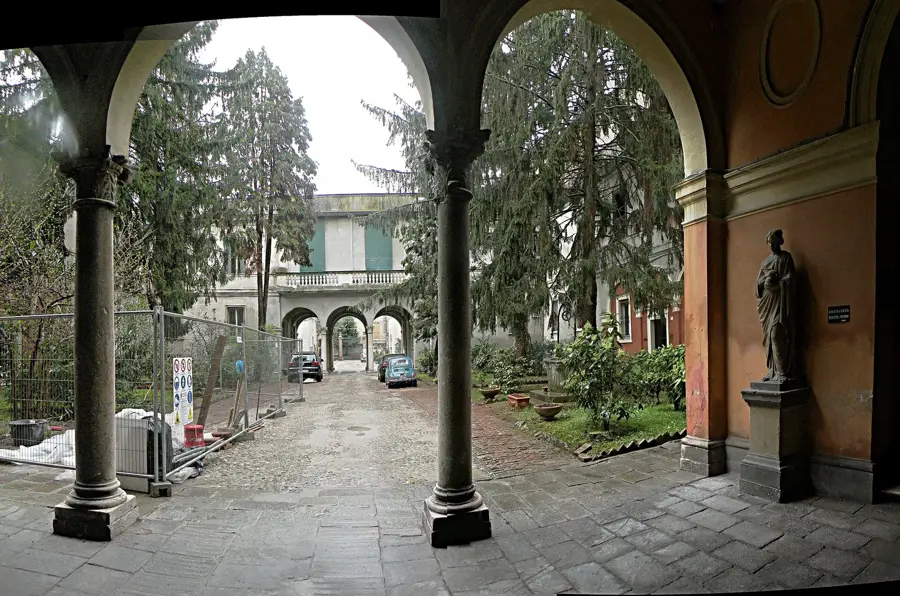
The Ferrara Chemical Park is one of Italy's most historic and technologically advanced industrial sites. Founded in the period after World War I, it experienced its greatest flourishing in the 1950s, when Nobel laureate Giulio Natta conducted groundbreaking research here on the production of polypropylene. Today, the site covers an area of approximately six million square meters and hosts global players such as LyondellBasell and Versalis. The location specializes in the production of plastics, synthetic rubber, and pharmaceutical precursors. A dense network of pipelines connects the park with other petrochemical centers like Porto Marghera and Mantua. Sustainability and the circular economy are now at the heart of strategic development, with increased research into bio-based polymers. Close collaboration with the University of Ferrara continuously fosters innovation in chemical process technology and material research.
- Location: Italy
- Top sights: Palazzo Varano · Palazzo Canonici Mattei · Palazzo di Giulio d'Este
- Nearby: Adria (41 km)
Best time to visit & climate
The most pleasant time to visit is May, Jun, Sep.
| Jan | Feb | Mar | Apr | May | Jun | Jul | Aug | Sep | Oct | Nov | Dec | |
|---|---|---|---|---|---|---|---|---|---|---|---|---|
| Avg °C | 3 | 5 | 9 | 14 | 18 | 24 | 27 | 26 | 21 | 15 | 9 | 4 |
| Rain mm | 39 | 59 | 58 | 62 | 75 | 57 | 49 | 53 | 65 | 73 | 85 | 53 |
📋 Practical info
Geography
Facts
- Giulio Natta discovered isotactic polypropylene here in 1954
- The chemical park covers a total area of approximately 600 hectares
- Over 30 companies operate within the chemical hub area
- The LyondellBasell research center in Ferrara is a global leader
- The site is directly connected to the Adriatic coast via pipelines
- Over 3,000 people work directly or indirectly in the chemical park
Explore nearby
Notable places around
Route planner — Car & Motorhome
Where do you start? We build the route here, with stops and country notes along the way.
© OpenStreetMap contributors · OpenRouteService
Sights in the town Ferrara Chemical Park (10)
Palazzo di Giulio d'Este
Building in Ferrara (FE). Former residence of the Este family.
Museo del Risorgimento e della Resistenza🏛 museum
Museum in Ferrara, Italy. Documents the Italian unification and resistance movement.
Monumento a Garibaldi
Monument in Ferrara. Dedicated to Italian national hero Garibaldi.
Chiesa di San Carlo⛪ church
Church building in Ferrara, Italy. Religious building in the historic center.
Museo di Paleontologia e Preistoria "Piero Leonardi"🏛 museum
Museum in Italy. Displays fossils and prehistoric finds.
Galleria d'Arte Moderna e Contemporanea🏛 museum
Museum in Ferrara. Exhibition of modern and contemporary art.
Sights nearby
Frequently asked questions
What is produced in the Ferrara Chemical Park?
Why is the site historically significant?
Can you visit the industrial area?
Is the chemical park far from the old town?
Which major companies operate there?
Ferrara Chemical Park: where is it located?
Ferrara Chemical Park: what is there to see?
Ferrara Chemical Park: when is the best time to visit?
Ferrara Chemical Park: why is it worth visiting?

Nearby cities
History & landmarks
More places