Plizio Visual Lab
Pont du Gard
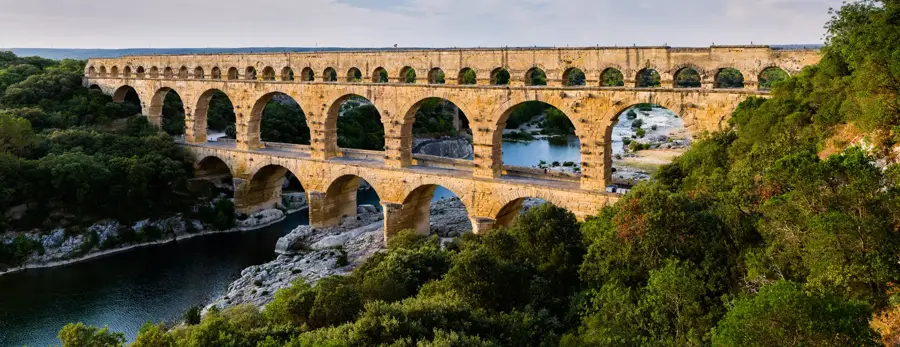
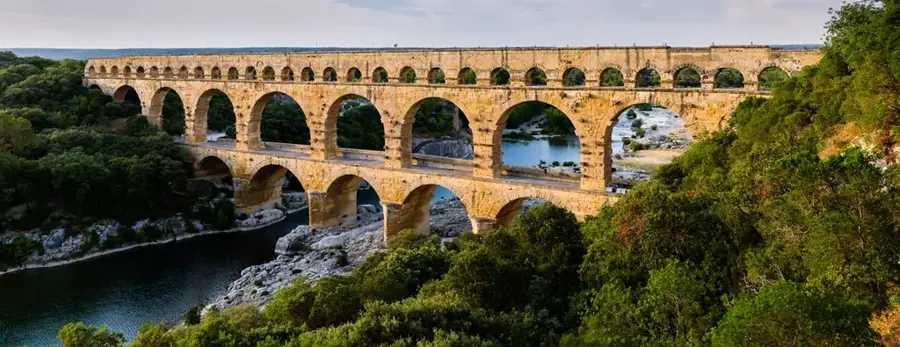
The Pont du Gard is one of the world's best-preserved Roman structures and a UNESCO World Heritage site. It was built around 50 AD to transport water from springs near Uzès to the city of Nîmes over a distance of 50 km. The bridge is 49 meters high and consists of three tiers of arches, constructed without mortar from limestone blocks weighing several tons. The structure is an ancient engineering marvel, as the gradient along the entire aqueduct is only a few centimeters per kilometer. Today, the site is a popular destination where visitors can swim in the Gardon River or kayak under the massive arches. A modern on-site museum explains the construction history and the significance of water supply in the Roman Empire. The bridge has a magical sight in the evening when it is illuminated. The surrounding garrigue landscape, with its olive trees and holm oaks, is excellent for hiking. The best time to visit is spring or early autumn when the temperatures are pleasant and the light beautifully highlights the golden-hued stones.
- Location: Occitanie, France
- Top sights: piscines · Plaja dau Verç · Tunnel
- Nearby: Uzès (12 km)
- Population: ~1.696 (2018)
Best time to visit & climate
The most pleasant time to visit is Jun, Aug, Sep.
| Jan | Feb | Mar | Apr | May | Jun | Jul | Aug | Sep | Oct | Nov | Dec | |
|---|---|---|---|---|---|---|---|---|---|---|---|---|
| Avg °C | 4 | 5 | 9 | 13 | 17 | 22 | 25 | 24 | 20 | 15 | 9 | 5 |
| Rain mm | 61 | 48 | 54 | 69 | 65 | 42 | 30 | 36 | 65 | 106 | 104 | 61 |
📋 Practical info
Geography
Facts
- UNESCO World Heritage site since 1985
- Part of a 50 km long aqueduct
- Highest Roman aqueduct in the world
- Built without using any mortar
- Consists of three tiers of arches
- Spans across the Gardon River
- Constructed in the 1st century AD
- Popular spot for kayaking and swimming
Explore nearby
Notable places around
Route planner — Car & Motorhome
Where do you start? We build the route here, with stops and country notes along the way.
© OpenStreetMap contributors · OpenRouteService
Sights in the town Pont du Gard (14)
Tunnel🏺 historical
Roman tunnel of the Nîmes aqueduct near Pont du Gard.
Abri préhistorique de la Salpêtrière🏺 historical
The prehistoric shelter of La Salpêtrière is a rock-shelter occupation site, listed as a monument historique.
Oliviers Millénaires📍 landmark
Oliviers Millénaires are ancient olive trees and a natural attraction at the Pont du Gard.
Sights nearby
Frequently asked questions
What is the Pont du Gard?
Does it cost anything to visit the site?
Can you walk on the bridge?
Can you swim in the river?
When is the bridge illuminated?
Pont du Gard: where is it located?
Pont du Gard: what is there to see?
Pont du Gard: when is the best time to visit?
Pont du Gard: why is it worth visiting?

Nearby cities