Plizio Visual Lab
Castries
ℹ️Practical info — Castries
▾
🌤 Weather — 5 days
📍 Nearby
Sights nearby
💡 Tips
- The grounds of the Château de Castries are free to enter and offer spectacular formal gardens designed by Le Nôtre.
- Follow the monumental aqueduct on foot; it's an impressive feat of engineering best seen in the late afternoon sun.
- Street parking in the historic center is very limited, so use the designated parking areas on the outskirts.
- Combine your visit with a wine tasting at one of the surrounding Languedoc vineyards.
- The stone streets can be uneven, so wear comfortable walking shoes for exploring the old town.
🍽 Food
Pick up this local savory bread, often baked with olives or herbs, from a traditional bakery in the old town.
Enjoy a glass of Coteaux du Languedoc at a terrace café near the castle gates.
Try this creamy salt cod dish, a regional specialty, at a traditional restaurant in the center.
🛍 Shopping · 🧘 Quiet spots
Look for locally produced olive goods in the specialty shops around the town center.
Purchase bottles of wine directly from the producers at the domains just outside the town.
Relax by the grand reflection pools and enjoy the symmetry of the French formal gardens.
Follow the tree-lined paths along the old stone aqueduct for a quiet escape from the town center.
Water temperature…
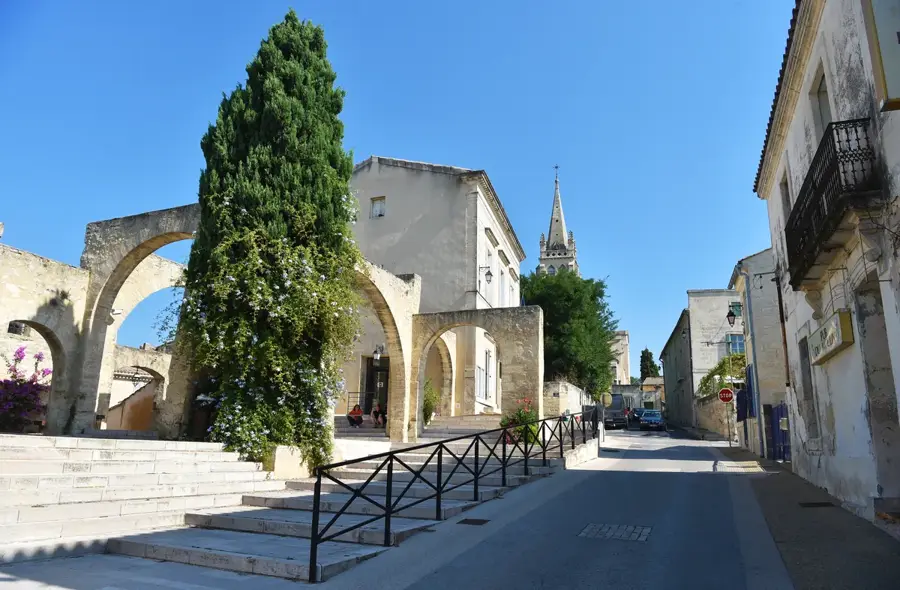
Castries is a small town in the Hérault department, located just a few kilometers northeast of Montpellier, known primarily for its extensive noble heritage. The centerpiece of the community is the Château de Castries, an imposing estate often referred to as the "Versailles of Languedoc" due to its scale and architectural elegance. Constructed between the 16th and 17th centuries, the castle is bordered by a vast formal French garden originally designed by André Le Nôtre. To supply water to the estate's fountains, the Aqueduc de Castries was built in the 1670s; its monumental stone arches stretch for nearly seven kilometers across the landscape. The medieval core of the village has retained much of its original character, showcasing typical Southern French dry-stone architecture. A historic olive mill and small, shaded squares reflect the area's agricultural past. The village is surrounded by extensive pine forests and garrigue scrubland, providing numerous marked trails for hikers and nature enthusiasts. Local bistros in the town center regularly serve Mediterranean dishes paired with robust regional wines from the Coteaux du Languedoc appellation.
- Location: Occitanie, France
- Top sights: Castries Castle · Castries Aqueduct · Saint-Étienne Church
- Nearby: Le Crès (5 km)
- Population: ~6.883
Best time to visit & climate
The most pleasant time to visit is Jun, Aug, Sep.
| Jan | Feb | Mar | Apr | May | Jun | Jul | Aug | Sep | Oct | Nov | Dec | |
|---|---|---|---|---|---|---|---|---|---|---|---|---|
| Avg °C | 7 | 7 | 10 | 13 | 17 | 22 | 25 | 24 | 20 | 16 | 11 | 8 |
| Rain mm | 52 | 39 | 48 | 59 | 49 | 30 | 20 | 25 | 51 | 82 | 73 | 47 |
Geography
Facts
- Castle gardens designed by André Le Nôtre
- Aqueduct is nearly 7 km long
- Population: 6,883 (2021 census)
- Area: 24.05 km²
- Twin town of Volpiano (Italy)
- Located on the Via Domitia (Roman road)
Explore nearby
Notable places around
Route planner — Car & Motorhome
Where do you start? We build the route here, with stops and country notes along the way.
© OpenStreetMap contributors · OpenRouteService
Start your morning exploring the historic heart of Castries, from the grand Saint-Étienne Church to the magnificent Castries Castle. Midday takes you out to the Ancienne carrière du Colombier to see the origins of local stone. In the afternoon, follow the monumental arches of the Aqueduct stretching across the landscape. Conclude your walk relaxing at the lush, open-air Théâtre de Verdure.
Saint-Étienne Church
Castries Castle
Ancienne carrière du Colombier
Castries Aqueduct
Théâtre de Verdure
We start the rainy morning at the church, then find indoor shelter at the grand castle by noon. In the wet afternoon, we carefully navigate the slippery paths of the historic quarry and the exposed aqueduct with umbrellas. We finish our walk at the green theatre, avoiding muddy paths.
Saint-Étienne Church
Castries Castle
Ancienne carrière du Colombier
Castries Aqueduct
Théâtre de Verdure
A crisp winter morning starts at the local church, followed by midday sunshine at the beautifully preserved castle. We spend a brisk afternoon admiring the historic quarry and the majestic aqueduct, wrapped in warm layers. Our walk concludes at the green theatre before the early 5 PM sunset.
Saint-Étienne Church
Castries Castle
Ancienne carrière du Colombier
Castries Aqueduct
Théâtre de Verdure
Kick off your cycling tour in the outskirts at the Templar commandery before heading to the sweeping Aqueduct. By midday, roll into the village center to admire the historic church and the magnificent "Little Versailles" castle. Afternoon riding takes you past the old quarries to the rustic Moulin. Finish your active day at the serene Ermitage de Saint-Léonard as the sun lowers.
Saint-Michel des Bannières (Commanderie Templière)
Castries Aqueduct
Saint-Étienne Church
Castries Castle
Ancienne carrière du Colombier
Moulin
Ermitage de Saint-Léonard
We ride through the morning rain to the Templar site, taking care on slick trails. By noon, we brave the showers at the aqueduct before finding dry shelter inside the church and castle. The wet afternoon brings us cautiously past the old quarry to the mill, ending at the slippery hermitage.
Saint-Michel des Bannières (Commanderie Templière)
Castries Aqueduct
Saint-Étienne Church
Castries Castle
Ancienne carrière du Colombier
Moulin
Ermitage de Saint-Léonard
A frosty morning ride takes us to the ancient Templar commandery. Midday involves a brisk cycle to the aqueduct and warming our hands inside the church and castle walls. In the freezing afternoon, we pedal vigorously, racing against the early 5 PM sunset to reach the hermitage.
Saint-Michel des Bannières (Commanderie Templière)
Castries Aqueduct
Saint-Étienne Church
Castries Castle
Ancienne carrière du Colombier
Moulin
Ermitage de Saint-Léonard
Drive smoothly to the distant medieval Templar site and the monumental Aqueduct in the morning. Midday brings you to the cultural Théâtre de Verdure and the charming Moulin. Spend the afternoon uncovering the hidden Ermitage and the rugged local quarries. As evening approaches, return to the village core for the striking church and a grand finale at the Castries Castle at dusk.
Saint-Michel des Bannières (Commanderie Templière)
Castries Aqueduct
Théâtre de Verdure
Moulin
Ermitage de Saint-Léonard
Ancienne carrière du Colombier
Saint-Étienne Church
Castries Castle
We drive safely through the rainy morning to the Templar site, grabbing a quick photo of the aqueduct. Midday is spent navigating muddy paths around the theatre and mill. In the wet afternoon, we carefully visit the hermitage and quarry, finally enjoying the dry comfort of the castle.
Saint-Michel des Bannières (Commanderie Templière)
Castries Aqueduct
Théâtre de Verdure
Moulin
Ermitage de Saint-Léonard
Ancienne carrière du Colombier
Saint-Étienne Church
Castries Castle
We start the cold winter morning with a drive to the Templar site, keeping the car heater on. Midday offers crisp views of the aqueduct and theatre. During the freezing afternoon, we explore the historic mill, hermitage, and quarry, making sure to tour the church and grand castle before dark.
Saint-Michel des Bannières (Commanderie Templière)
Castries Aqueduct
Théâtre de Verdure
Moulin
Ermitage de Saint-Léonard
Ancienne carrière du Colombier
Saint-Étienne Church
Castries Castle
Sights in the town Castries (7)
Frequently asked questions
What is the main attraction in Castries?
How far is Castries from Montpellier?
Can the castle park be visited?
Are there local specialties in Castries?
Is Castries family-friendly?
Castries: where is it located?
Castries: what is there to see?
Castries: when is the best time to visit?
Castries: why is it worth visiting?

Nearby cities