Plizio Visual Lab

Ruins of Jiaohe
Plizio editorial teamData Sources
ruin
—°5
Ruins of Jiaohe (China)

Weather…

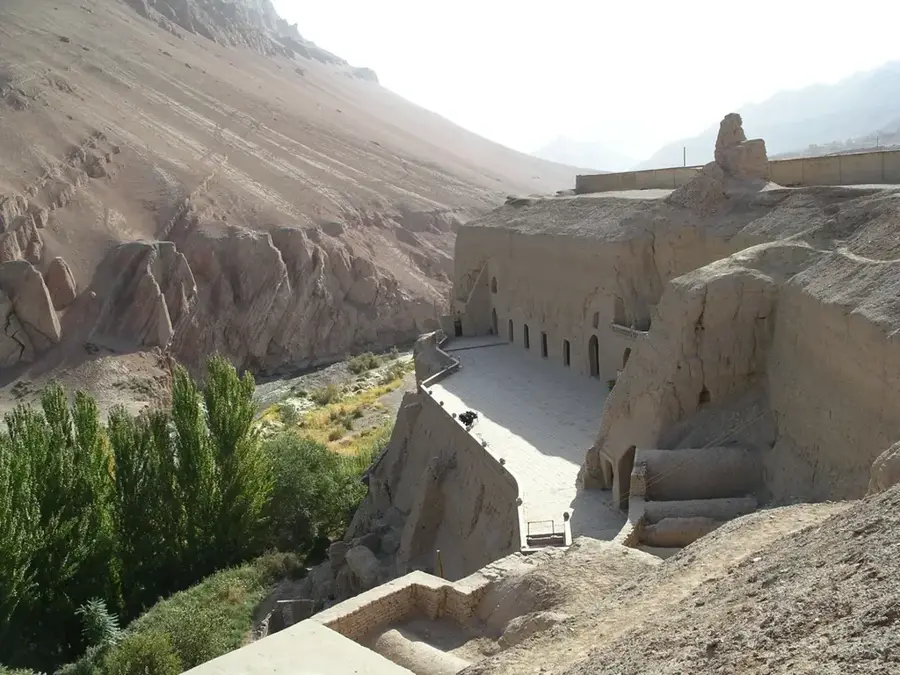
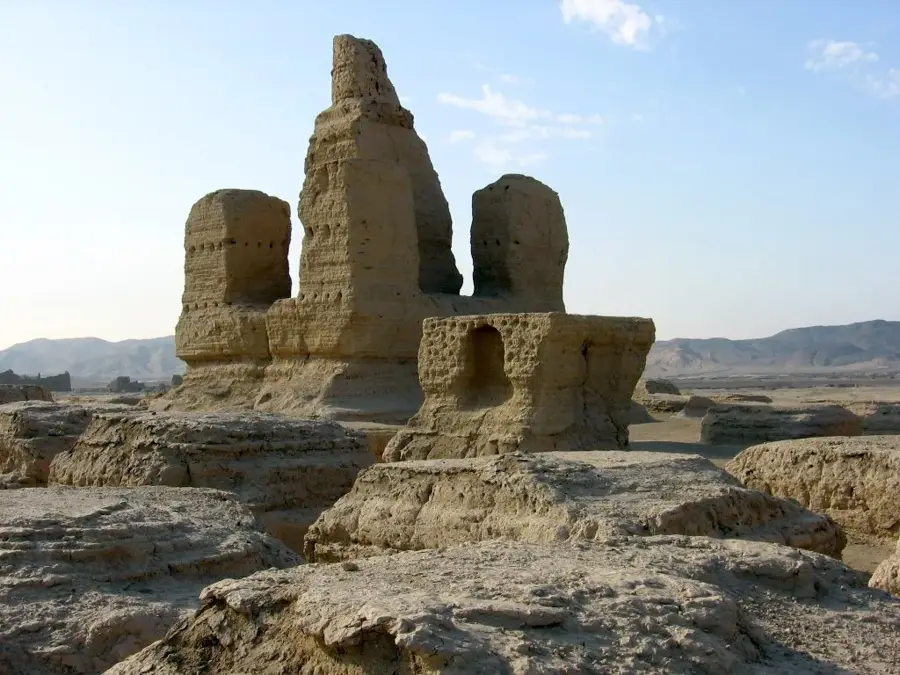
The Ruins of Jiaohe are perched atop a massive, leaf-shaped plateau in the Yarnaz Valley, roughly 10 kilometers west of Turpan in Xinjiang. Known as the 'confluence of rivers' due to its location between two river branches, Jiaohe is the world's largest and best-preserved ancient city constructed using a 'negative' architectural technique. Instead of building upward, its residents carved homes, temples, and administrative buildings directly into the loess earth of the plateau, creating a subterranean streetscape. Established in the 2nd century BC as the capital of the Cheshi Kingdom, it served as a critical strategic stronghold along the Silk Road for over a millennium. The natural 30-meter-high cliffs of the plateau provided such effective defense that the city lacked artificial fortifications like walls. Jiaohe flourished as an administrative center under the Tang Dynasty and later as a Uyghur stronghold before being devastated and eventually abandoned in the 13th century following Mongol invasions. Now a UNESCO World Heritage site, it remains a marvel of ancient engineering and urban planning.

Best time to visit & climate

The most pleasant time to visit is Apr, May, Sep.

JanFebMarAprMayJunJulAugSepOctNovDec
Avg °C-6-18162329313023144-4
Rain mm45511131416138786

📋 Practical info

🚪
Visiting
The fascinating ruins of Jiaohe stretch across a steep plateau and are open to the public, allowing visitors to marvel at the remains of the former buildings and streets entirely under the open sky.
🕒
Typical hours
Opening hours typically follow the standard daylight hours of the region, with a late afternoon visit highly recommended to avoid the most intense midday heat on the exposed loess plateau.
📷
Photography
Photographing the dramatic plateau landscape with its structures carved from the loess is a dream for photographers, though drone flights are generally strictly prohibited to protect the site.
⏱️
Time needed
Plan to spend roughly two to three hours touring the extensive facility on the plateau so that you can carefully explore the various sectors of the ancient city without feeling rushed at all.
Combine with
Because Jiaohe is located close to Turpan, it is a great idea to combine a visit with the famous Karez irrigation system or the welcoming Emin Minaret to better understand the local cultural history.
🧭
Getting there
The ruined city can be easily reached from Turpan by taxi or as part of a guided tour, with the drive through the river valley offering spectacular views of the striking surrounding landscape.
💡
Insider tip
Wear comfortable, closed-toe shoes as the pathways on the plateau can be dusty and uneven, and make absolutely sure to bring a water bottle since on-site supplies are generally quite limited.

Geography

Coordinates
42.91500, 89.16800

Facts

  • Jiaohe was established as the capital of the Cheshi Kingdom in the 2nd century BC.
  • The plateau is approximately 1,650 meters long and 300 meters wide at its widest point.
  • It is unique for its 'negative architecture,' where buildings were carved out of the earth.
  • Natural cliffs ranging from 10 to 30 meters high served as the city's primary defense.
  • A massive Buddhist monastery covering 5,000 square meters is located in the city center.
  • The city was abandoned in the late 13th century after being sacked by Mongol forces.

Explore nearby

Notable places around
Route planner — Car & Motorhome

Where do you start? We build the route here, with stops and country notes along the way.

Vehicle
Only stops with (optional):

© OpenStreetMap contributors · OpenRouteService

Sights in the town Ruins of Jiaohe (5)

Jiaohe Ancient Uygur City Museum🏛 museum

Exhibits here trace the history of Jiaohe, an ancient city uniquely built on a steep island plateau.

Southern Buddhist Temple🏺 historical

Ruins of a significant Buddhist complex carved directly into the soft earth of the Jiaohe plateau.

Stupa Forest📍 landmark

A field within the ancient city of Jiaohe containing 101 mud-brick stupas tightly packed in a square formation.

Northeastern Buddhist Temple🏺 historical

The ruins of an ancient Buddhist complex located in the northeastern sector of the cliff-top city of Jiaohe.

Northwestern Buddhist Temple🏺 historical

Remains of a historic temple in the northwestern part of the ruined city, known for its architecture carved directly from the loess soil.

Sights nearby

Frequently asked questions

When is the best time to visit?
Spring and autumn are convenient to avoid the extreme summer heat of the Turpan Depression.
How do I reach the ruins?
The ruins are about 10 km west of Turpan and easily reachable by taxi or bus.
Is there any shade on the site?
There is very little shade; be sure to bring sunscreen, a hat, and plenty of water.
What makes Jiaohe architecturally special?
The city was not built, but dug out and carved directly from the loess ground.
How much time should I plan for?
Plan for about 2 to 3 hours to explore the extensive plateau at a relaxed pace.
Ruins of Jiaohe: where is it located?
Ruins of Jiaohe is located in China.
Ruins of Jiaohe: what is there to see?
Highlights include Jiaohe Ancient Uygur City Museum, Southern Buddhist Temple, Stupa Forest.
Ruins of Jiaohe: when is the best time to visit?
The most pleasant time to visit is Apr, May, Sep.
Ruins of Jiaohe: why is it worth visiting?

The Ruins of Jiaohe are perched atop a massive, leaf-shaped plateau in the Yarnaz Valley, roughly 10 kilometers west of Turpan in Xinjiang.
View on map → The Top 50 Attractions → OpenStreetMap →
Asia
Explore with Plizio Discover more places in Asia
More places in China →

Nearby cities

Nature

More places