Plizio Visual Lab

Teatro Colón
Plizio editorial teamData Sources
Landmark
—°13
Teatro Colón (Argentina)

Weather…

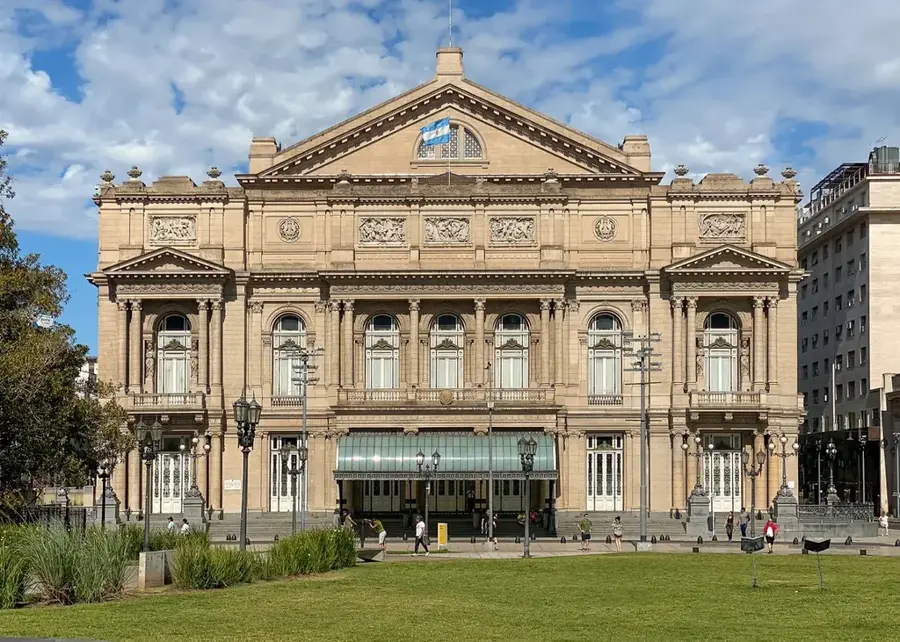
The Teatro Colón in Buenos Aires is globally renowned as one of the finest opera houses in the world, celebrated for its near-well-suited acoustics. The current building was inaugurated on May 25, 1908, with a performance of Verdi's 'Aida' after 20 years of construction. It was designed by architects Francesco Tamburini, Victor Meano, and Jules Dormal, featuring a brilliant eclectic style that blends Italian Renaissance and French Baroque influences. The horseshoe-shaped auditorium can accommodate nearly 2,500 seated spectators and features a magnificent central dome repainted by artist Raúl Soldi in 1966. Legends such as Enrico Caruso, Maria Callas, and Luciano Pavarotti have performed on its stage, solidifying its place in musical history. More than just a theater, it is a comprehensive artistic complex with vast underground workshops for set design, costumes, and a prestigious ballet school. A massive restoration project completed in 2010 ensured that this architectural and acoustic masterpiece remains a beacon of high culture.

Best time to visit & climate

The most pleasant time to visit is Mar, Nov, Dec.

JanFebMarAprMayJunJulAugSepOctNovDec
Avg °C25242117131091113172023
Rain mm110125122100724968698011310497

📋 Practical info

🚪
Visiting
The Teatro Colón in Buenos Aires is one of the world's most renowned opera houses and can be visited. It is famous for its excellent acoustics and sweeping beauty. Guided tours are regularly offered in several languages, providing a behind-the-scenes look.
🕒
Typical hours
Teatro Colón is typically open daily for tours, except for a few holidays. Tours usually run from 9 am to 5 pm, last entry about one hour before closing. On performance days, availability may be limited.
📷
Photography
Photography is allowed during tours without flash. The main hall with its golden dome and stage is the absolute highlight. For professional shoots or video, a special permit is required.
⏱️
Time needed
A standard tour takes about 50 minutes to an hour. If you also attend a performance, add the runtime of about two to three hours. The imposing building provides plenty to explore.
Combine with
Teatro Colón is in the San Nicolás district, near Florida pedestrian street and the Obelisk. Combine the visit with a walk to Plaza de Mayo and Casa Rosada. Café Tortoni, one of the city's oldest cafés, is also nearby.
🧭
Getting there
The opera house is on Avenida 9 de Julio, within walking distance of Teatro Colón metro station (Line D) and Diagonal Norte (Line C). Buses and taxis stop outside. Drivers can find guarded parking garages nearby.
💡
Insider tip
Book the tour in English or Spanish online in advance as demand is high. For a performance, formal attire is recommended. Arrive 30 minutes early to admire the hall in peace. Try one of the famous empanadas in the neighborhood.

Geography

Coordinates
-34.60110, -58.38310

Facts

  • The theater was inaugurated on May 25, 1908, Argentina's national day.
  • The auditorium has a capacity of 2,478 seats and approximately 1,000 standing spots.
  • Its acoustics are frequently ranked as the best in the world for opera performances.
  • The total floor area of the building exceeds 58,000 square meters.
  • The central chandelier weighs 1,300 kilograms and holds 250 individual light bulbs.
  • The theater houses massive underground workshops spread across three basement levels.

Explore nearby

Notable places around
Route planner — Car & Motorhome

Where do you start? We build the route here, with stops and country notes along the way.

Vehicle
Only stops with (optional):

© OpenStreetMap contributors · OpenRouteService

Sights in the town Teatro Colón (13)

La Casa de los azulejos- art nouvear🏺 historical

La Casa de los azulejos is a striking urban monument known for its eye-catching tilework. The ornate facade stands out from the surrounding street architecture.

Monumento al General Lavalle🏺 historical

This public monument features a stone statue honoring General Juan Lavalle. The sculpted memorial stands prominently within the urban square.

Museo Sadaic 'Vicente López y Planes'🏛 museum

Established in 1962, the Museo Sadaic 'Vicente López y Planes' is a notable museum dedicated to music. The exhibition rooms display historical musical scores and instruments.

🕒 Mo-Fr 10:00-15:00

Asociación Estímulos de Bellas Artes🎭 culture

The Asociación Estímulos de Bellas Artes is an urban arts center offering painting and drawing classes. The building features brightly lit studio spaces for the students.

Museo Judío de Buenos Aires🏛 museum

Opened in 1970, the Museo Judío de Buenos Aires chronicles the rich history of the Jewish community in Argentina. This notable museum is located directly adjacent to the synagogue building.

🕒 Mo-Fr 10:00-18:00

Teatro Coliseo🎭 culture

Teatro Coliseo is a well-known theater hosting a variety of stage performances. The large building is a permanent fixture in the urban entertainment district.

Rue des Artisans📍 landmark

The Rue des Artisans is a characterful galleried cobblestone passage housing boutiques and antique shops. The pedestrian alley is lined with French-style buildings.

Museo Regina Pacini de Alvear🏛 museum

The Museo Regina Pacini de Alvear is a notable museum located within the Casa del Teatro complex. The exhibition spaces display memorabilia of the famous soprano.

🕒 Mo-Sa 10:00-17:00 "call for info"

Plazoleta Suipacha🌳 park

Plazoleta Suipacha is a small, paved urban park located between tall buildings. This notable public space features a few benches for resting.

Centro Cultural de la Cooperación Floreal Gorini🎭 culture

The Centro Cultural de la Cooperación Floreal Gorini is a multi-story urban building used for art exhibitions and theatrical performances. The center includes a bookstore on the ground floor.

Catedral de San Marón⛪ religious

The Catedral de San Marón is a notable Maronite Catholic place of worship integrated into the urban buildings. The interior features traditional pews and a main altar.

Parroquia de San Nicolás de Bari⛪ religious

The Parroquia de San Nicolás de Bari is a notable Catholic church featuring a twin-towered facade. The wide entrance steps lead from the street directly into the nave.

Nuestra Señora de Las Victorias📍 landmark

Nuestra Señora de Las Victorias is a Christian church with a brick facade that blends into the urban row of buildings. The interior features stained glass windows and wooden pews.

Sights nearby

Frequently asked questions

Can you visit Teatro Colón?
Yes, usually through guided tours or tickets for a performance. The interior is one of the main reasons to go.
How much time do you need?
Allow about 1 hour for a tour. If you also attend a performance, you will need much more time.
Is the acoustics really that good?
Yes, Teatro Colón is world-famous for its acoustics. That is why even the guided tour is a highlight.
Is it good for families?
Yes, if children can stay calm and you like cultural activities. For small kids, a short tour is usually the best choice.
When should you book tickets?
Popular performances should be booked early. Guided tours are also better reserved in advance, especially in peak season.
Teatro Colón: where is it located?
Teatro Colón is located in Argentina.
Teatro Colón: what is there to see?
Highlights include La Casa de los azulejos- art nouvear, Monumento al General Lavalle, Museo Sadaic 'Vicente López y Planes'.
Teatro Colón: when is the best time to visit?
The most pleasant time to visit is Mar, Nov, Dec.
Teatro Colón: why is it worth visiting?
The Teatro Colón in Buenos Aires is globally renowned as one of the finest opera houses in the world, celebrated for its near-well-suited acoustics.
View on map → The Top 50 Attractions → OpenStreetMap →
South America
Explore with Plizio Discover more places in South America
More places in Argentina →

History & landmarks

More places