Plizio Visual Lab

Palace of Running Waters
Plizio editorial teamData Sources
Landmark
—°12
Palace of Running Waters (Argentina)

Weather…

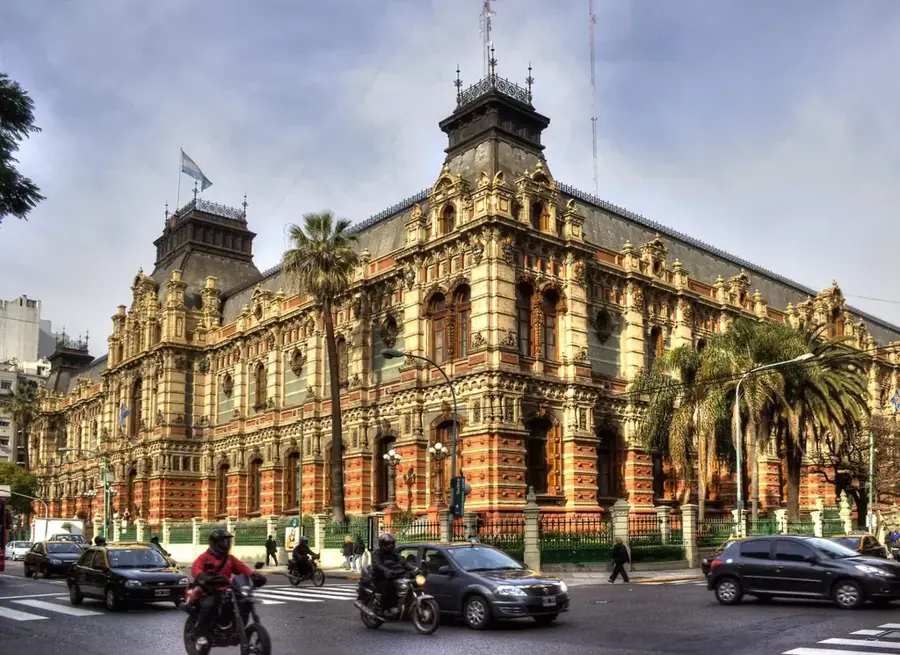
The Palacio de Aguas Corrientes (Palace of Running Waters) in Buenos Aires is an architectural masterpiece built between 1887 and 1894 to serve as the city's main water reservoir. Behind its remarkable French Renaissance-style facade lies a massive iron structure that once housed 12 giant water tanks with a total capacity of 72 million liters. Designed by architects Olaf Boye and Juan de Medici, the building is clad in over 300,000 glazed terra cotta tiles manufactured by the British firm Royal Doulton. These tiles feature intricate ornaments, coats of arms, and botanical motifs, giving an industrial utility building the appearance of a royal palace. The facility was crucial for meeting the water demands of the rapidly growing capital at the end of the 19th century. Declared a National Historic Monument in 1987, it now houses the Water and Heritage Museum and administrative offices of the water company AySA. It remains one of the most visually striking and unique buildings in Latin America.

Best time to visit & climate

The most pleasant time to visit is Mar, Nov, Dec.

JanFebMarAprMayJunJulAugSepOctNovDec
Avg °C25242117131091113172023
Rain mm110125122100724968698011310497

📋 Practical info

🚪
Visiting
The exterior facade is freely viewable at any time; the interior houses a museum of water history. The museum is open on weekdays with limited weekend hours.
🕒
Typical hours
The museum is typically open weekdays 9am-1pm and 2pm-6pm. Check for holiday closures as schedule may vary.
📷
Photography
The ornate facade is excellent for photos; inside photography is allowed without flash. Tripods require prior permission.
⏱️
Time needed
Spend 20 minutes admiring the exterior and about 1 hour in the museum. Guided tours are available.
Combine with
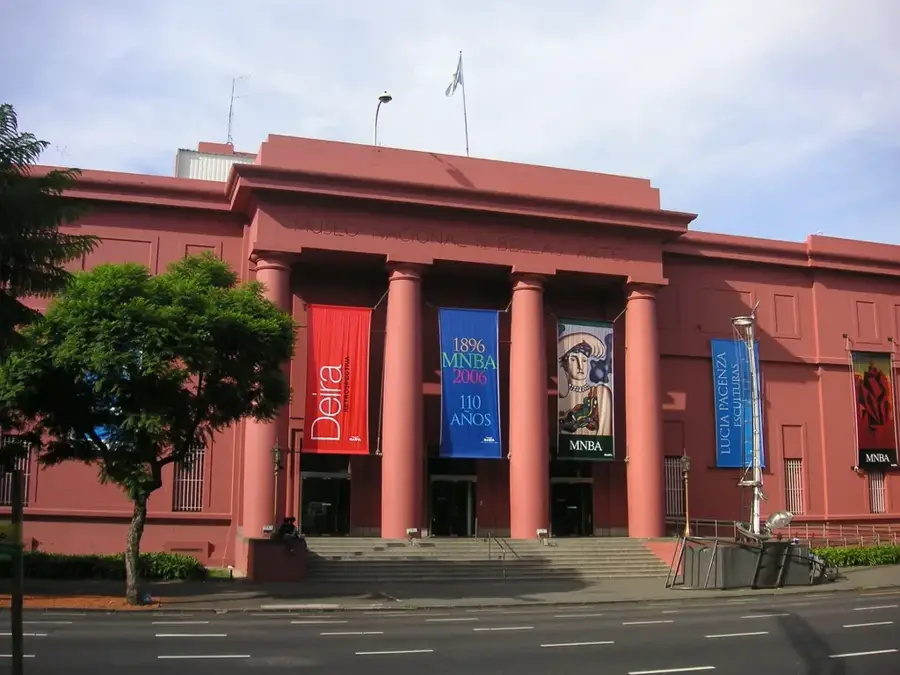
Combine with a stroll in Recoleta or the nearby National Museum of Fine Arts. The area is rich in architecture.
🧭
Getting there
Located at Riobamba and Viamonte, take the D line subway to Facultad de Medicina. Many buses pass nearby.
💡
Insider tip
Visit on a weekday morning to avoid crowds. The facade is best photographed in the late afternoon light.

Geography

Coordinates
-34.59970, -58.39410

Facts

  • The building was constructed over a seven-year period from 1887 to 1894.
  • More than 300,000 glazed terra cotta tiles cover its four facades.
  • The internal tanks held a maximum of 72.7 million liters of water.
  • The entire iron frame for the building was manufactured in Belgium.
  • It was designated as a National Historic Monument in 1982.
  • The palace houses a museum dedicated to the history of water and sanitation.

Explore nearby

Notable places around
Route planner — Car & Motorhome

Where do you start? We build the route here, with stops and country notes along the way.

Vehicle
Only stops with (optional):

© OpenStreetMap contributors · OpenRouteService

Sights in the town Palace of Running Waters (12)

Teatro del Picadero🎭 culture

Teatro del Picadero is a recognized cultural venue renowned for its distinctive architectural façade.

Teatro Astral🎭 culture

The Teatro Astral is a prominent theatre featuring a traditionally designed grand auditorium.

Galería Notre Dame🎭 culture

Galería Notre Dame is an arts centre focused on showcasing visual arts and contemporary exhibitions.

Museo del Holocausto🏛 museum

The Holocaust Museum of Buenos Aires preserves the memory of the Shoah through significant historical artifacts.

La Comedia📍 landmark

La Comedia operates as a dynamic dance space hosting choreographic performances and movement arts.

Vereda del tango. Km. 0📍 landmark

This symbolic sidewalk marker represents the conceptual starting point of traditional tango culture.

Edificio Los Galgos📍 landmark

Edificio Los Galgos is an architectural attraction noted for its historic building design.

Museo de la Facultad de Odontología🏛 museum

Established in 1980, this university museum chronicles the evolution of dental practices and equipment.

🕒 Tu,Fr 09:00-12:00

Museo 'Padre Coll'🏛 museum

The 'Padre Coll' Museum is an exhibition space presenting religious artifacts and historical collections.

Plaza Rodríguez Peña🌳 park

Plaza Rodríguez Peña is a tree-lined urban square featuring green lawns and public monuments.

Plazoleta Enrique Udaondo🌳 park

Plazoleta Enrique Udaondo is a notable urban park situated in Buenos Aires. It features a paved recreational space within the bustling cityscape.

Plazoleta Agustín Rivero Astengo🌳 park

This public park provides a landscaped gathering space in the local neighborhood. Plazoleta Agustín Rivero Astengo features paved areas and benches for relaxation.

Sights nearby

Frequently asked questions

What kind of building is this?
A magnificent historic waterworks in the Balvanera district.
Can it be visited?
Yes, it houses a museum about the history of water.
Is pre-registration needed?
For guided tours, pre-booking is often required.
How is the architecture?
Impressive, decorated with many colored ceramic tiles.
When is the museum open?
Usually on weekdays during normal working hours.
Palace of Running Waters: where is it located?
Palace of Running Waters is located in Argentina.
Palace of Running Waters: what is there to see?
Highlights include Teatro del Picadero, Teatro Astral, Galería Notre Dame.
Palace of Running Waters: when is the best time to visit?
The most pleasant time to visit is Mar, Nov, Dec.
Palace of Running Waters: why is it worth visiting?

The Palacio de Aguas Corrientes (Palace of Running Waters) in Buenos Aires is an architectural masterpiece built between 1887 and 1894 to serve as the city's main water reservoir.
View on map → The Top 50 Attractions → OpenStreetMap →
South America
Explore with Plizio Discover more places in South America
More places in Argentina →

History & landmarks

More places