Plizio Visual Lab

Galileo Galilei Planetarium
Plizio editorial teamData Sources
Landmark
—°11
Galileo Galilei Planetarium (Argentina)

Weather…

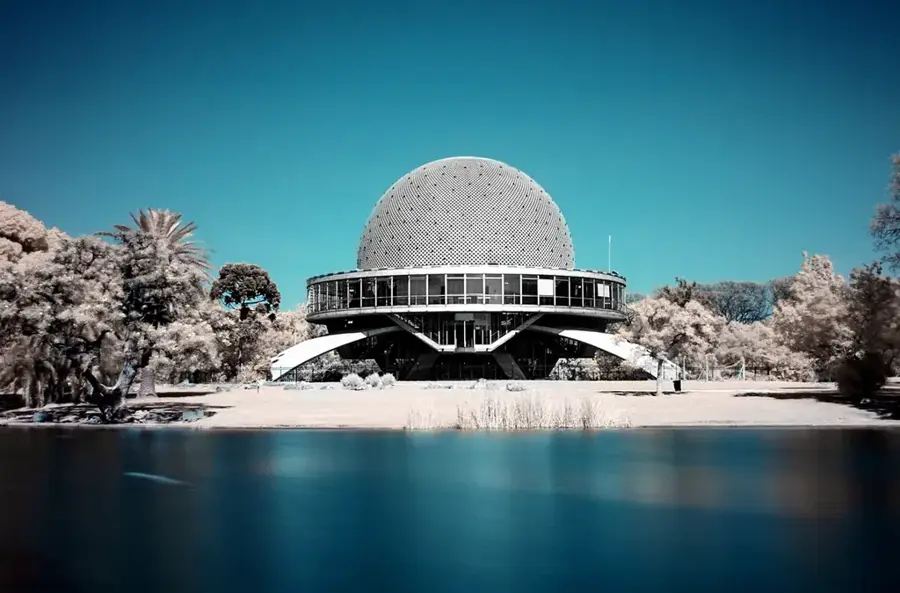
The Galileo Galilei Planetarium is located in the Palermo district of Buenos Aires and was inaugurated in 1966 based on the designs of architect Enrique Jan. The building is renowned for its distinctive modern design, featuring a spherical structure supported by three pillars on a triangular base. The dome has a diameter of 20 meters, and its main projection hall can accommodate up to 250 spectators for astronomical shows. A notable feature on the entrance plaza is a large metallic meteorite named 'El Toba,' found in 1920 in the Campo del Cielo region. The planetarium underwent significant renovations in 2011 and 2017 to upgrade its projection systems to 4K digital technology and expand its interactive museum area. It serves as the primary center for astronomical education and scientific outreach in the capital. At night, the exterior of the dome is illuminated by thousands of LED lights, making it a prominent landmark within the Parque Tres de Febrero.

Best time to visit & climate

The most pleasant time to visit is Mar, Nov, Dec.

JanFebMarAprMayJunJulAugSepOctNovDec
Avg °C25242117131091113172023
Rain mm110125122100724968698011310497

📋 Practical info

🚪
Visiting
The Galileo Galilei Planetarium in Buenos Aires is a public planetarium with regular shows. It can be visited through guided tours or shows.
🕒
Typical hours
Shows typically run several times a day, but exact times vary. It's advisable to check the official website for current schedules in advance.
📷
Photography
Inside the planetarium, photography is usually not allowed during shows. Outside shots of the distinctive building are always permitted and very worthwhile.
⏱️
Time needed
A typical show lasts about 45 to 60 minutes. Allow an additional 15 to 30 minutes to view the exhibition areas.
Combine with
The planetarium is in Parque Tres de Febrero, where you can also visit the Rose Garden and Buenos Aires Zoo. The MALBA Museum is also not far.
🧭
Getting there
The planetarium is easily accessible by subway (Line D, Ministro Carranza station) and bus. From the city center, the taxi ride takes about 20 minutes.
💡
Insider tip
Book your tickets online in advance as shows sell out quickly, especially on weekends. Arrive early to get a good seat in the dome hall.

Geography

Coordinates
-34.56950, -58.41160

Facts

  • The planetarium was officially inaugurated on December 20, 1966.
  • The projection dome has a diameter of exactly 20 meters.
  • Architect Enrique Jan used equilateral triangles for the base structure.
  • The 'El Toba' meteorite on display at the entrance weighs 4,250 kg.
  • It was the first planetarium in South America to install a laser projector.
  • The facility is located within the grounds of the Parque Tres de Febrero.

Explore nearby

Notable places around
Route planner — Car & Motorhome

Where do you start? We build the route here, with stops and country notes along the way.

Vehicle
Only stops with (optional):

© OpenStreetMap contributors · OpenRouteService

Sights in the town Galileo Galilei Planetarium (11)

Nagano Waterfall📍 landmark

Designed to mimic Japanese landscapes, this artificial cascading waterfall flows gently over mossy rocks in a tranquil garden setting.

Pequeña Glorieta🌿 nature

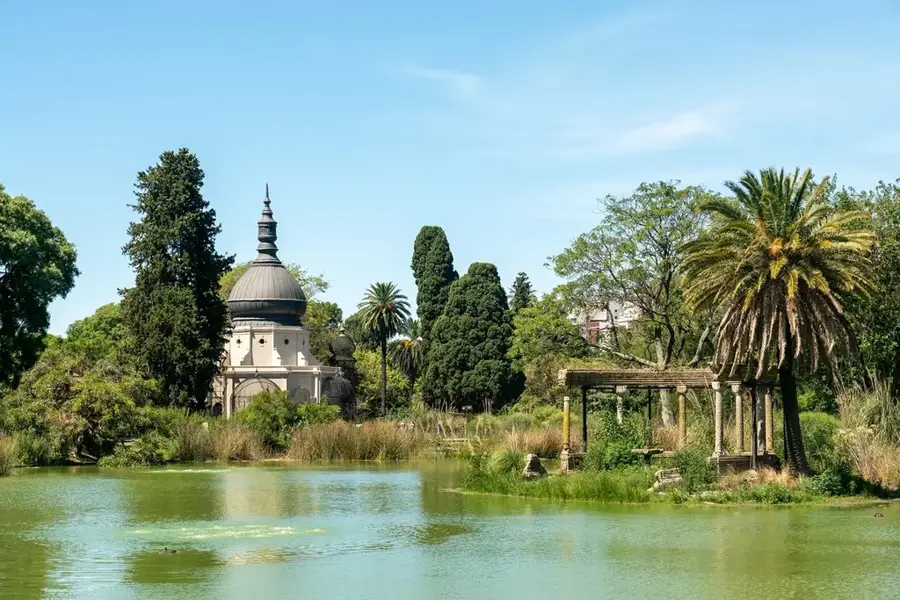
This small, shaded wooden gazebo provides a peaceful vantage point to watch the koi fish swimming in the garden's ponds.

Columna Persa🏺 historical

Unveiled in 1971, this towering column is a replica of the ancient Persepolis pillars gifted to the city by the Shah of Iran.

Fuerza Bruta🎭 culture

Housed in a versatile performance space, this dynamic theater hosts the globally renowned, immersive aerial acrobatics show Fuerza Bruta.

Parque El Rosedal📍 landmark

This meticulously landscaped botanical attraction features thousands of blooming rose bushes arranged around easy on the eye paths and a serene lake.

Plaza República del Perú🌳 park

This urban park in Buenos Aires serves as a green tribute to the Republic of Peru.

Planetario Galileo Galilei📍 landmark

Shaped like a futuristic UFO, this iconic planetarium in Buenos Aires features a state-of-the-art projection dome for astronomical shows.

Parque Bosque Alegre🌳 park

Also known as Parque de la Raza, this open green space in Buenos Aires provides shaded lawns for recreation.

Cantero Central Guillermo Barbieri🌳 park

Dedicated to the musician Guillermo Barbieri, this central landscaped median provides a green corridor through the city streets.

Museo de artes plásticas 'Eduardo Sívori'🏛 museum

Founded in 1934, this fine arts museum in Buenos Aires specializes in showcasing works by Argentine artists.

Monument to Christopher Columbus🏺 historical

Inaugurated in 1921, this impressive marble monument in Buenos Aires was built to commemorate Christopher Columbus.

Sights nearby

Frequently asked questions

Do tickets need to be reserved in advance?
Yes, especially on weekends, online booking is advisable.
Is the planetarium kid-friendly?
Absolutely, there are special shows for young visitors.
What is the best way to get there?
Best by bus or taxi to Parque Tres de Febrero.
Is there Wi-Fi or cafés there?
In the park surroundings, there are many small food stalls.
Is it worth visiting when it rains?
Yes, since the shows take place indoors, it's convenient.
Galileo Galilei Planetarium: where is it located?
Galileo Galilei Planetarium is located in Argentina.
Galileo Galilei Planetarium: what is there to see?
Highlights include Nagano Waterfall, Pequeña Glorieta, Columna Persa.
Galileo Galilei Planetarium: when is the best time to visit?
The most pleasant time to visit is Mar, Nov, Dec.
Galileo Galilei Planetarium: why is it worth visiting?
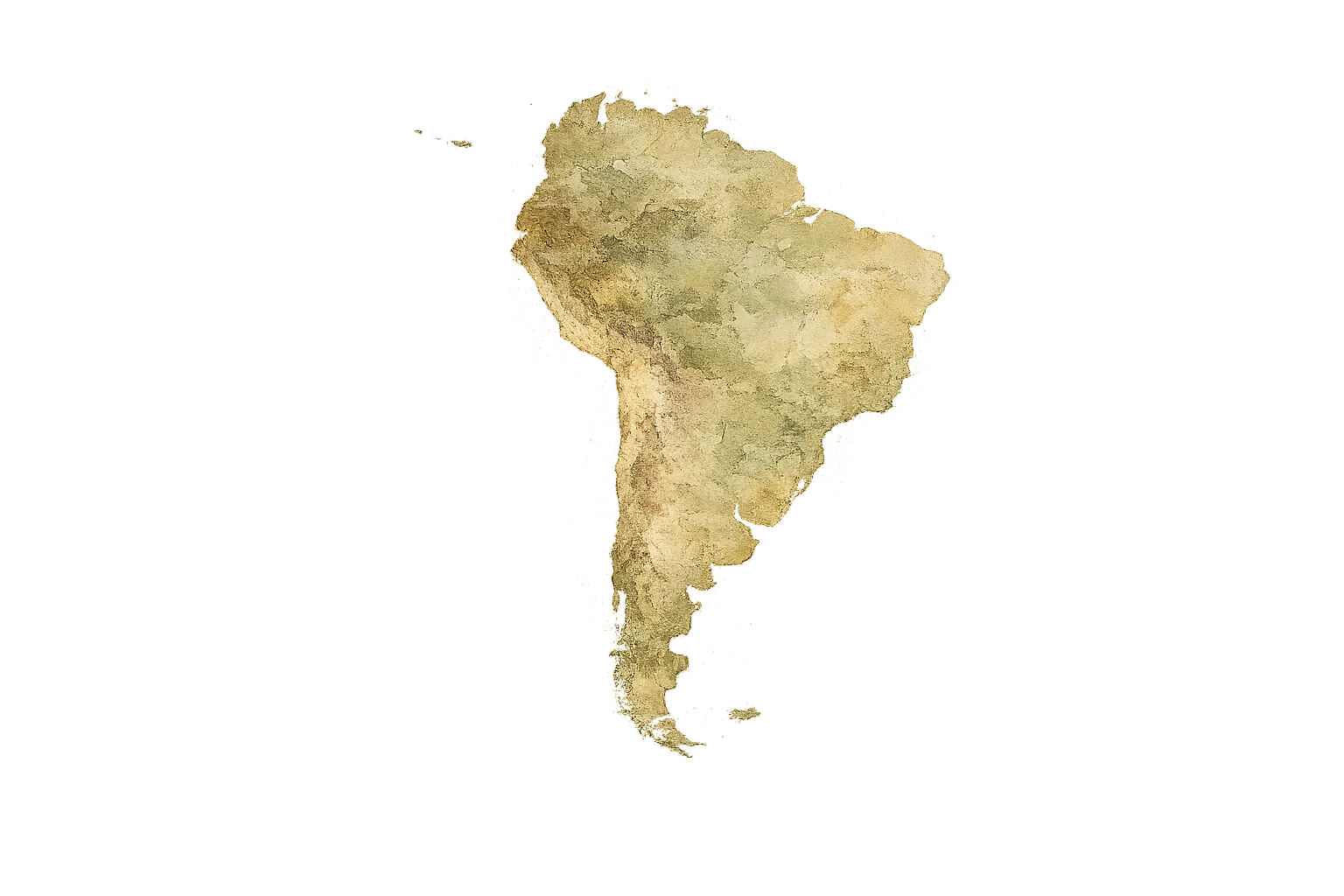
The Galileo Galilei Planetarium is located in the Palermo district of Buenos Aires and was inaugurated in 1966 based on the designs of architect Enrique Jan.
View on map → The Top 50 Attractions → OpenStreetMap →
South America
Explore with Plizio Discover more places in South America
More places in Argentina →

History & landmarks

More places