Plizio Visual Lab

Recoleta Cemetery
Plizio editorial teamData Sources
Landmark
—°11
Recoleta Cemetery (Argentina)

Weather…

The Recoleta Cemetery in Buenos Aires is one of the world's most significant necropolises, serving as a silent chronicle of Argentina's elite and history. Established in 1822 on the former gardens of the Recoleto monks, it contains over 6,400 elaborate mausoleums spread across 5.5 hectares. The cemetery is renowned for its diverse architectural styles, ranging from Neoclassical and Neo-Gothic to Art Deco, featuring numerous sculptures by famous artists. It is the final resting place for Argentine presidents, military heroes, Nobel laureates, and the wealthy socialites of the 19th and 20th centuries. The most famous resident is undoubtedly Eva Perón, whose family tomb remains the primary draw for visitors from around the globe. Designed like a 'city of the dead' with paved streets and monumental tombs, nearly 100 of its structures are designated as National Historic Monuments. Walking through its corridors has a profound look into the social and political evolution of the Argentine nation.

Best time to visit & climate

The most pleasant time to visit is Mar, Nov, Dec.

JanFebMarAprMayJunJulAugSepOctNovDec
Avg °C25242117131091113172023
Rain mm110125122100724968698011310497

📋 Practical info

🚪
Visiting
Recoleta Cemetery is a publicly accessible attraction featuring elaborate mausoleums and green spaces. Visitors can stroll among the ornate tombs and admire the architectural heritage.
🕒
Typical hours
The cemetery is typically open daily from 7:00 AM to 5:30 PM, though hours may vary by season. On holidays, shorter hours or closures often apply.
📷
Photography
Photography is allowed throughout the cemetery, but flash inside mausoleums is avoided out of respect for the deceased. Eva Perón's grave is a particularly popular subject.
⏱️
Time needed
A thorough walk takes about one and a half to two hours, depending on interest in the various mausoleums. Those passionate about history and architecture should allocate closer to two hours.
Combine with
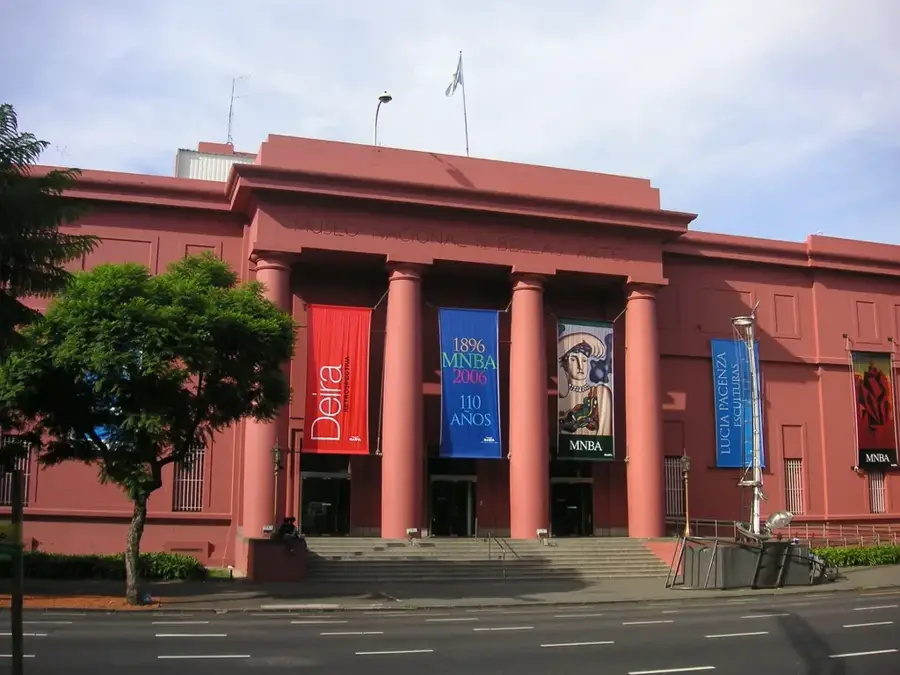
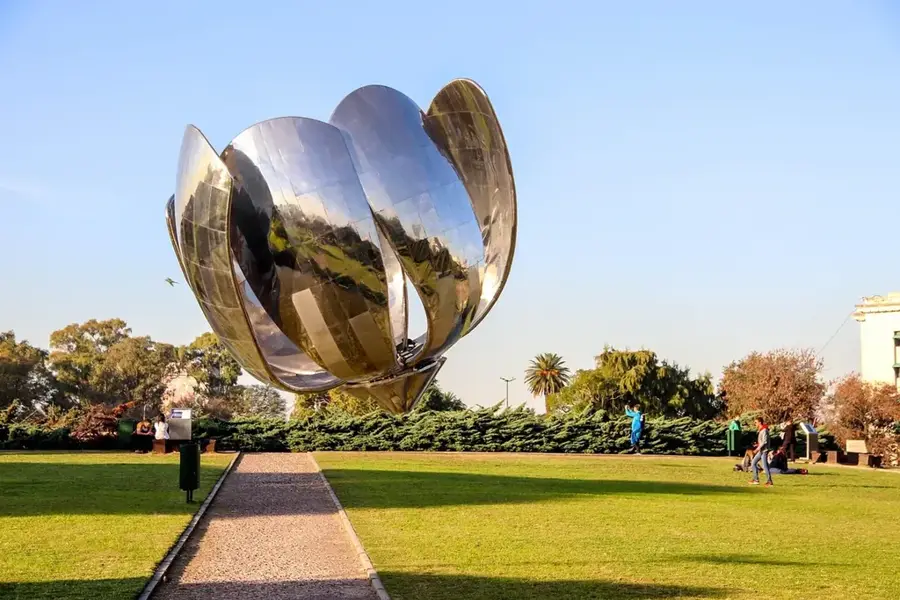
The cemetery is located in the upscale Recoleta neighborhood, which gives numerous cafés, museums, and parks. A walk to the nearby Museo Nacional de Bellas Artes or the Floralis Genérica is well worthwhile.
🧭
Getting there
Recoleta is reachable by subway line D (Facultad de Medicina station) or by many bus lines. From the city center it is about a 20-minute walk, or you can take a taxi.
💡
Insider tip
Arrive early in the morning to avoid crowds and enjoy the peaceful atmosphere. A free cemetery map at the entrance helps you quickly find Eva Perón's grave.

Geography

Coordinates
-34.58750, -58.39290

Facts

  • The cemetery was opened on November 17, 1822, as the city's first public graveyard.
  • It covers an area of approximately 5.5 hectares in the upscale Recoleta district.
  • More than 90 mausoleums have been declared National Historic Monuments.
  • Eva Perón is buried in the Duarte family crypt, secured five meters underground.
  • The cemetery holds the grave of Luis Federico Leloir, a Nobel Prize winner in Chemistry.
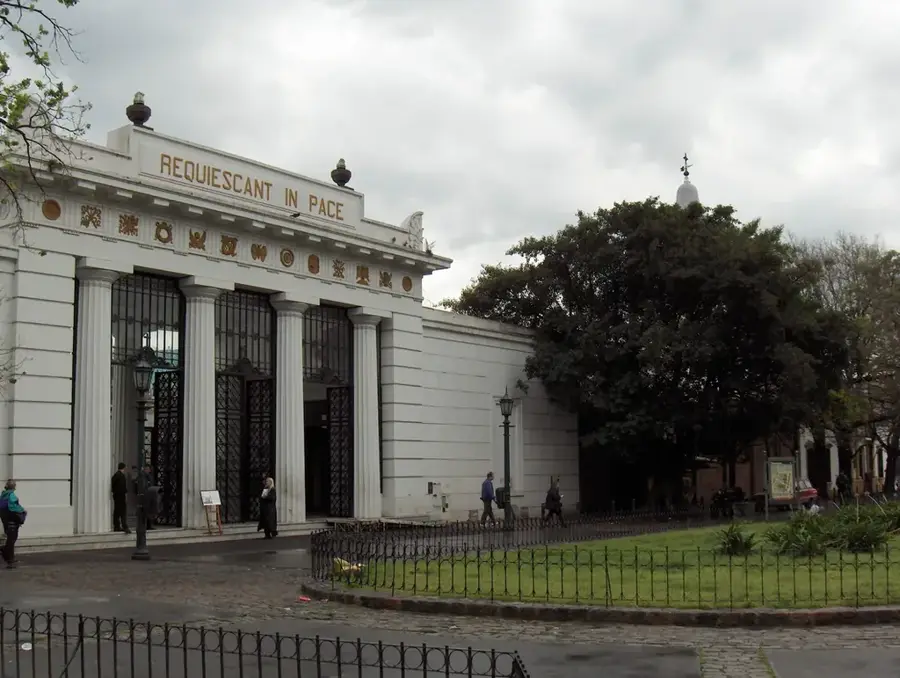
  • The entrance features a grand Neoclassical portal with towering Doric columns.

Explore nearby

Notable places around
Route planner — Car & Motorhome

Where do you start? We build the route here, with stops and country notes along the way.

Vehicle
Only stops with (optional):

© OpenStreetMap contributors · OpenRouteService

Sights in the town Recoleta Cemetery (11)

Av. Alvear📍 landmark

This prominent city avenue is known for its elegant architecture and upscale character.

Gomero de la Recoleta📍 landmark

This historic rubber tree is a natural landmark that dates back to the 1790s.

Museo Participativo de Ciencias🏛 museum

Established in 1990, this participatory museum provides interactive science exhibits.

💶

Museo Notario 'Roberto Mario Arata'🏛 museum

This specialized museum preserves the history of the notarial profession and is named after Roberto Mario Arata.

Museo Notarial Argentino🏛 museum

This heritage institution operates as a museum preserving the legal and notarial history of Argentina.

🕒 Mo-Sa 10:00-17:00 "call for info"🆓

Monumento a Guillermo Rawson🏺 historical

This public monument honoring Guillermo Rawson was formally established in 1958.

Recoleta Cemetry📍 landmark

This renowned cemetery is a protected heritage site famous for its elaborate aristocratic mausoleums.

🕒 Mo-Su 07:00-17:30

Residencia Maguire🏺 historical

This historic manor house is a prominent architectural landmark with a heritage level of 22.

Plazoleta Pedro Miguel Obligado🌳 park

This small urban park functions as a neighborhood square named after Pedro Miguel Obligado.

Plaza Vicente López y Planes🌳 park

This public park space honors the writer who composed the lyrics of the Argentine national anthem.

Plaza Teniente General Emilio Mitre🌳 park

This green urban square is dedicated to the military figure Lieutenant General Emilio Mitre.

Sights nearby

Frequently asked questions

How long does a visit to La Recoleta Cemetery take?
Usually 1 to 2 hours is enough. If you want to study the tombs and stories, you can easily stay longer.
Do you need a ticket?
Entry is often paid, but moderate. Guided tours may have an extra fee.
Is the cemetery photogenic?
Yes, because of the sculptures, mausoleums, and light-shadow contrasts. Respectful photography matters a lot here.
Is it good for families?
Yes for older children and teens if they are interested in history. With small kids, a shorter visit is better.
What is the best time for photos?
Morning or late afternoon gives the best light. The tombs look more dimensional and less harsh then.
Recoleta Cemetery: where is it located?
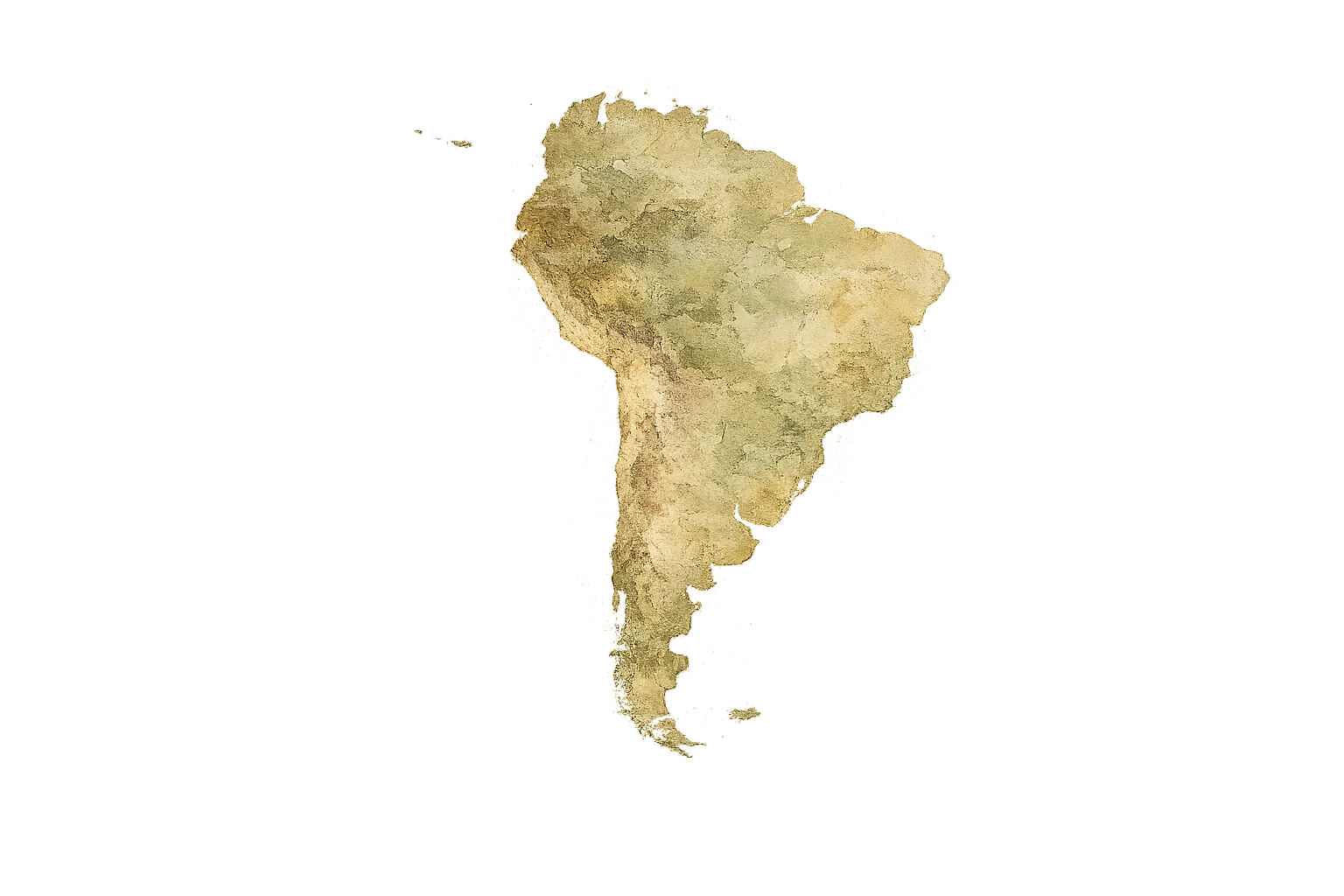
Recoleta Cemetery is located in Argentina.
Recoleta Cemetery: what is there to see?
Highlights include Av. Alvear, Gomero de la Recoleta, Museo Participativo de Ciencias.
Recoleta Cemetery: when is the best time to visit?
The most pleasant time to visit is Mar, Nov, Dec.
Recoleta Cemetery: why is it worth visiting?
The Recoleta Cemetery in Buenos Aires is one of the world's most significant necropolises, serving as a silent chronicle of Argentina's elite and history.
View on map → The Top 50 Attractions → OpenStreetMap →
South America
Explore with Plizio Discover more places in South America
More places in Argentina →

History & landmarks

More places