Plizio Visual Lab

Namba
Plizio editorial teamData Sources
Mountain
—°
Namba (Angola)

Weather…

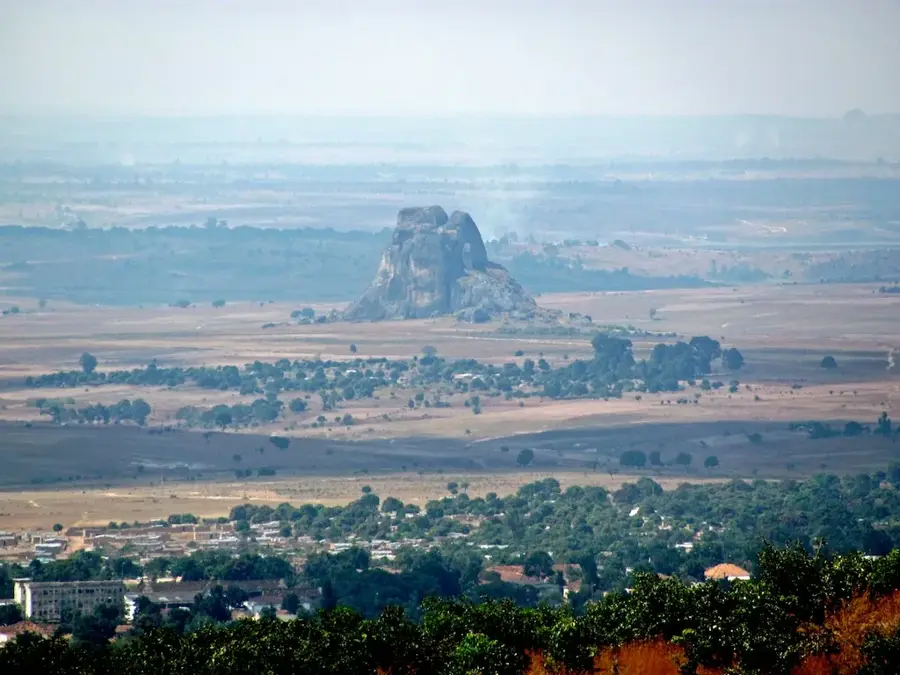
Monte Namba is a prominent peak within the Serra do Moco range, which contains the highest elevations in Angola, located in the Huambo province. This granitic massive rises sharply above the central plateau, shaped by millions of years of tectonic activity and surface erosion. The mountain is ecologically significant for hosting some of the country's last remaining patches of Afromontane forest, providing a refuge for a wide array of endemic flora and fauna. Climatically, Monte Namba experiences much cooler temperatures than the surrounding plains, often shrouded in orographic clouds that sustain its unique high-altitude ecosystem. Historically, the rugged terrain of the Namba and Moco massifs served as a natural fortress for local communities during colonial-era conflicts and holds spiritual importance for the regional population. Currently, Monte Namba is a focal point for conservation efforts aimed at protecting Angola’s fragile mountain biodiversity from the threats of deforestation and habitat loss.

Best time to visit & climate

The most pleasant time to visit is May, Jul, Aug.

JanFebMarAprMayJunJulAugSepOctNovDec
Avg °C202020201917182023232120
Rain mm16116430565910333107232183

📋 Practical info

🧭
Getting there
Successfully reaching the foothills of these mountains strictly requires skillfully navigating a complex, unmarked network of dirt tracks winding through the central plateau. Hiring an experienced local driver with a high-clearance vehicle is overwhelmingly recommended.
📅
Best season
The clearly defined dry season, traditionally lasting from May to September, comes highly recommended to completely avoid the disastrously impassable, deep muddy tracks characteristic of the extended rainy season. Visibility is also markedly improved during these cooler months.
⛰️
Terrain & paths
The captivating environment transitions from gently rolling highlands directly into dramatically steeper, imposing rocky peaks. The walking surface itself is a challenging, constantly shifting mix of slippery grassy slopes and highly exposed, weathered granite formations.
🎒
What to bring
Carefully considered layered clothing is completely essential to rapidly adapt to the area's quickly changing temperatures. Extremely sturdy footwear, alongside critical navigation equipment such as a dedicated GPS unit or heavily detailed offline maps, are absolutely required.
🅿️
Parking
It is customary to park the vehicle safely within the bounds of the nearest rural community or to find a broad, suitable clearing well off the main track. Care must be taken to ensure the parked vehicle does not accidentally obstruct local agricultural traffic in any way.
⚠️
Safety
The most significant and ever-present concern is the very real danger of becoming hopelessly lost in the vast, almost entirely unmarked highland landscape. Travelers must universally carry enough emergency supplies to comfortably survive an unexpected, forced overnight stay.
⏱️
Time needed
Potential visitors must deliberately plan for an exhaustive full day of intense exploration. This carefully calculated timeframe rigorously accounts for the significant, arduous drive originating from major towns just to successfully reach the starting point of the hike.

Geography

Coordinates
-12.00000, 15.50000

Facts

  • Monte Namba reaches an elevation of approximately 2,420 meters above sea level.
  • The peak is situated on the Bié Plateau, the central highland region of Angola.
  • The mountain's forests are home to the endangered Swierstra's Francolin.
  • Geologically, the massif is primarily composed of ancient Precambrian granite.
  • Temperatures at the summit can drop toward freezing during the winter months.
  • The area was comprehensively mapped and studied by scientists only in the 20th century.

Explore nearby

Notable places around
Route planner — Car & Motorhome

Where do you start? We build the route here, with stops and country notes along the way.

Vehicle
Only stops with (optional):

© OpenStreetMap contributors · OpenRouteService

Sights nearby

Frequently asked questions

How difficult is Namba?
Depending on the route, it is moderate to challenging. Heat, uneven terrain, and navigation are the main concerns.
When is the best time for Namba?
In the dry season, trails and visibility are best. Afternoons can get hot, so starting early is smarter.
Do you need special gear?
Good shoes, water, and sun protection are the minimum. For longer routes, a map or offline GPS is useful.
Are there villages nearby?
Often yes, but distances can be greater than expected. Plan enough time for both the way in and the return.
Is Namba good for panoramas?
Yes, higher points often give wide views over the region. In clear air, the panoramas are especially strong.
Namba: where is it located?
Namba is located in Angola.
Namba: when is the best time to visit?
The most pleasant time to visit is May, Jul, Aug.
Namba: why is it worth visiting?
Monte Namba is a prominent peak within the Serra do Moco range, which contains the highest elevations in Angola, located in the Huambo province.
View on map → The Top 50 Attractions → OpenStreetMap →
Africa
Explore with Plizio Discover more places in Africa
More places in Angola →

Nearby cities

History & landmarks

More places