Plizio Visual Lab

Boco
Plizio editorial teamData Sources
Mountain
—°1
Boco (Angola)

Weather…

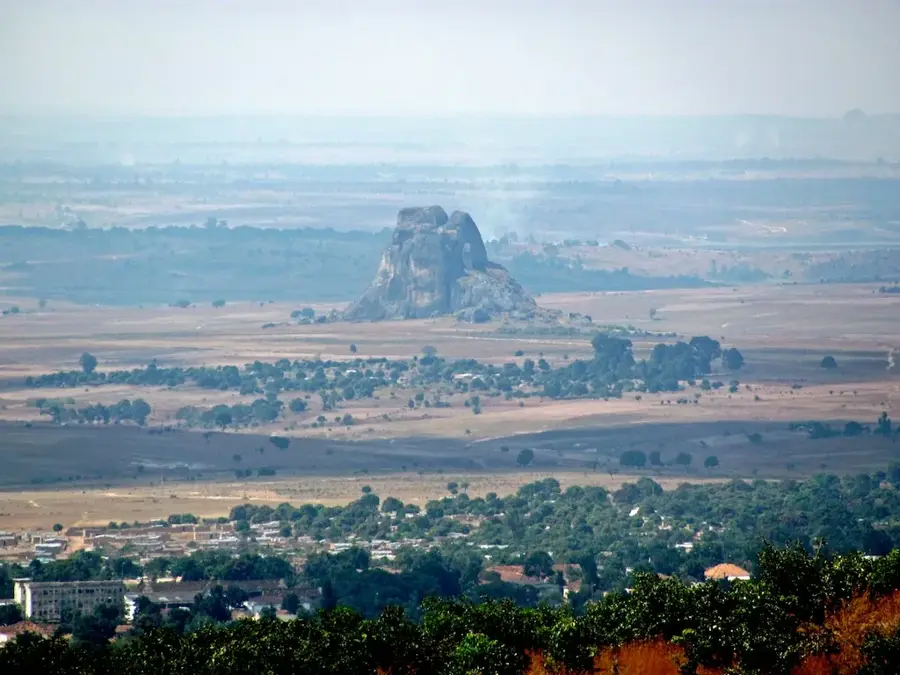
Monte Boco is a prominent mountain in the central highlands of Angola, located in the Benguela province. It is part of the plateau that dominates the region, serving as a natural divide between the coastal plains and the interior highlands. Geographically, Monte Boco is characterized by its rugged granite formations and steep slopes, which are typical of the central plateau's geology. The region surrounding the mountain, particularly the Bocoio district, is known for its agricultural significance, where the temperate highland climate favors the cultivation of various crops. Historically, the area was an important settlement space for the Ovimbundu people, who farmed the fertile valleys at the foot of the mountain. The vegetation on Monte Boco consists primarily of Miombo woodlands and alpine grasses at higher elevations. The mountain provides spectacular panoramic views over the surrounding rolling hills and serves as a vital watershed for local streams. Despite its natural beauty, the mountain remains largely undeveloped for tourism, making it a lesser-known spot for nature enthusiasts.

Best time to visit & climate

The most pleasant time to visit is May, Aug, Sep.

JanFebMarAprMayJunJulAugSepOctNovDec
Avg °C202020201917172022222120
Rain mm18716924583810433101265201

📋 Practical info

🧭
Getting there
The mountain is typically accessed from secondary rural roads that branch off from the main regional highways, winding through small agricultural settlements. The final stretches towards the mountain's base often require a high-clearance 4x4 vehicle due to badly degraded surfaces.
📅
Best season
Planning a visit during the extended dry season from May to September ensures that the deeply rutted dirt access tracks remain reliably passable. Venturing here during heavy rains often results in travelers becoming hopelessly stranded in deep, tenacious mud.
⛰️
Terrain & paths
Hikers face a mix of scrubby lower slopes that eventually give way to much steeper, rugged rock faces requiring careful foot placement. The informal local footpaths are often unmaintained, braided by livestock, and highly prone to loose, slipping scree on the ascents.
🎒
What to bring
Robust, well-treaded hiking boots are absolutely essential for gripping the loose, unstable rock trails found on the higher mountain gradients. Visitors must independently carry generous supplies of drinking water, reliable sun protection, and a well-stocked wilderness first aid kit.
🅿️
Parking
Expect to park informally on firm ground alongside the rural dirt tracks or within the scattered nearby farming hamlets. It is customary and polite to seek casual permission from local residents before leaving a vehicle parked securely for the duration of the day.
⚠️
Safety
The complete absence of formal trails and directional signage makes hiring a locally experienced guide paramount for a safe and direct ascent. Prepare for rapid weather shifts and note that emergency medical rescue is entirely unavailable in this remote rural setting.
⏱️
Time needed
Depending on the exact starting location and path conditions, navigating to the prominent summit and returning usually constitutes a solid half-day endeavor. Taking ample time to appreciate the sweeping regional vistas can easily extend this into a full five to six-hour journey.

Geography

Coordinates
-12.50000, 15.20000

Facts

  • The mountain is located in Benguela Province near Bocoio.
  • The summit elevation reaches approximately 1,800 meters.
  • The geology is defined by massive granite rock formations.
  • The region is a traditional settlement area for the Ovimbundu.
  • Miombo woodlands dominate the natural slope vegetation.
  • Annual rainfall is significantly higher than in the coastal lowlands.

Explore nearby

Notable places around

Route planner — Car & Motorhome

Where do you start? We build the route here, with stops and country notes along the way.

Vehicle
Only stops with (optional):

© OpenStreetMap contributors · OpenRouteService

Sights in the town Boco (1)

Serra Malica🌿 nature

This prominent mountain peak rises above the natural landscapes surrounding Monte Boco.

Sights nearby

Frequently asked questions

How hard is it to climb Boco?
Moderate to challenging, depending on the start point and weather. Expect heat and uneven terrain.
When should you visit Boco?
In the dry season, access is usually easier and visibility is better. Early in the day is most comfortable.
Is a guide useful on Boco?
Yes, especially on less marked trails. A guide knows safe routes and local weather changes.
Are there accommodation or camping options on the mountain?
There are often no built facilities directly on the mountain. If camping is allowed, it is usually basic and self-supported.
Is Boco good for landscape photography?
Yes, especially in clear air and side light. Ridges, rock lines, and distant views make strong subjects.
Boco: where is it located?
Boco is located in Angola.
Boco: when is the best time to visit?
The most pleasant time to visit is May, Aug, Sep.
Boco: why is it worth visiting?
Monte Boco is a prominent mountain in the central highlands of Angola, located in the Benguela province.
View on map → The Top 50 Attractions → OpenStreetMap →
Africa
Explore with Plizio Discover more places in Africa
More places in Angola →

Nearby cities

History & landmarks

More places