Plizio Visual Lab

Hwaseong Fortress
Plizio editorial teamData Sources
historical-site
—°15
Hwaseong Fortress (South Korea)

Weather…

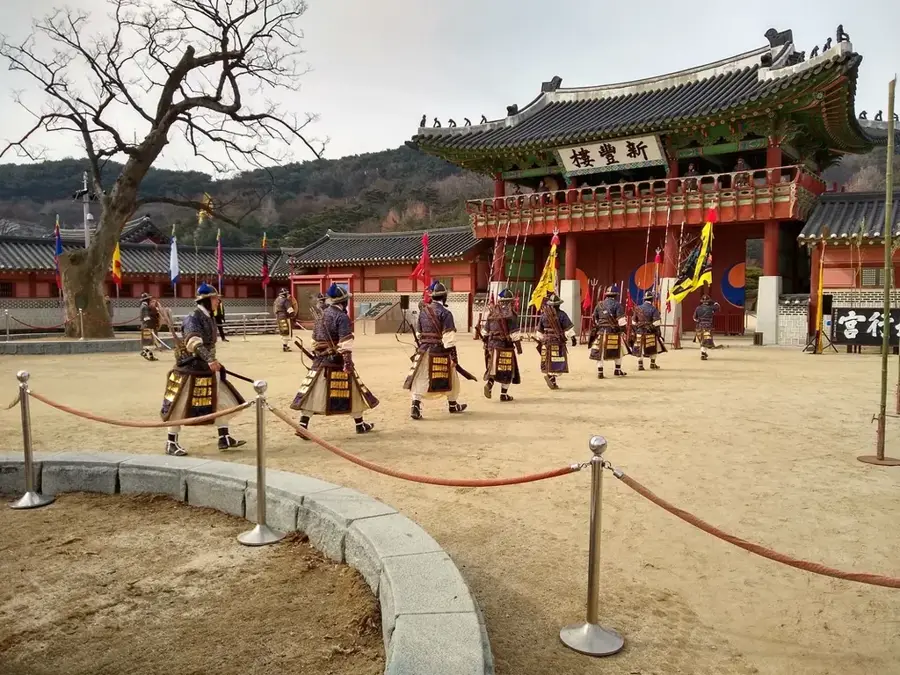
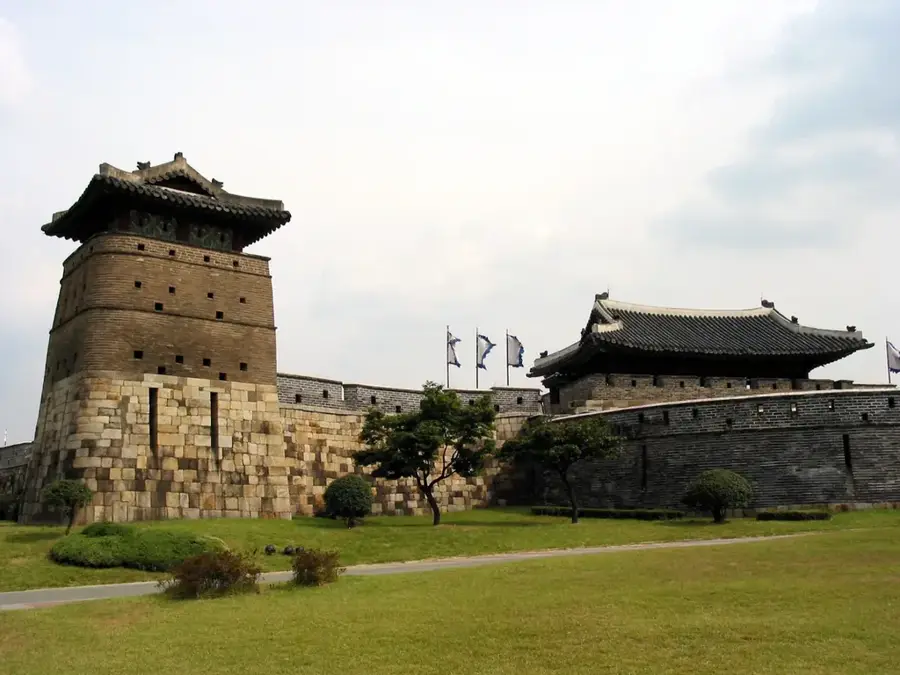
Hwaseong Fortress in Suwon is an exceptional example of late Joseon Dynasty military architecture, constructed between 1794 and 1796. King Jeongjo commissioned the fortress to house the remains of his father and to establish Suwon as a new economic and strategic hub. The fortress walls stretch for approximately 5.74 kilometers, encircling much of the modern city center. What distinguishes Hwaseong is its integration of traditional Korean fort-building techniques with scientific innovations from China and Europe, a result of the 'Silhak' (Practical Learning) movement. Innovative construction tools like the 'Geojunggi' (pulley system) were used to lift massive stones. Despite suffering damage during the Korean War, the fortress was accurately restored thanks to the 'Hwaseong Seongnyeok Uigwe,' a detailed archival record of the original construction. Designated a UNESCO World Heritage site in 1997, it is famous for its four grand gates and unique defensive structures.

Best time to visit & climate

The most pleasant time to visit is May, Jun, Sep.

JanFebMarAprMayJunJulAugSepOctNovDec
Avg °C-3-14101621242520147-1
Rain mm2031377284116361260138534722

📋 Practical info

🚪
Visiting
Hwaseong Fortress is a vast fortification complex open to visitors year-round. Most areas including the walls, gates, and pavilions can be explored on foot or on a guided tour.
🕒
Typical hours
The fortress is typically open from 9 AM to 6 PM, with last admission at 5 PM. Some sections like the Hwaseong Museum may have separate hours.
📷
Photography
Photography is allowed freely throughout the fortress grounds. Drone use is prohibited for security reasons.
⏱️
Time needed
A walk along the walls and through the main gates takes about two to three hours. Those who also want to visit the museum and palace should allocate half a day to a full day.
Combine with
The fortress is located in Suwon and can be combined with a visit to the Hwaseong Museum and Haenggung Palace. The Suwon Hwaseong Folk Museum and traditional market are also nearby.
🧭
Getting there
Suwon is easily reachable by subway from Seoul (Line 1), taking about 30 minutes. From Suwon Station, it's a 15-minute walk or a short bus ride to the fortress entrance.
💡
Insider tip
Rent a traditional Korean hanbok in Suwon to get free admission to the fortress. A visit in the late afternoon provides especially beautiful light for photos.

Geography

Coordinates
37.27500, 127.01290

Facts

  • Built between 1794 and 1796
  • Total wall length of 5.74 kilometers
  • Commissioned by King Jeongjo of Joseon
  • UNESCO World Heritage site since 1997
  • Used advanced pulley systems called Geojunggi
  • Restored using detailed 18th-century manuscripts

Explore nearby

Notable places around

Route planner — Car & Motorhome

Where do you start? We build the route here, with stops and country notes along the way.

Vehicle
Only stops with (optional):

© OpenStreetMap contributors · OpenRouteService

Sights in the town Hwaseong Fortress (15)

Paldalsan (Mt.)🌿 nature

The central peak of Suwon, serving as the highest point within the fortress walls with panoramic views of the city.

Western Bastion II🌿 nature

An elevated defensive outpost on the western wall that provides a clear bird's-eye view of the royal palace below.

Southern Bastion📍 landmark

A stone defensive protrusion designed to protect the fortress wall between Paldalmun Gate and the secret southern entrance.

Haeum Art Museum🏛 museum

A refined gallery space that displays a curated collection of local traditional art alongside contemporary Korean works.

Pal-Dalsan Dolmen Site🏺 historical

A prehistoric megalithic burial site featuring ancient stone dolmens discovered on the forested slopes of Mount Paldal.

Western Bastion III📍 landmark

A stone defensive outpost protruding from the wall to provide coverage for the southwestern corner of the fortress.

Cyber Agriculture Science Museum🏛 museum

An interactive museum that utilizes digital technology to showcase the evolution of traditional and future agricultural sciences.

Saemaul leader training center site🏺 historical

This historical site commemorates the training of leaders for the Saemaul Undong rural development movement.

Dragon Statue📍 landmark

This imposing dragon sculpture stands as a symbolic protector near the historic fortress walls of Suwon.

Myeongjak Gallery🎭 culture

This contemporary art gallery showcases a curated collection of local fine arts and traditional Korean craftsmanship.

Jamsa Science Museum🏛 museum

This specialized museum explores the scientific techniques of traditional Korean sericulture and silk production.

Western Guard Pavilion🏰 castle

A wooden defensive pavilion built atop the western walls to provide a vantage point for fortress guards.

Sangcheon Catholic Church⛪ religious

A prominent Catholic church known for its red brick facade and its role as a spiritual center.

South Gate Rodeo Market🎭 culture

A lively street market near Paldalmun Gate known for trendy fashion shops and diverse street food.

Gucheon-dong Tools Market🎭 culture

This specialized market in Suwon is a hub for hardware and traditional artisanal tools.

Sights nearby

Frequently asked questions

How long does a walk around the fortress take?
The full circuit along the wall is about 5.7 km long and takes approximately 2 to 3 hours on foot.
Are there entrance fees?
Yes, there is a small fee for the fortress and Haenggung Palace (usually 1,000-1,500 Won).
Is it worth visiting in the evening?
Absolutely, the fortress walls are beautifully lit at night and offer a romantic atmosphere.
Is the fortress accessible?
Partially; many sections have steps, but there are flatter paths and a tourist tram available.
Can you try archery there?
Yes, at the Yeonmudae post, visitors can try traditional Korean archery under guidance.
Hwaseong Fortress: where is it located?
Hwaseong Fortress is located in South Korea.
Hwaseong Fortress: what is there to see?
Highlights include Paldalsan (Mt.), Western Bastion II, Southern Bastion.
Hwaseong Fortress: when is the best time to visit?
The most pleasant time to visit is May, Jun, Sep.
Hwaseong Fortress: why is it worth visiting?

Hwaseong Fortress in Suwon is an exceptional example of late Joseon Dynasty military architecture, constructed between 1794 and 1796.
View on map → The Top 50 Attractions → OpenStreetMap →
Asia
Explore with Plizio Discover more places in Asia
More places in South Korea →

Nearby cities

History & landmarks
More places