Plizio Visual Lab

Bukhansan National Park
Plizio editorial teamData Sources
park
—°19
Bukhansan National Park (South Korea)

Weather…

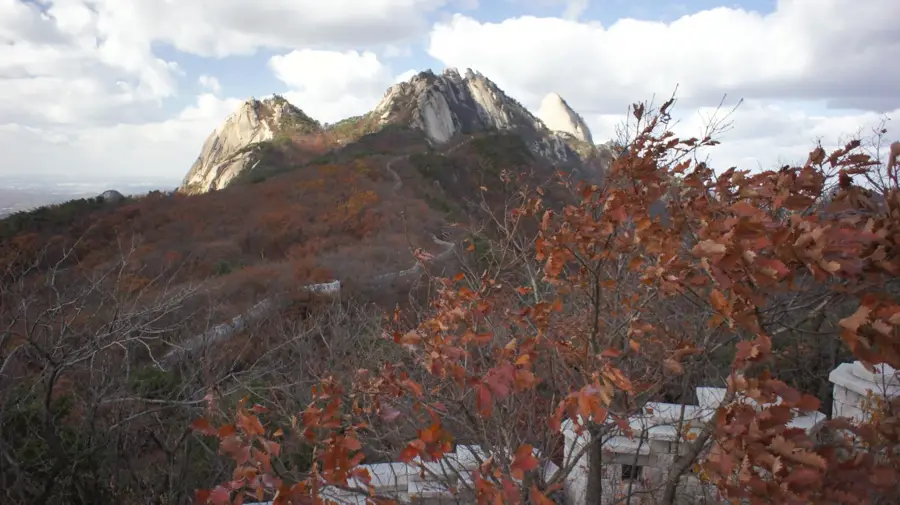
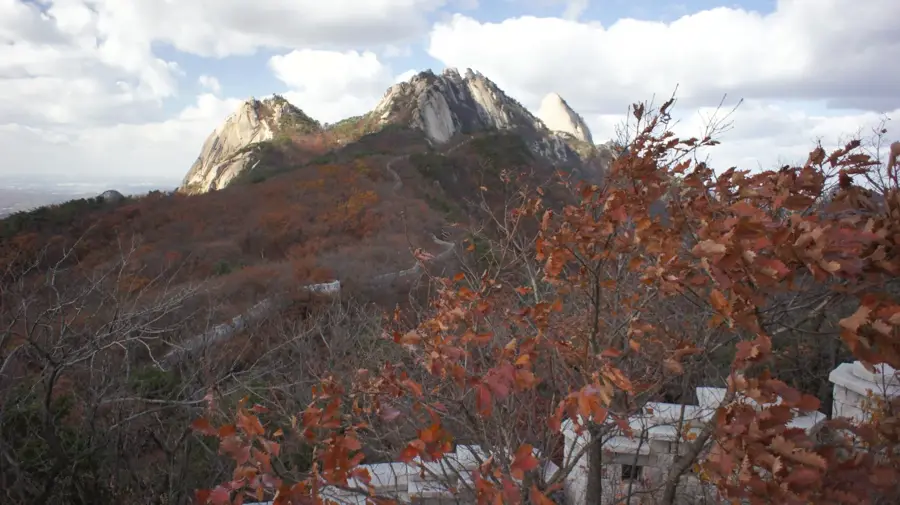
Bukhansan National Park, often referred to as the 'Green Lung of Seoul,' is a unique natural sanctuary situated directly to the north of the South Korean capital. Officially designated as a national park in 1983, it is world-renowned for its striking granite peaks, with Baegundae being the highest point at 836 meters. The park holds a Guinness World Record for the 'Most Visited National Park per Unit Area,' welcoming over five million visitors annually due to its proximity to the metropolitan area. Beyond its spectacular scenery, which hosts over 1,300 species of flora and fauna, the park features significant historical treasures, such as the Bukhansanseong Fortress with its 9.5-kilometer-long defensive wall. More than 100 Buddhist temples and hermitages are located within its rugged valleys, testifying to the long spiritual tradition of the mountain range. The dense network of hiking trails provides routes for all skill levels, from gentle stream-side walks to challenging rock climbs on steep granite cliffs, offering sweeping panoramic views over the vast urban landscape of Seoul.

Best time to visit & climate

The most pleasant time to visit is May, Jun, Sep.

JanFebMarAprMayJunJulAugSepOctNovDec
Avg °C-3-14101621242520147-1
Rain mm2031377284116361260138534722

📋 Practical info

🧭
Getting there
The park is extraordinarily accessible via Seoul's comprehensive public transit system, with multiple subway lines and local buses terminating directly at major trailheads. Most visitors simply ride the subway to stations like Bukhansan Ui and walk a short distance.
📅
Best season
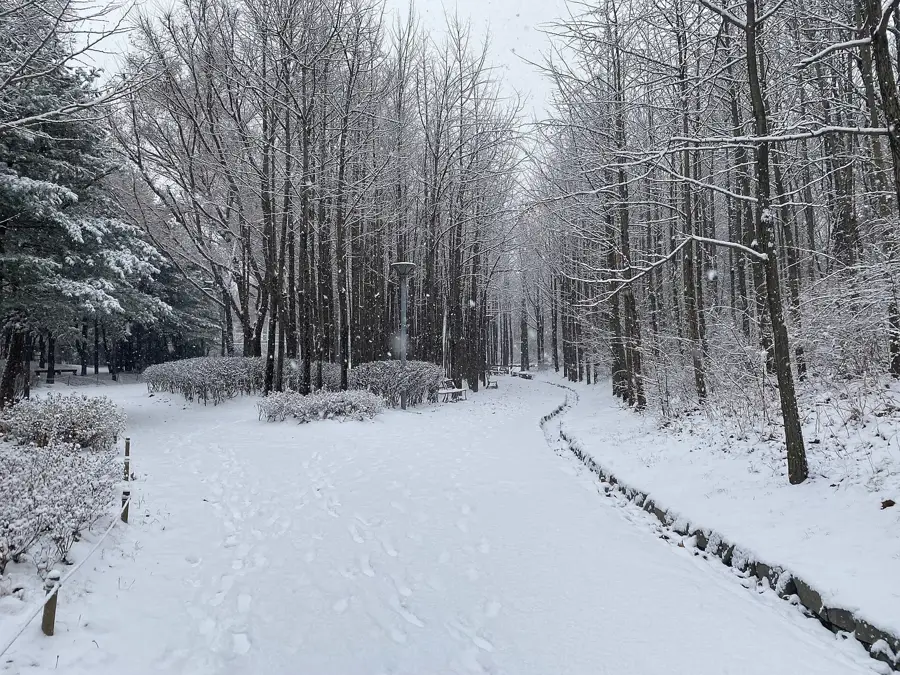
Autumn, particularly October and November, is broadly considered the most spectacular time to visit due to the spirited fall foliage and cool hiking weather. Spring provides blooming scenery, while summers are typically quite hot and winters bring snow and ice to the trails.
⛰️
Terrain & paths
The landscape is dominated by massive, exposed granite peaks, steep gorges, and forested valleys. Trails range from well-maintained, relatively flat forested walks to highly strenuous, near-vertical ascents involving steel cables and embedded metal steps on rock faces.
🎒
What to bring
Good quality hiking boots with excellent traction are typically essential for safely gripping the smooth granite surfaces. In winter, micro-spikes and trekking poles are absolutely necessary, while breathable clothing and sufficient water are required year-round.
🅿️
Parking
While there are dedicated parking lots at major entrances, they usually fill up incredibly early on weekends and holidays due to the park's immense popularity. Consequently, utilizing Seoul's highly efficient public transportation is universally recommended over driving.
⚠️
Safety
Hikers must exercise extreme caution on the exposed granite ridges, particularly when the rock is wet from rain or slippery with winter ice. Bottlenecks can form on popular, steep sections during weekends, requiring patience and careful footing to avoid dangerous falls.
⏱️
Time needed
Shorter valley walks can easily be completed in just one to two hours for a quick nature escape from the city. Scaling the highest peaks, such as Baegundae, generally requires a rigorous four to six hours round trip, depending on the chosen route and fitness level.

Geography

Coordinates
37.65900, 126.97900

Facts

  • Designated as South Korea's 15th national park in 1983.
  • Highest elevation is Baegundae peak at 836.7 meters.
  • Guinness Record holder for most annual visitors per unit area.
  • The wall of Bukhansanseong Fortress is 9.5 km long.
  • Home to more than 1,300 documented biological species.
  • The park spans a total land area of 79.9 km².

Explore nearby

Notable places around
Route planner — Car & Motorhome

Where do you start? We build the route here, with stops and country notes along the way.

Vehicle
Only stops with (optional):

© OpenStreetMap contributors · OpenRouteService

Sights in the town Bukhansan National Park (19)

YongAm Gate🏰 castle

A historic stone gate guarding the mountain ridges as part of the Bukhansanseong Fortress wall.

Mangyongdae🌿 nature

One of the three main peaks of Bukhansan, famous for its dramatic cliffs and expansive views.

Baegunbongammun🏰 castle

This hidden stone gate served as a secret passage within the Bukhansanseong fortress wall.

Yeougul📍 landmark

A natural narrow cave hidden among the prominent granite rocks of Bukhansan National Park.

Nojeokbong🌿 nature

A massive granite peak whose shape resembles a stack of rice, offering wide views over the surrounding ridges.

Gaeyeon Falls📍 landmark

A refreshing waterfall cascading over rock steps in a scenic valley of Bukhansan.

Wonhyobong🌿 nature

A rugged granite peak named after the famous Silla-dynasty monk Wonhyo.

Sigumun🏺 historical

Known as the 'Gate of the Dead', this historic portal was used to transport corpses out of the fortress.

Site of Sumun🏺 historical

The historic remains of a water gate where a stream once flowed through the fortress walls.

Bukhansan Hot Spring🎡 recreation

A relaxing sauna facility at the foot of the mountains utilizing natural mineral waters.

LOTTE WORLD KIDS PARK🎡 recreation

An indoor theme park featuring colorful rides and interactive play zones for families.

Aquafield🎡 recreation

A modern wellness destination offering indoor pools and themed saunas near the national park.

Stupa🏺 historical

A traditional Buddhist stone monument housing sacred relics or honoring a monk.

Jungseongmun🏰 castle

An inner defensive gate of the Bukhansanseong fortress designed to protect the royal command post.

Korea SGI Suyu Cultural Center🎭 culture

A modern community space dedicated to peace, culture, and Buddhist education.

Arboretum📍 landmark

A peaceful green space showcasing a diverse collection of trees and native plants.

Eunpyeong History & Hanok Museum🏛 museum

A cultural center exploring local history and the architecture of traditional Korean wooden houses.

Jingwan Temple⛪ religious

One of Seoul's four major ancient temples, positioned in a quiet valley within the national park.

Gangbuk General Market🎭 culture

A lively local marketplace where vendors sell fresh produce and traditional Korean snacks.

Sights nearby

Frequently asked questions

Which hiking trail in Bukhansan is the most popular?
The trail to Baegundae Peak is the most famous, offering the most spectacular views over all of Seoul.
Are there drinking water stations for hikers in the park?
There are mountain springs at many temples along the trails, but it is advisable to bring plenty of your own water.
Do I need professional climbing gear?
Good hiking boots are enough for normal trails; professional gear is only needed for specific rock climbing routes.
Is camping allowed in the national park?
No, camping and open fires are strictly prohibited throughout the national park to protect the environment.
How long does it take to hike to the peak?
Depending on the starting point and your fitness level, the hike to Baegundae Peak takes about 2 to 3 hours.
Bukhansan National Park: where is it located?
Bukhansan National Park is located in South Korea.
Bukhansan National Park: what is there to see?
Highlights include YongAm Gate, Mangyongdae, Baegunbongammun.
Bukhansan National Park: when is the best time to visit?
The most pleasant time to visit is May, Jun, Sep.
Bukhansan National Park: why is it worth visiting?

Bukhansan National Park, often referred to as the 'Green Lung of Seoul,' is a unique natural sanctuary situated directly to the north of the South Korean capital.
View on map → The Top 50 Attractions → OpenStreetMap →
Asia
Explore with Plizio Discover more places in Asia
More places in South Korea →

History & landmarks

More places