Plizio Visual Lab
Solila Bird Watching Area
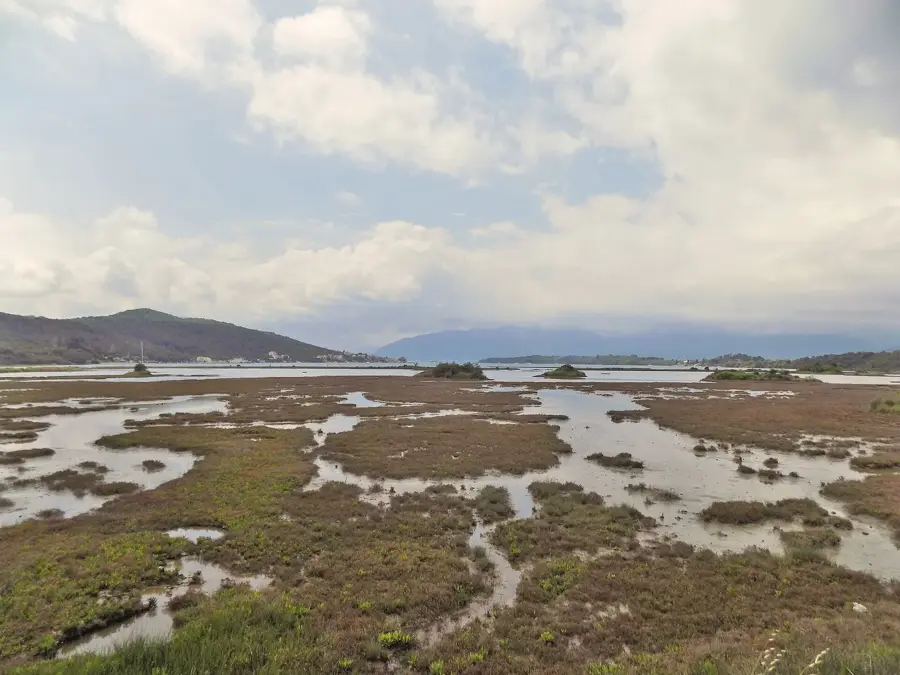
The Solila nature reserve in the Bay of Tivat is a former salt production site that has evolved into one of the most critical wetlands for migratory birds along the eastern Adriatic. Spanning roughly 150 hectares, the area hosts a unique flora dominated by halophytes (salt-tolerant plants) such as glasswort (Salicornia). These specialized plants have adapted to high soil salinity, providing the structural basis for a complex ecosystem of mudflats and shallow waters. Historically, salt was harvested here from the 14th century until the 1960s, a practice that permanently shaped the local soil chemistry. Since gaining protected status in 2008, populations of rare orchids and endemic coastal plants have seen a steady recovery. The vegetation provides essential foraging for over 110 recorded bird species, including flamingos and cranes, while also shielding the coastline from erosion. Solila stands as a prime example of rewilding industrial land into a vital biological sanctuary.
- Location: Montenegro
- Top sights: Plavi horizonti · Kalardovo · Velika Špilja - Pecka
- Nearby: Gošići (4 km)
Best time to visit & climate
The most pleasant time to visit is Jun–Aug.
| Jan | Feb | Mar | Apr | May | Jun | Jul | Aug | Sep | Oct | Nov | Dec | |
|---|---|---|---|---|---|---|---|---|---|---|---|---|
| Avg °C | 4 | 5 | 8 | 12 | 16 | 20 | 24 | 24 | 19 | 14 | 10 | 6 |
| Rain mm | 156 | 152 | 138 | 103 | 89 | 67 | 42 | 43 | 116 | 138 | 187 | 178 |
📋 Practical info
Geography
Facts
- The protected area covers a total of 150 hectares.
- More than 110 different bird species have been recorded here.
- Industrial salt production at the site ended in the 1960s.
- The area has been under nature protection since 2008.
- The dominant plant genus is the salt-tolerant glasswort.
- Recognized as a Ramsar site of international importance.
Explore nearby
Notable places around
Route planner — Car & Motorhome
Where do you start? We build the route here, with stops and country notes along the way.
© OpenStreetMap contributors · OpenRouteService
Sights in the town Solila Bird Watching Area (3)
Sights nearby
Frequently asked questions
Can you see flamingos in Solila?
What was Solila formerly?
How many bird species are there?
Is the entrance to the reserve free?
Are there special observation huts there?
Solila Bird Watching Area: where is it located?
Solila Bird Watching Area: what is there to see?
Solila Bird Watching Area: when is the best time to visit?
Solila Bird Watching Area: why is it worth visiting?

Nearby cities
History & landmarks
More places